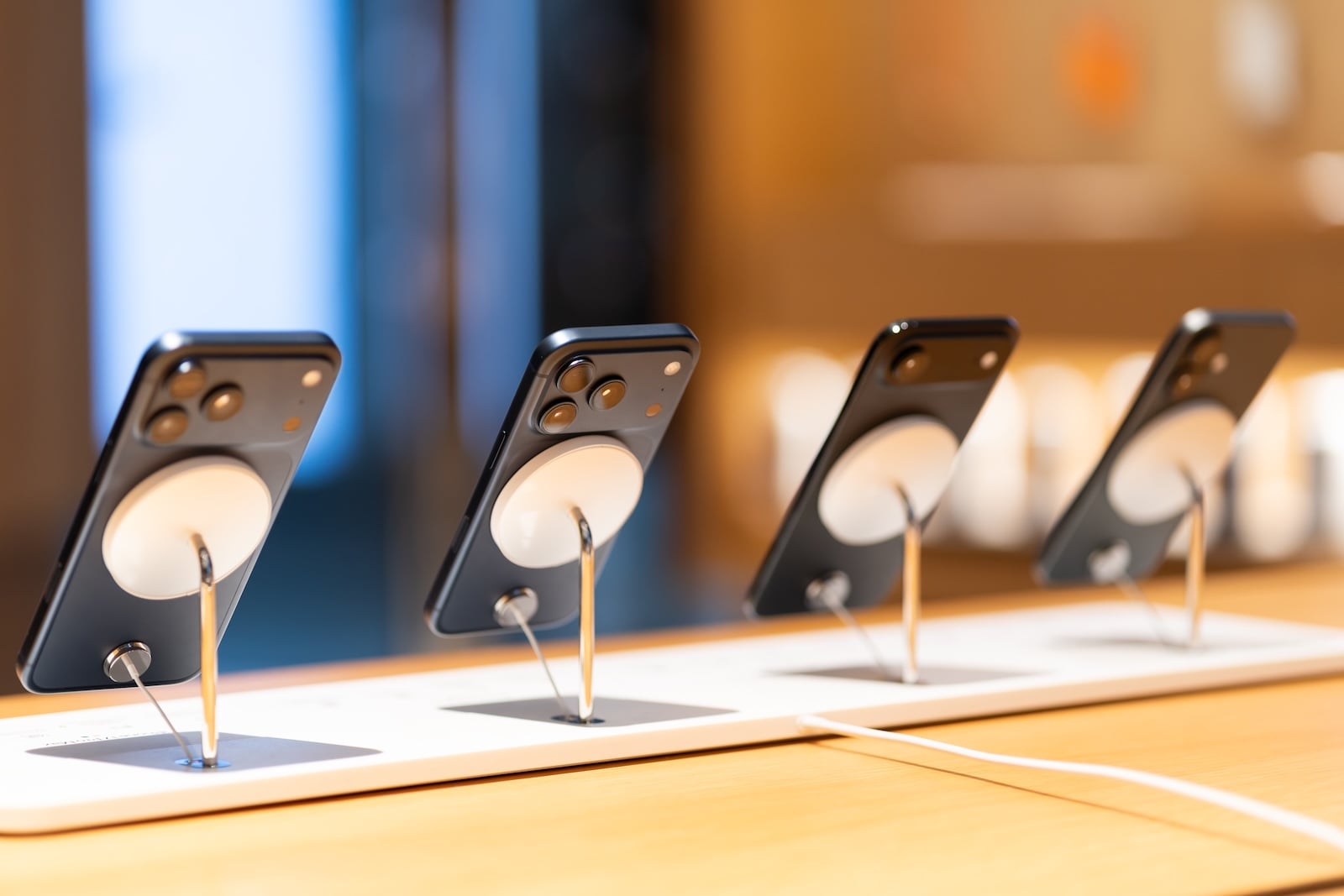
Following today's quarterly results, Tim Cook made a remarkable admission: Demand for the iPhone 17 is so high that Apple simply cannot currently supply enough. Speaking to Reuters, Cook described demand as "off the charts" and explained the reason for the shortages.
Anyone glancing at the individual segments in Apple's Q2 results might be surprised at first glance: With $56.99 billion in revenue, the iPhone business was slightly below the average analyst estimate. This might sound like weakness – but the opposite is true. The reason isn't a lack of demand, but rather that Apple could currently sell significantly more iPhones if the supply chain allowed it.
What Cook told Reuters
In the interview following the Q2 results, Cook was unusually frank. Demand for the iPhone 17 was "off the charts". Apple would simply have sold more if the company had been able to produce more devices.
Cook specifically identifies the problem: there is currently insufficient capacity for the advanced processor nodes. "Right now, there's simply less flexibility in the supply chain regarding the availability of additional components," Cook told Reuters. This statement is significant because a CEO typically avoids such limitations. Cook's statement clearly confirms that Apple has missed out on revenue this quarter.
Why TSMC is the bottleneck
Apple has all its A-Series and Apple Silicon chips manufactured by the Taiwanese contract manufacturer TSMC. TSMC is currently the world's central hub for high-performance chip production – and therein lies the problem: The AI boom has caused demand for state-of-the-art chips to explode. Hyperscalers like Google, Microsoft, OpenAI, Anthropic, and Nvidia are massively acquiring manufacturing capacity because they want to scale their AI data centers.
For Apple, this represents an unfamiliar situation: Just a few years ago, Apple was by far TSMC's largest customer – with the result that Apple dictated capacity decisions. This is now significantly less the case. While Apple remains a key major customer, it has noticeably less leverage in negotiations than before. This is more than just a short-term supply chain disruption – it's a structural shift.
Gross margin at 49.2 percent – despite pressure
Despite the tight component supply situation, Apple reported a gross margin of 49.2 percent in Q2. This exceeds the expectations of many analysts and is at the upper end of Apple's historical range. It's important to put this into perspective: this total gross margin also includes services, whose margins are traditionally significantly higher than those of hardware. The fact that Apple is still able to achieve profitable growth in this environment demonstrates the stability of its operating model.
The iPhone 17 Pro and the standard model are particularly popular
Apple doesn't officially release sales figures or model-by-model data. However, Cook hinted that the Pro segment is particularly strong: The new aluminum chassis of the iPhone 17 Pro and the striking orange color variant are apparently proving popular. The standard iPhone 17 is also likely to play a significant role – for the first time, the base models are getting ProMotion technology and the always-on display, features previously reserved for the Pro models. This has noticeably narrowed the gap between the base and Pro versions, making it easier for many buyers to upgrade from an older iPhone.
In addition, the iPhone 17e, which was launched this quarter and covers the lower price segment, is included in the quarterly figures for the first time.
What happens next
It will be interesting to see how Apple addresses the bottleneck in processor nodes. There is no short-term solution – TSMC can only expand its capacity over months, more likely years. Apple will therefore likely try to secure longer-term supply contracts and place its orders earlier. Cook had already indicated in previous earnings calls that the supply chain was "less flexible" than usual.
For now, the picture is clear: Apple has a premium product that's selling faster than the company can supply it. From an investor's perspective, that's one of the best problems a corporation can have – even if Cook doesn't put it that way.
Cook's supply chain confession is a statement
Tim Cook's open discussion of supply bottlenecks right now – just under six months before handing over the reins to John Ternus on September 1st – has a twofold effect: On the one hand, it signals to the market that the weak iPhone sales figures in the quarterly results are not a demand issue. On the other hand, it demonstrates that Apple has accepted a new reality in its relationship with TSMC. For the incoming CEO Ternus, who, as head of hardware, knows these supply chain dynamics inside and out, this is a perfect opportunity – and simultaneously one of the key tasks he will have to tackle from day one. (Image: Shutterstock / Wongsakorn 2468)
- Apple Q2 2026: Record quarter with $111.2 billion in revenue
- iPhone 17 Pro and iPhone Air: Charging problem after completely empty battery
- Apple AI is testing multiple solutions in parallel
- Satellite smartphones: Apple clearly dominates the market
- Ternus needs to decide on iPhone prices and US production early
- Apple vs. Epic Games: Appeals Court lifts suspension
- Apple TV receives six nominations at the Gotham TV Awards
- UBS raises price target for Apple – shortly before the quarterly results
- Apple Vision Pro: First cataract surgery worldwide successful
- Claude is getting nine new connectors for creative tools
- Ted Lasso Season 4: Starts August 5 on Apple TV
- Apple TV: Survey of subscribers on content and sports
- App Store: New monthly subscriptions with a 12-month commitment are coming
- Severance: Adam Scott knows the ending and promises surprises
- iOS 26.5 Beta 4: Apple concludes the testing phase
- John Ternus on Apple Services: "So many opportunities" for growth
- Why September 1st is crucial for Ternus' CEO start
- Will the next entry-level iPad be called the "iPad Neo"?
- Ternus speaks about Vision Pro: „We are only at the beginning“
- Apple TV wins two Peabody Awards 2026
- GPT-5.5 is here: OpenAI introduces a "new intelligence class" for ChatGPT and Codex
- Perplexity CEO: AI will make the iPhone more important, not obsolete
- Apple's entry-level Mac mini is sold out
- Apple Maps was Cook's "first big mistake" – Apple Watch his pride and joy