Apple is entering 2026 facing increasing cost pressures. Rising prices for memory, chips, and modern wafers are noticeably impacting hardware costs. Although Apple has not yet taken any concrete measures, it is clear that the overall environment is deteriorating significantly. The company continues to try to keep sales prices more stable than many competitors. This very approach is creating additional internal pressure, as the rising component prices cannot be fully offset in the long term.
These assessments come from an investor note by Morgan Stanley. They are not based on official Apple forecasts, but rather on recent discussions and investigations within the Asian supply chain. Studies in Taiwan, in particular, indicate increasing supply shortages and rising input costs for smartphones, PCs, and servers. These developments directly affect Apple and impact nearly all of its major product lines.
Rising storage prices until the beginning of 2026
According to Morgan Stanley, prices for memory chips, especially DRAM and NAND, had already risen significantly by the end of 2025. This development has forced many hardware manufacturers to increase the prices of their end products. Price pressure is expected to intensify further until early 2026.
This presents a challenging environment for Apple. Even if sales prices officially remain stable, the company is not immune to rising costs. Analysts expect margins to come under pressure. While Apple's size and strong market position mean the impact is less severe than for smaller competitors, the cost increases cannot be completely absorbed.
An additional effect could be a shift in demand forward. Anticipated price increases often lead to purchases being made earlier, which creates short-term sales peaks, but does not represent a structural solution in the long term.
Why storage prices are particularly relevant
Rising storage costs primarily affect Apple users through the pricing of storage tiers and upgrades. Macs are particularly impacted. RAM and storage are fixed at the time of purchase and cannot be upgraded later. Higher storage prices are therefore often reflected in more expensive configuration options or less attractive base models.
Even with iPhones, rising storage prices directly impact the cost of different storage tiers. Even if the entry-level prices remain the same, higher storage options can become significantly more expensive.
Apple's special role in DRAM and NAND
Apple's approach to memory procurement differs from that of many other OEMs. The company built up large NAND inventories at comparatively low supplier prices until early 2026. However, these contracts are expiring and will need to be renegotiated once the agreed-upon quantities are reached.
The situation with DRAM is even more uncertain. According to reports, Apple is still negotiating prices for its 2026 hardware generation. Suppliers have a strong negotiating position, as prices are increasingly converging with general market levels. A significant sequential price increase is considered possible.
Should these negotiations go badly, the higher costs would directly impact iPhones as well as the storage and memory configurations of Macs. Apple can absorb some of the cost pressure internally, for example through operational efficiency. However, if sales prices remain unchanged, the range of configuration options will inevitably be limited.
Rising wafer costs and Apple's advantage at TSMC
Costs are also rising on the foundry side. State-of-the-art wafers are becoming more expensive, which is particularly noticeable at new manufacturing nodes. Morgan Stanley expects Apple to experience lower price increases than other customers. The main reason for this is Apple's strategic importance to TSMC.
At the same time, the cost increases for next-generation nodes are more pronounced than for current processes. Apple can offset some of these additional costs through more efficient chip sizes. Nevertheless, custom silicon chips remain a significant cost factor and affect almost all major product lines, from the iPhone to the Mac.
What options remain for Apple?
Morgan Stanley clearly outlines the overall situation for OEMs. Rising component costs inevitably lead to price increases, lower specifications, or declining margins. Apple, compared to its competitors, enjoys higher margins and therefore more room to maneuver.
This flexibility is particularly evident in upgrade prices, base configurations, and the structure of the product range. For Mac purchases, this means that memory and storage upgrades could become more expensive at checkout, even if the entry-level prices remain stable.
The crucial question is how long Apple can maintain this strategy in 2026. At some point, rising configuration prices or less generous base configurations will noticeably impact product appeal and profit margins.
Apple faces increasing cost pressure in 2026
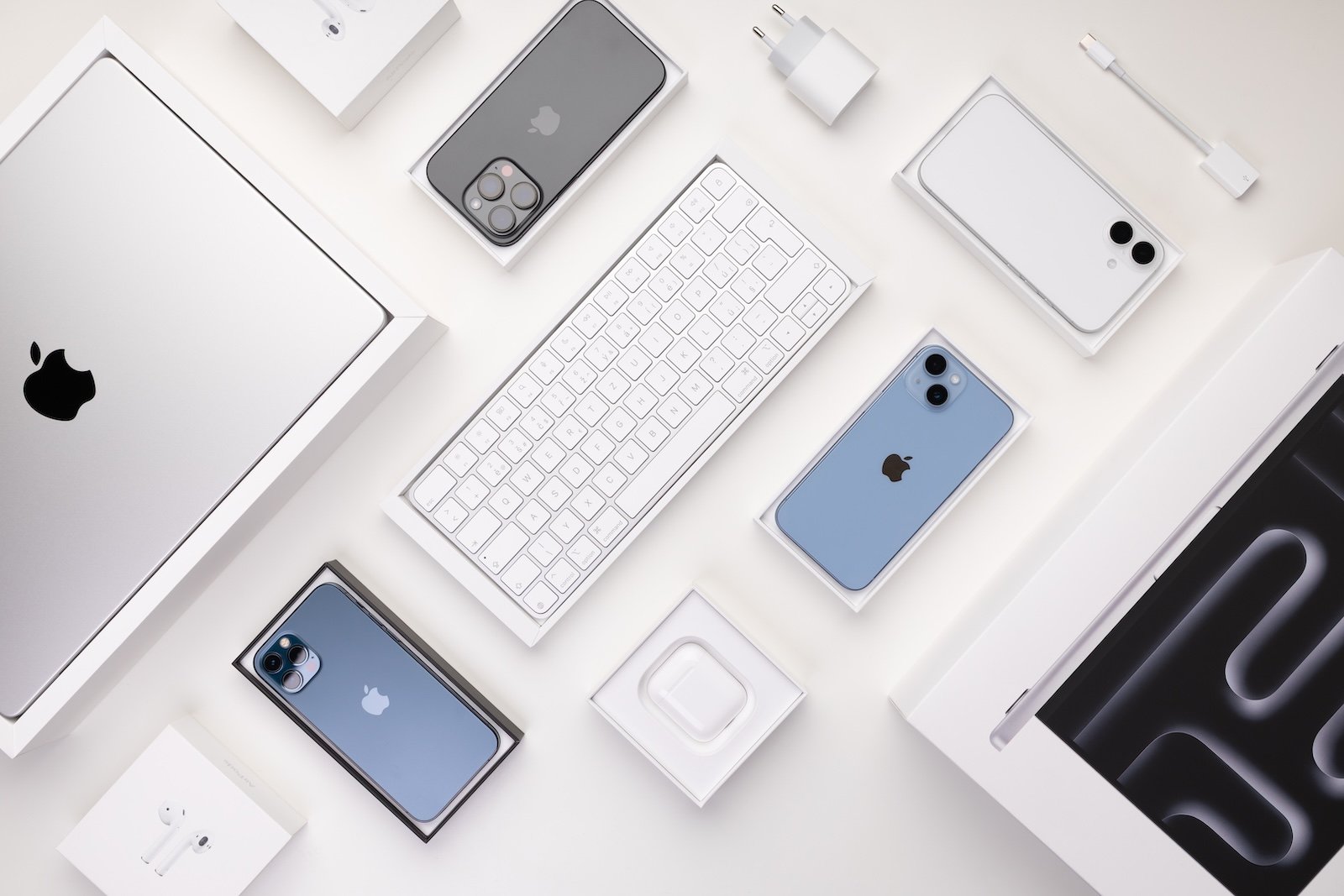
Apple faces a tight cost environment in 2026. Rising prices for memory, chips, and wafers are increasing pressure on margins and product configurations. Even without direct price increases, adjustments are almost unavoidable, especially regarding memory options and upgrades. Apple's strong market position and close supplier relationships give it an advantage, but even these have their limits. How Apple manages rising component prices will be crucial in determining how stable its hardware prices and margins remain in the coming years. (Image: Shutterstock / Ya.kubovskiy)
- iPhone Fold is getting closer: CES provides strong clues
- Apple makes Macs and iPads significantly faster on 5 GHz Wi-Fi
- Apple Vision Pro makes NBA games immersive for the first time
- Apple TV wins seven awards at Critics' Choice Awards
- iPhone exports from India reach the 50 billion mark
- Belkin showcases powerful Qi2.2 charging solutions at CES 2026
- Apple Vision Pro is not a flop, it's just misrated
- Clicks Power Keyboard: New MagSafe keyboard in detail
- Punkt. MC03: A smartphone that consistently protects data
- Clicks Communicator: Communication instead of smartphone stress
- Apple is focusing on new Fitness+ programs and challenges
- Apple updates vintage list for Macs, iPhones and more
- Apple Fitness+ officially announces big plans for 2026
- Apple raises $3 million to fight AIDS
- iPhone 17 Pro: Reports of static noise while charging
- Apple better prepared: Notebook market under pressure in 2026
- More Roomba models support Matter for HomeKit
- Pluribus Season 1: The finale was planned completely differently
- Apple receives a reprieve from US tariffs on Chinese semiconductors
- Cyberattack on Apple supplier: Background and consequences
- Tesla is working on native car keys for smartphones
- Apple and the billion-dollar App Store ruling in the UK
- macOS Gatekeeper bypassed via two-stage malware chain
- Apple Intelligence must pass China's AI censorship test
- Ted Lasso Season 4: Producers announce possible release date