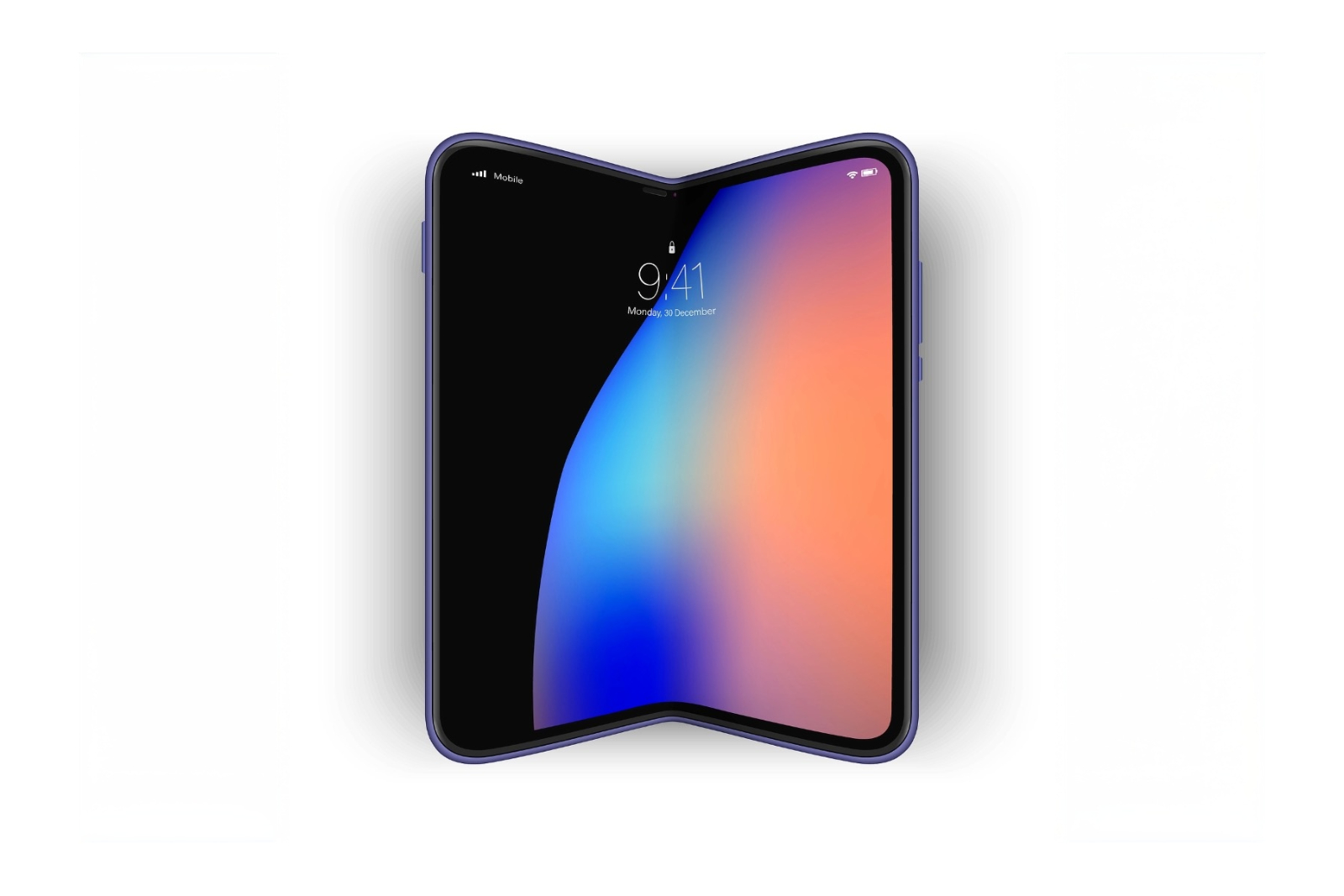
The iPhone Fold is getting closer, and new statements from analysts are providing an increasingly complete picture. In a recent investor note, renowned Apple analyst Jeff Pu has once again revealed concrete technical details about the first foldable iPhone. At the same time, he places the device within Apple's overall strategy for 2026, a year that is expected to be challenging for the smartphone market as a whole.
According to several forecasts, the global smartphone market is facing a decline. Rising storage costs and weak demand, especially in the mid-range Android segment, are impacting sales figures. However, Apple is expected to largely buck this trend. The iPhone Fold plays a key role in this, as does the new iPhone 18 series, which, according to Jeff Pu, is designed for growth both technically and strategically.
Declining market, rising Apple share
Jeff Pu expects global smartphone sales to decline by about 4 percent in 2026. He cites the impact of higher storage costs in an overall weak end market as the main reason. He believes that lower and mid-range Android devices will be particularly affected.
Apple, however, is expected to decouple from this trend. Pu forecasts around 250 million iPhones will be sold in 2026. This would represent a 2 percent increase compared to the previous year. Apple's market share would thus rise to 21 percent, after reaching 19 percent in 2024 and 20 percent in 2025.
According to Pu, another growth driver is the continued strong demand for the iPhone 17 series. Apple has therefore increased its production forecast for the first quarter of 2026 from the original 56 million to 59 million devices.
The iPhone Fold as part of the iPhone 18 series
According to current information, Apple plans to unveil three new iPhones in the fall of 2026. These include the iPhone 18 Pro, the iPhone 18 Pro Max, and, for the first time, a foldable model, the iPhone Fold. The regular iPhone 18 is expected to follow in the spring of 2027, along with the iPhone 18e and the iPhone Air 2. The technical specifications mentioned by Jeff Pu are based on information from GF Securities and apply to all three fall models, with some key differences for the iPhone Fold.
Display, design and casing
The iPhone Fold is expected to have a 7.8-inch internal display. An additional 5.3-inch external display is planned, which will be used when the device is folded. This clearly positions the device between a smartphone and a tablet.
According to Pu, Apple is using a combination of titanium and aluminum for the casing. The two Pro models in the iPhone 18 series, however, are said to use only aluminum. The material used for the iPhone Fold suggests greater robustness and a clear premium positioning.
Processor, memory and wireless technology
All three models in the iPhone 18 series are expected to be equipped with the new A20 Pro. The chip is based on the N2 manufacturing process and uses a WMCM package. This design allows for tighter integration of processing units and memory.
All models feature 12 GB of LPDDR5 RAM. Apple also uses its own Apple C2 baseband for cellular connectivity across the board.
Camera equipment in detail
For the front camera, Apple uses an 18-megapixel sensor with a 6P lens. On the iPhone Fold, this camera will be available in both the folded and unfolded states, each with 18 megapixels.
The iPhone Fold is planned to feature a dual-camera system on the back. It will consist of a 48-megapixel main camera with a 7P lens and a second 48-megapixel camera with a 6P lens. The Pro models will also include a periscope telephoto lens, which, according to the table, is not planned for the iPhone Fold.
Touch ID instead of Face ID
A key feature of the iPhone Fold is the absence of Face ID. While the iPhone 18 Pro and iPhone 18 Pro Max continue to rely on structured light and a smaller Dynamic Island, the foldable model will reportedly use Touch ID exclusively. This confirms Jeff Pu's earlier reports and underscores that Apple is prioritizing different features for the iPhone Fold compared to traditional iPhones.
Focus on AI and local processing
Jeff Pu explicitly links the iPhone 18 series to Apple's AI roadmap. The switch to N2 silicon, WMCM packaging, and the increase to 12 GB of RAM are primarily intended to enable AI workloads directly on the device.
The goal is a significantly more powerful version of Siri, which Pu says will be introduced in 2026. This new Siri is intended to operate more locally, react faster, and handle more complex tasks without constant cloud connectivity. The iPhone Fold is expected to benefit from its large display area and high processing power.
Strategy shift at Apple: The iPhone Fold is now the focus
The iPhone Fold is more than just another new model. It's part of a clear strategy with which Apple is actively addressing a shrinking market. Foldable design, Touch ID, powerful hardware, and a strong focus on on-device AI processing define an iPhone that deliberately sets itself apart from previous generations. If Jeff Pu's predictions prove correct, the iPhone Fold will be a key component of Apple's growth in 2026. (Photo by seveniwe / Bigstockphoto)
- Apple and TSMC: AI boom puts the chip alliance to the test
- iPhone 17e: Dynamic Island is coming, display remains at 60 Hz
- iOS 26.4 could significantly improve Apple Notes
- iPhone Fold: Liquid metal hinge and titanium casing
- iPhone 18 Pro: Leak suggests major changes to the display
- Apple could unveil a high-end MacBook Pro on January 28th
- Apple is hit by the AI boom: Important chip components are in short supply worldwide
- Apple optimizes Gemini for Siri even without Google branding
- Apple Glasses: How the niche market finally becomes a mass market
- Apple and AI: Partnership with Google as a transitional solution
- Apple is preparing new AI server chips and data centers
- Apple, AI and TSMC: Why the balance of power is changing
- iPhone 2027: Why the anniversary model will be less radical
- iPhone Fold paves the way for a thinner display in the iPhone Air 2
- iPhone with 200 megapixels? Leaker tempers expectations
- Apple is exploring multispectral imaging for iPhone cameras
- iPhone 18: Apple breaks with its annual release schedule
- iPhone 17e: Mass production is expected to start soon
- Apple remains calm on AI and could ultimately win
- iPhone Fold: This is what Apple's first foldable is supposed to look like, according to leaks
- iPhone 18: This is how expensive Apple's new A20 chip will be
- iPhone Air 2: New evidence contradicts previous rumors
- The iPhone 18 will be the first to feature camera sensors manufactured in the US
- iPhone Fold: Apple continues testing a fold-free display