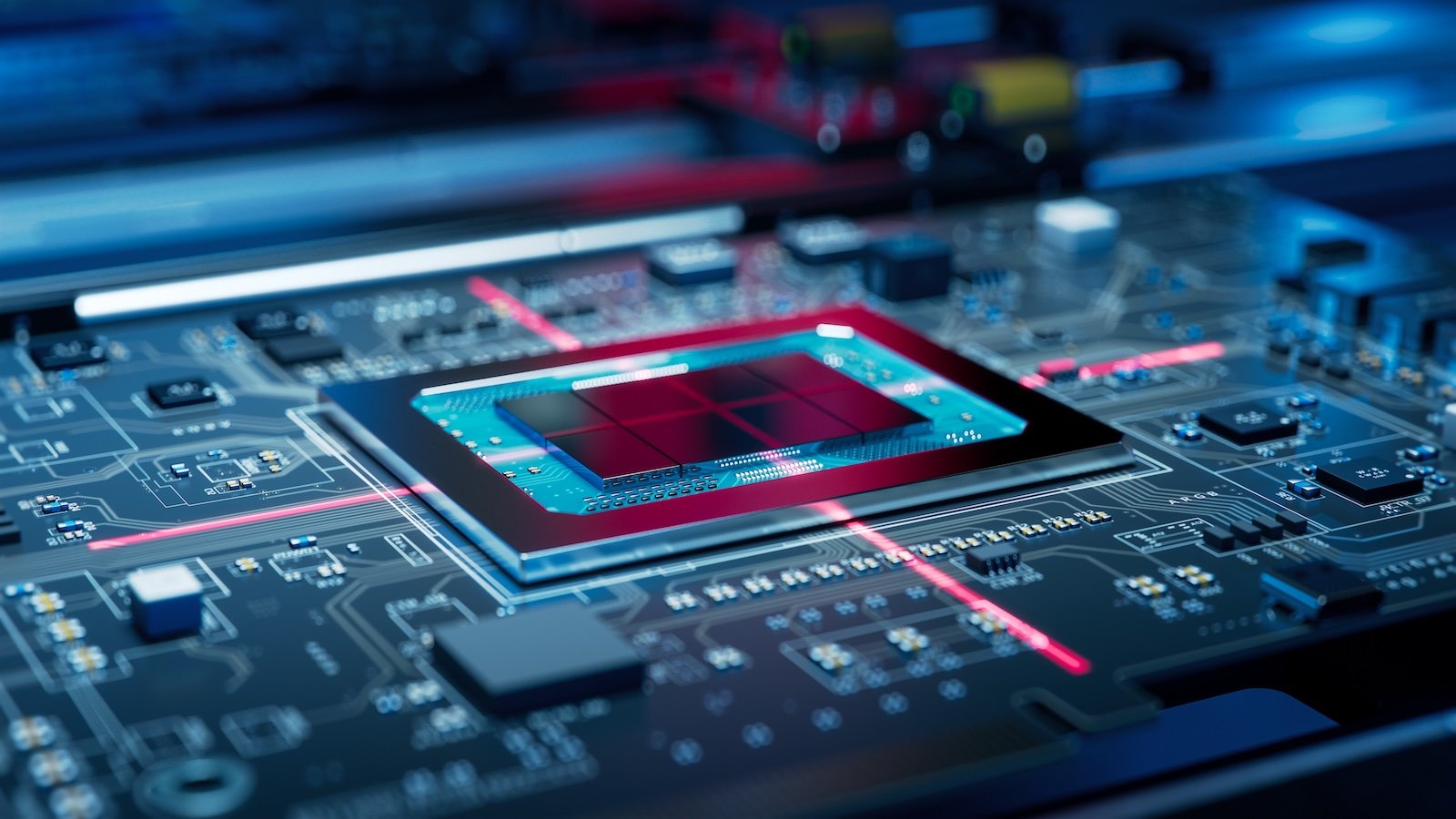
According to a recent report, Apple is facing a serious shortage of a key chip component. The global boom in artificial intelligence is putting massive pressure on supply chains. Fiberglass fabric, a crucial material for modern chip substrates, is particularly affected. The shortage is already considered critical and is expected to affect Apple for several years.
As Nikkei Asia reports, this is not a short-term problem. The bottleneck is described as one of the biggest challenges of 2026, with repercussions extending at least into the second half of 2027. Apple is not alone in this, but is under particular pressure because the company invested in this technology early on.
Apple and the early use of fiberglass fabric
According to Nikkei Asia, Apple was among the first companies to use woven glass fibers as part of the substrate for iPhone chips. This is due to the material's properties. Woven glass fibers are dimensionally stable, very rigid, and enable particularly fast data transmission. These properties are crucial for high-performance and energy-efficient chips.
Fiberglass fabric is a key component of chip substrates and printed circuit boards, also known as PCBs. These form the basis of almost all electronic devices. The most advanced versions of this material come almost exclusively from a single manufacturer.
Dependence on a Japanese manufacturer
According to the report, the most advanced fiberglass fabrics are almost exclusively produced by Nitto Boseki, also known as Nittobo. This strong reliance on a single supplier exacerbates the situation. Production capacities are limited and cannot be expanded in the short term.
Due to the increasing demand for high-performance chips, these capacities are coming under growing pressure. Additional quantities are currently unavailable, regardless of how strongly large customers try to exert influence.
The AI boom as the trigger for the supply crisis
The massive expansion of AI infrastructure is one of the main reasons for the bottleneck. Companies like Nvidia, Google, and Amazon need high-quality fiber optic fabric for their AI chips. Demand has risen sharply and is reminiscent of the recent memory chip shortages that led to significantly higher prices.
According to Nikkei Asia, this demand pressure led Apple, along with AMD and Nvidia, to even send employees to Japan to secure additional supply. The attempt was unsuccessful. One source summarized the situation: Without additional capacity, there is no additional capacity, even with strong pressure on the manufacturer.
Apple's search for alternative suppliers
To reduce its dependence, Apple has taken several steps, including involving the Japanese government. At the same time, Apple is actively searching for alternative sources, which is proving difficult.
One concrete approach is the collaboration with the Chinese manufacturer Grace Fabric Technology. Apple has also asked Mitsubishi Gas Chemical to oversee quality improvements from this Chinese supplier. Other potential suppliers include Taiwan Glass and the Chinese companies Taishan Fiberglass and Kingboard Laminates Group.
High technical hurdles for new providers
Entering this market is extremely technically demanding. Each individual glass fiber is thinner than a human hair and must be perfectly round and completely free of air bubbles. Even the slightest deviations can compromise the quality of the entire substrate.
According to industry insiders, new suppliers are facing significant challenges in achieving both sufficient production volumes and consistently high quality. No major technology company is willing to take the risk of mounting high-end chips on substrates that could compromise the quality of the final products.
Qualcomm is also affected
The Nikkei Asia report also names Qualcomm as another company affected by the tense situation. Here, too, there is no short-term solution. The entire industry is struggling with the same structural problems in its supply chain.
Apple must expect long-term uncertainties in chip production
The shortage of fiberglass fabric is developing into a long-term problem for Apple. The AI boom continues to drive demand for high-performance chips while simultaneously exacerbating existing bottlenecks in specialized materials. Despite intensive efforts, political support, and the search for new suppliers, the supply situation remains strained. For Apple, this means that the planning and production of future chips will be subject to significant reservations until at least 2027. (Image: Shutterstock / IM Imagery)
- Apple optimizes Gemini for Siri even without Google branding
- Apple Glasses: How the niche market finally becomes a mass market
- Apple and AI: Partnership with Google as a transitional solution
- Apple is preparing new AI server chips and data centers
- Apple, AI and TSMC: Why the balance of power is changing
- iPhone 2027: Why the anniversary model will be less radical
- iPhone Fold paves the way for a thinner display in the iPhone Air 2
- iPhone with 200 megapixels? Leaker tempers expectations
- Apple is exploring multispectral imaging for iPhone cameras
- iPhone 18: Apple breaks with its annual release schedule
- iPhone 17e: Mass production is expected to start soon
- Apple remains calm on AI and could ultimately win
- iPhone Fold: This is what Apple's first foldable is supposed to look like, according to leaks
- iPhone 18: This is how expensive Apple's new A20 chip will be
- iPhone Air 2: New evidence contradicts previous rumors
- The iPhone 18 will be the first to feature camera sensors manufactured in the US
- iPhone Fold: Apple continues testing a fold-free display
- iPhone 18: Test production is expected to start as early as February
- iPhone Fold could be in short supply due to production problems
- Apple is working on a 24-inch iMac with an OLED display
- iPhone Air 2: Apple plans comeback with a better concept
- Apple is considering chip assembly for iPhones in India for the first time
- HomePod mini 2: New clues dampen hopes for N1
- iPhone Fold: iPad aspect ratio in smartphone format
- The iPhone 17e brings back MagSafe and is significantly improved