
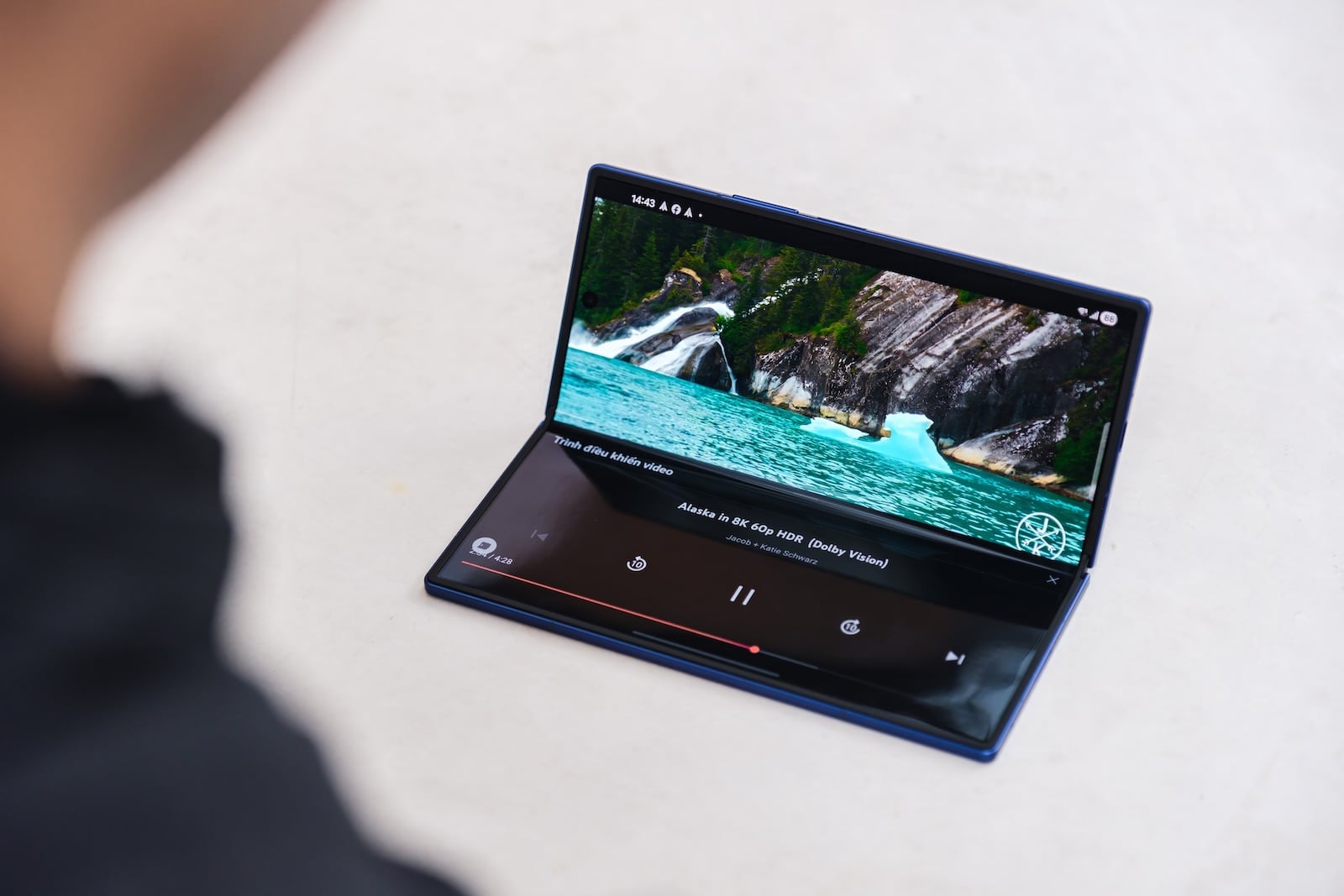
Apple's first foldable iPhone is considered a prestigious technological project – but it could become the most expensive gamble in the entire lineup when it comes to resale value. A new analysis quantifies how much value such a device is likely to lose after just twelve months.
Foldable smartphones are considered a showcase of cutting-edge technology, but they are notoriously poor investments. A recent resale study highlights this very point, just before Apple is set to launch its first foldable device. The expected starting price of around $2,000 would make Apple's first foldable iPhone by far the most expensive model in the product line – and therefore also the device with the highest possible absolute depreciation. Anyone buying the iPhone Ultra simply to try out the new form factor should be aware of the implications before committing.
Foldable smartphones lose value the fastest
The data comes from the resale service SellCell, which examined the residual value development of flagship smartphones from manufacturers Apple, Samsung, Google, Motorola, and OnePlus over twelve months. The result is sobering for foldable devices: Foldable models lose an average of 64.6 percent of their value within a year, performing worse than any other smartphone category. By comparison, traditional smartphones experience a value loss of around 55.3 percent.
In absolute terms, this means that owners of foldable phones lose an average of $997.69 after twelve months, compared to $605.32 for conventional smartphones – a difference of over $392. While ordinary devices retain 44.7 percent of their initial value after one year, foldable models only retain 35.4 percent.
What that would mean for a $2,000 device
A fall launch is considered a certainty: The iPhone Ultra is expected to be released in fall 2026, alongside the new iPhone 18 Pro models, at a rumored price of around $2,000. Based on the average depreciation rate of today's foldable phones, such a device would only have a residual value of around $708 after twelve months. That would correspond to a loss of approximately $1,292 – in the first year alone.
This figure is a model calculation, not a measured value: it simply extrapolates the behavior of previous foldable devices to a product that doesn't yet exist. Nevertheless, it indicates the order of magnitude of potential depreciation if the iPhone Ultra behaved like the industry average.
Apple holds its value better than the competition
Herein lies the crucial caveat. Apple devices traditionally retain their value significantly better than those of their competitors. After twelve months, the iPhone 16 series still held 51.5 percent of its value, placing it at the top of all manufacturers surveyed – ahead of OnePlus with 46.8 percent, Google with 40.8 percent, Samsung with 39.5 percent, and Motorola with 24.5 percent. Within Apple's own product range, the figures were sometimes even higher: The base model of the iPhone 16 retained 51.4 percent, while the 256-gigabyte version of the iPhone 16 Pro Max even retained 56.4 percent.
If the iPhone Ultra were to follow this typical Apple curve instead of the foldable average, the loss would be noticeably lower – but would still amount to around $1,000 over the first year.
Why the invoice should be treated with caution
The honest answer lies somewhere between these two scenarios. A foldable iPhone combines two opposing effects: the strong residual value stability of the Apple brand on the one hand, and the historically weak value performance of the entire foldable segment on the other. Exactly where the iPhone Ultra ends up depends on whether buyers develop long-term confidence in the new form factor or whether the first generation is remembered as an experiment.
However, there is a practical solution for those who are undecided: Apple offers a 14-day return period. Anyone who returns the device within this timeframe gets the trial period for free – provided they make a decision quickly enough.
The actual price will determine how expensive the experiment will really be
Whether the model calculation actually results in a four-figure loss depends entirely on the final sales price and Apple's ability to defy the foldable trend and its associated depreciation. One thing is certain: with the first foldable iPhone, it's not just about the purchase price, but also about how much of it will be worth after a year. (Image: Shutterstock / tinhkhuong)
- Foldable iPhone Ultra: The September launch is apparently getting closer
- The Apple Watch Ultra 4 is expected to be released later this year
- Apple could raise iPhone 17 prices this month
- Apple's Home roadmap extends to 2028
- Ternus puts Apple's design back in the spotlight
- 2027 is expected to be Apple's biggest product year
- iPhone 18 Pro: The camera plateau continues to grow
- The iPhone 18 Pro could start at $1,399
- The iPhone Air 2 is expected to get a second camera and a better battery
- Apple is planning iPhones with 1.4 nanometer chips from 2028
- Apple plans anniversary iPhone and camera AirPods for 2027
- iOS 27: The new Siri could be rounded on the iPhone 18
- iPhone 18: 12 GB RAM expected without a higher price
- iPhone Ultra: Leaker believes delay rumors are false
- iPhone 18: Supplier statement supports late launch
- iPhone 18 Pro: New colors with the same old risks
- Agentic AI: Apple could build an OpenClaw competitor
- Siri AI: Does the success of the beta make a subscription more likely?
- iOS 27: Three features Apple hasn't shown yet
- Touchscreen for MacBook: Leaker considers it a certainty
- macOS 27 provides three clues about the MacBook Ultra
- Apple's AI delay pushes back Home Hub, glasses and robot
- How a crisis meeting triggered Apple's AI transformation