
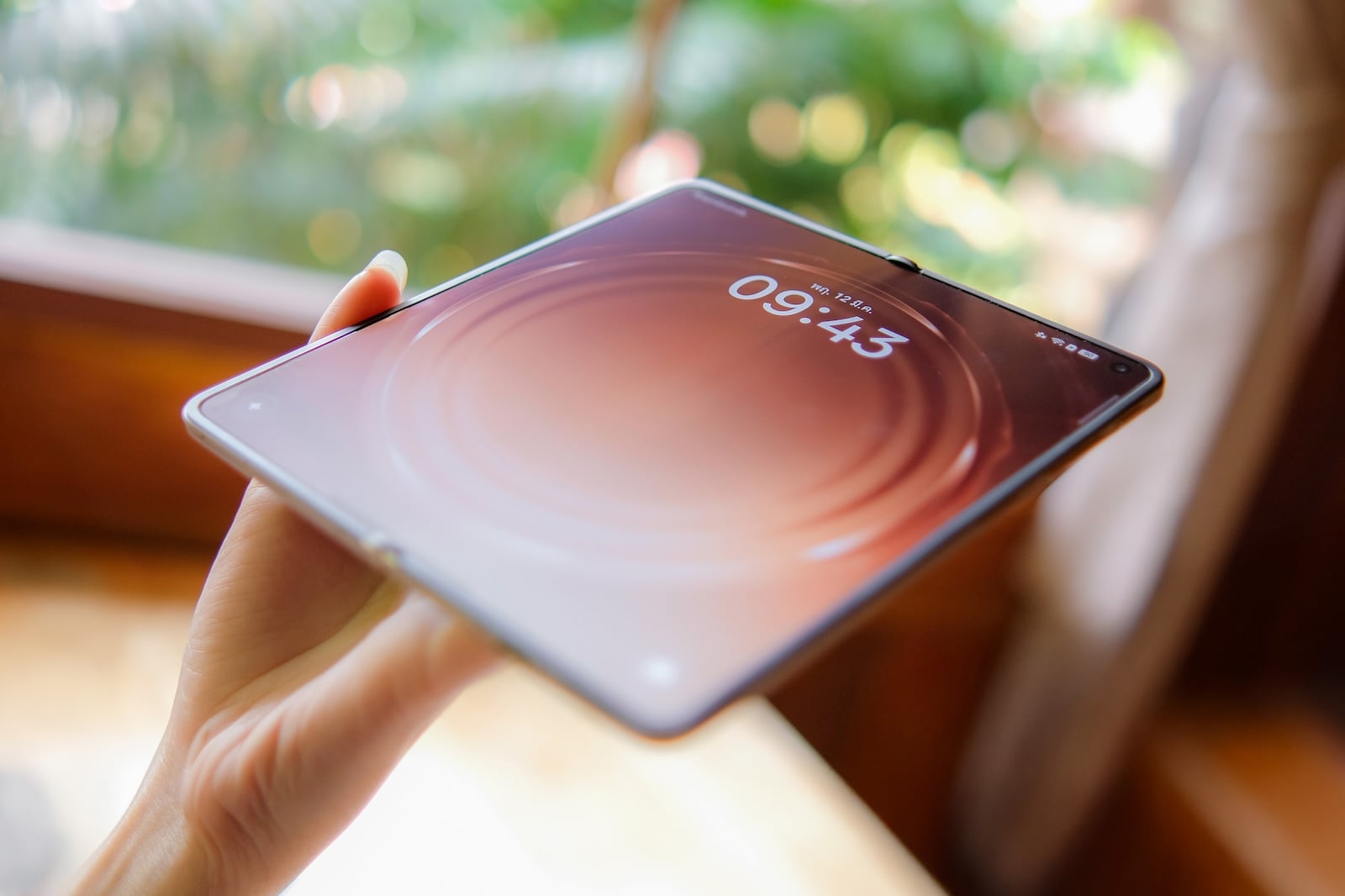
Despite persistent rumors of delays, a new supply chain report suggests that Apple's first foldable iPhone is still on track for a September launch. Initial components are reportedly already being shipped in small quantities – a signal that dampens speculation about a postponement.
Few Apple products are currently as controversial as the first foldable iPhone. Sometimes it's said that the device is right on schedule, while other times reports circulate about technical hurdles in the final development phase. A recent report from China now supports the optimistic view and fuels hopes for a launch this fall. How the individual pieces of the puzzle fit together can be understood in the complete overview of all the rumors and facts surrounding the iPhone Ultra.
Initial components are apparently starting up
The report is based on a publication in the China Securities Journal, citing a source at an Apple supplier. According to the report, Apple recently began shipping small quantities of components for the foldable iPhone. The supplier is also said to have been instructed that the device will be unveiled in September 2026 – alongside the iPhone 18 Pro and the iPhone 18 Pro Max.
A second supply chain source cited in the same report stated that they had received no indication of a delay and were still working towards a timeline for autumn 2026. This supports a claim made just last week by a Chinese leaker: that the rumors of a postponement were unfounded.
Green light for display production
Another, separate industry report reinforces the picture of an advanced timeline. According to this report, Samsung Display has received approval from Apple to begin module production of the OLED panels for the foldable iPhone. Parts of the rear production lines at the Vietnamese factory are reportedly already operational to fulfill an initial order of approximately three million panels, with delivery scheduled for this year.
What's remarkable is the hurdle that had to be overcome. Approval for module production requires the supplier to demonstrate consistent final assembly quality and readiness for mass production. Apple's threshold is reportedly a yield of at least 70 percent – Samsung Display surpassed this mark with a final yield of over 80 percent. Under a three-year agreement, the company is the exclusive supplier of foldable OLED panels, meaning Apple would not use any other display manufacturer during this period.
Technically, the panels will utilize Color Filter on Encapsulation (CoE) technology, which eliminates the need for a polarizer and applies the color filter directly to the encapsulation layer. They will also incorporate Samsung Display's latest M16 material set, which is expected to offer improvements in brightness, color reproduction, lifespan, and energy efficiency compared to previous generations. Back-end production - which includes the addition of driver circuits, flexible circuit boards, and protective components - takes place at the Vietnamese factory, which has approximately 80 production lines, about 50 of which are currently active. With a manageable production volume of three million units, this leaves ample capacity for future expansion.
The open question surrounding the hinge
However, the situation isn't quite so clear-cut. There have been repeated reports that Apple's first foldable phone is encountering technical hurdles in the final stages of development. In May, leaker Instant Digital claimed that the foldable iPhone was still struggling with durability concerns regarding the hinge mechanism. While the dreaded problem of the display crease is said to be largely resolved, the hinge allegedly still doesn't meet internal long-term reliability standards. It had already been reported that a hinge issue was slowing down trial production.
Apple is known for setting particularly stringent durability requirements for entirely new product categories. However, unresolved hinge concerns at such a late stage of development would be unusual given the anticipated market launch. There have also been recent reports of difficulties in pre-production – an indication of just how demanding the mass production of a foldable device is for Apple.
Why some expect a later delivery
Not all voices paint such a clear picture. Bloomberg journalist Mark Gurman reported back in March that the foldable iPhone might not launch at the same time as the iPhone 18 Pro and iPhone 18 Pro Max in September. Even earlier, Barclays analyst Tim Long predicted that the device wouldn't ship until December – which would mean a gap of up to three months between the foldable and Apple's flagship models.
Such a staggered approach wouldn't be unprecedented for Apple. In 2017, the iPhone X was unveiled alongside the iPhone 8 and iPhone 8 Plus, but didn't reach customers until November, while the other models launched as usual in September. Should Apple ultimately decide on a later release of the foldable iPhone, the device would likely still be showcased at the annual iPhone event alongside the iPhone 18 Pro models. In this case, Apple would announce the entire lineup together and then release the individual models according to their respective production schedules.
This is what's supposed to be in the first foldable iPhone
Regarding the features, expectations have been solidifying into a fairly concrete picture for months. The foldable iPhone is expected to have a 7.8-inch internal display and a 5.5-inch external display. It is anticipated to be powered by the A20 chip, complemented by Apple's own C2 modem. Instead of Face ID, a Touch ID sensor is expected to be integrated into the side button, along with two rear-facing cameras. A price tag of around $2,000 is circulating. According to reports, Apple could market the book-like, foldable device as the "iPhone Ultra."
Part of a new launch strategy
What's remarkable compared to previous fall announcements is Apple's presumably new approach. As part of a split-launch strategy, the regular iPhone 18 is expected to be released in the spring of next year. The fact that Android manufacturers are already looking to copy Apple's split-launch model suggests that this approach could catch on. The foldable iPhone would thus be part of a premium wave that Apple is deliberately separating from its standard models.
Apple's foldable is nearing the finish line
It remains to be seen whether the foldable iPhone will actually go on sale on schedule in September, or whether Apple will separate the unveiling and delivery. However, recent signals from the supply chain suggest that development is well advanced and that Apple is working diligently towards a fall launch. Should component deliveries continue as reported, the first foldable iPhone in history will be noticeably closer. (Image: Shutterstock / Framesira)
- The Apple Watch Ultra 4 is expected to be released later this year
- Apple could raise iPhone 17 prices this month
- Apple's Home roadmap extends to 2028
- Ternus puts Apple's design back in the spotlight
- 2027 is expected to be Apple's biggest product year
- iPhone 18 Pro: The camera plateau continues to grow
- The iPhone 18 Pro could start at $1,399
- The iPhone Air 2 is expected to get a second camera and a better battery
- Apple is planning iPhones with 1.4 nanometer chips from 2028
- Apple plans anniversary iPhone and camera AirPods for 2027
- iOS 27: The new Siri could be rounded on the iPhone 18
- iPhone 18: 12 GB RAM expected without a higher price
- iPhone Ultra: Leaker believes delay rumors are false
- iPhone 18: Supplier statement supports late launch
- iPhone 18 Pro: New colors with the same old risks
- Agentic AI: Apple could build an OpenClaw competitor
- Siri AI: Does the success of the beta make a subscription more likely?
- iOS 27: Three features Apple hasn't shown yet
- Touchscreen for MacBook: Leaker considers it a certainty
- macOS 27 provides three clues about the MacBook Ultra
- Apple's AI delay pushes back Home Hub, glasses and robot
- How a crisis meeting triggered Apple's AI transformation