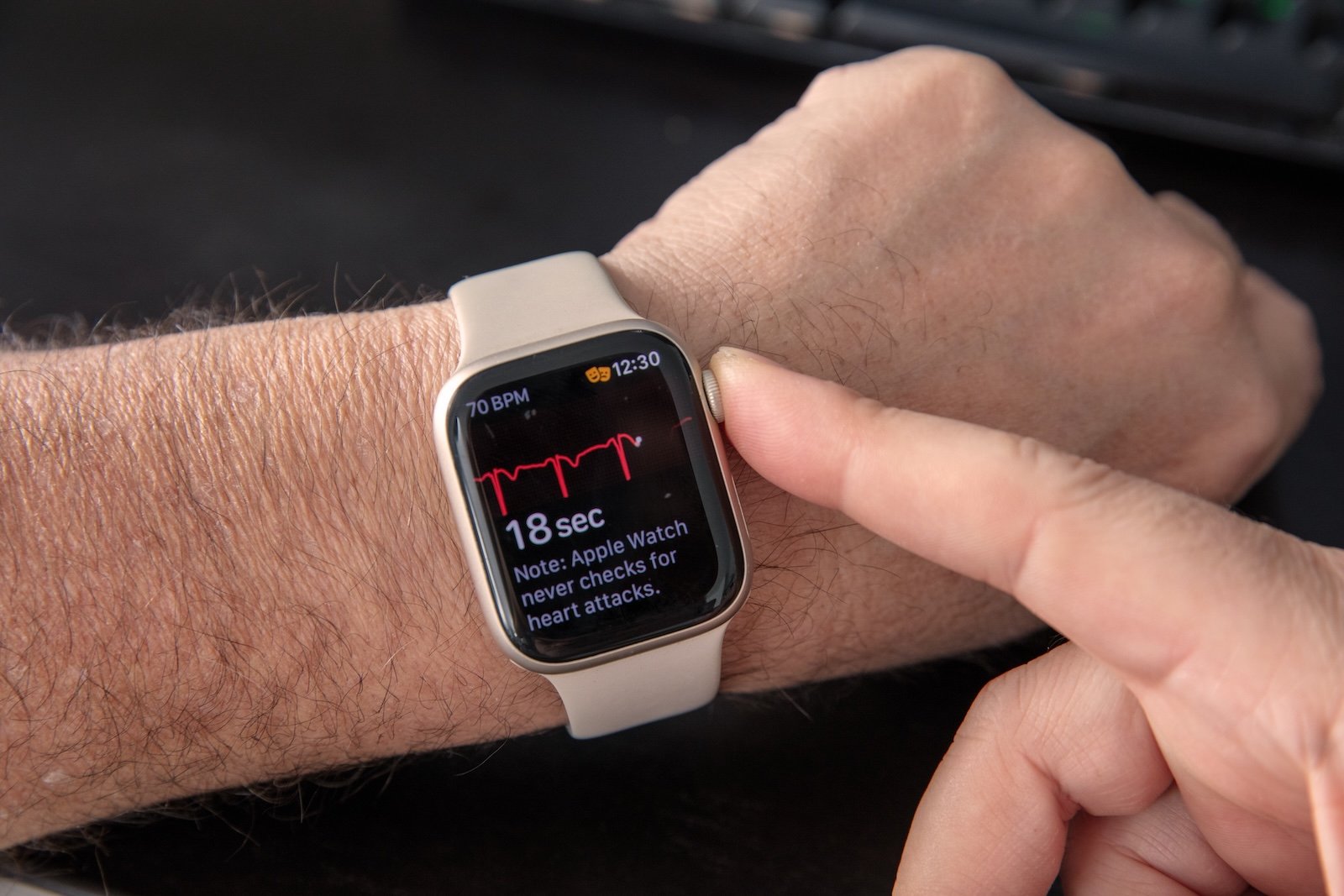
The Apple Watch is increasingly being perceived as a medical device and no longer just as a smartwatch for fitness and everyday life. A new, peer-reviewed study now shows in detail how reliably the Apple Watch can detect atrial fibrillation. The results indicate that continuous heart monitoring with a smartwatch detects significantly more cases than traditional medical monitoring methods – even in people without symptoms.
Since Apple integrated new health features into the Apple Watch Series 4 in 2018 with the introduction of the ECG app and irregular heart rhythm notifications, heart health has become inextricably linked to the Apple Watch. There have been repeated reports of individual cases where the wearable provided early warnings of heart problems. The newly published study now provides, for the first time, reliable data from everyday use and systematically demonstrates the contribution the Apple Watch can make to the detection of atrial fibrillation.
Background: Atrial fibrillation and its risks
Atrial fibrillation is one of the most common heart rhythm disorders. It often occurs only intermittently and doesn't always cause noticeable symptoms. This is precisely what makes the condition so dangerous. If left undetected, atrial fibrillation significantly increases the risk of stroke. Conventional tests usually only capture the heart rhythm briefly, meaning many episodes go unnoticed.
Structure and procedure of the study
The study was conducted by Amsterdam UMC and lasted for six months. A total of 437 people participated. All participants were over 65 years old and had an increased risk of stroke. The group was divided into two parts:
- 219 people received an Apple Watch and wore it for an average of about twelve hours a day.
- 218 people received standard medical care without the use of a smartwatch.
The Apple Watch used both optical heart rate measurement (PPG) and the integrated ECG function to detect irregularities in heart rhythm.
Results after six months
After the six months were completed, clear differences emerged between the two groups:
- In the Apple Watch group, 21 people were diagnosed with atrial fibrillation.
- 57 percent of these diagnosed individuals had no symptoms whatsoever.
- Only 5 people were diagnosed in the standard care group.
- All those affected in this group already had noticeable symptoms.
The data clearly shows that the Apple Watch primarily detects cases that would otherwise have gone undetected. Asymptomatic atrial fibrillation, in particular, becomes visible through continuous monitoring, whereas it is often missed during conventional checkups.
Importance of continuous monitoring
A key advantage of the Apple Watch lies in its continuous monitoring of heart rhythm data throughout daily life. Atrial fibrillation often occurs irregularly and can disappear again within a short time. Short-term measurements at the doctor's office or in the hospital frequently fail to detect such episodes. The Apple Watch fills this gap by monitoring the heart rhythm over many hours and providing alerts when abnormalities are detected.
Assessment from a cardiological perspective
Cardiologist Michiel Winter from Amsterdam UMC interprets the results as follows:
Using smartwatches with PPG and ECG functions aids doctors in diagnosing individuals unaware of their arrhythmia, thereby expediting the diagnostic process. Our findings suggest a potential reduction in the risk of stroke, benefiting both patients and the healthcare system by reducing costs. This reduction would offset the initial cost of the device.
Publication of study results
The full study was published in the JACC Journals. All details regarding the methodology, data analysis, and medical classification can be found there.
Apple Watch detects atrial fibrillation earlier and more frequently
The study shows that the Apple Watch detects atrial fibrillation significantly more often than conventional medical standard care. The high number of diagnoses in asymptomatic individuals is particularly noteworthy. Continuous heart monitoring thus proves to be a crucial factor for the earlier detection and potential prevention of strokes. As a result, the Apple Watch is increasingly becoming a serious tool in the field of heart health and preventative medicine. (Image: Shutterstock / rawf8)
- Apple significantly increased its lobbying spending in the US in 2025
- Apple under pressure: Investors demand transparency regarding China
- Apple TV and the 2026 Oscars: F1 becomes a beacon of hope
- Apple is enticing buyers in China with New Year's discounts
- ChatGPT Atlas: New update improves the AI browser
- Apple leads the Global 500 2026 as the most valuable brand
- Apple supplier Luxshare: Hackers steal product data
- Threads is introducing advertising worldwide – here's what's changing now
- Apple TV reveals release date for For All Mankind Season 5
- Apple responds to BOE problems and relies on Samsung
- Apple and tracking: France's landmark ruling
- iPad Pro & Air: Apple releases new firmware for Magic Keyboard
- Apple faces patent lawsuit over Eye Contact feature
- Apple faces a protracted dispute over fall detection
- iPhone 17 Pro: Tests dispel concerns about discoloration
- Apple clearly prevailed against market trend in China in 2025
- Firehound analyzes app store apps with serious data leaks
- WhatsApp Web: Voice & video group calls are coming soon
- Threads is gaining mobile users and leaving X behind
- OpenAI is specifically preparing for its first hardware launch in 2026
- New MacBook Pro update on the horizon? Delivery times as a hint
- Apple: Lisa Jackson retires after 13 years
- Apple Music shows trailers for the Super Bowl LX Halftime Show
- Apple opens new Sainte-Catherine Store in Montreal
- ChatGPT introduces affordable subscription and tests advertising