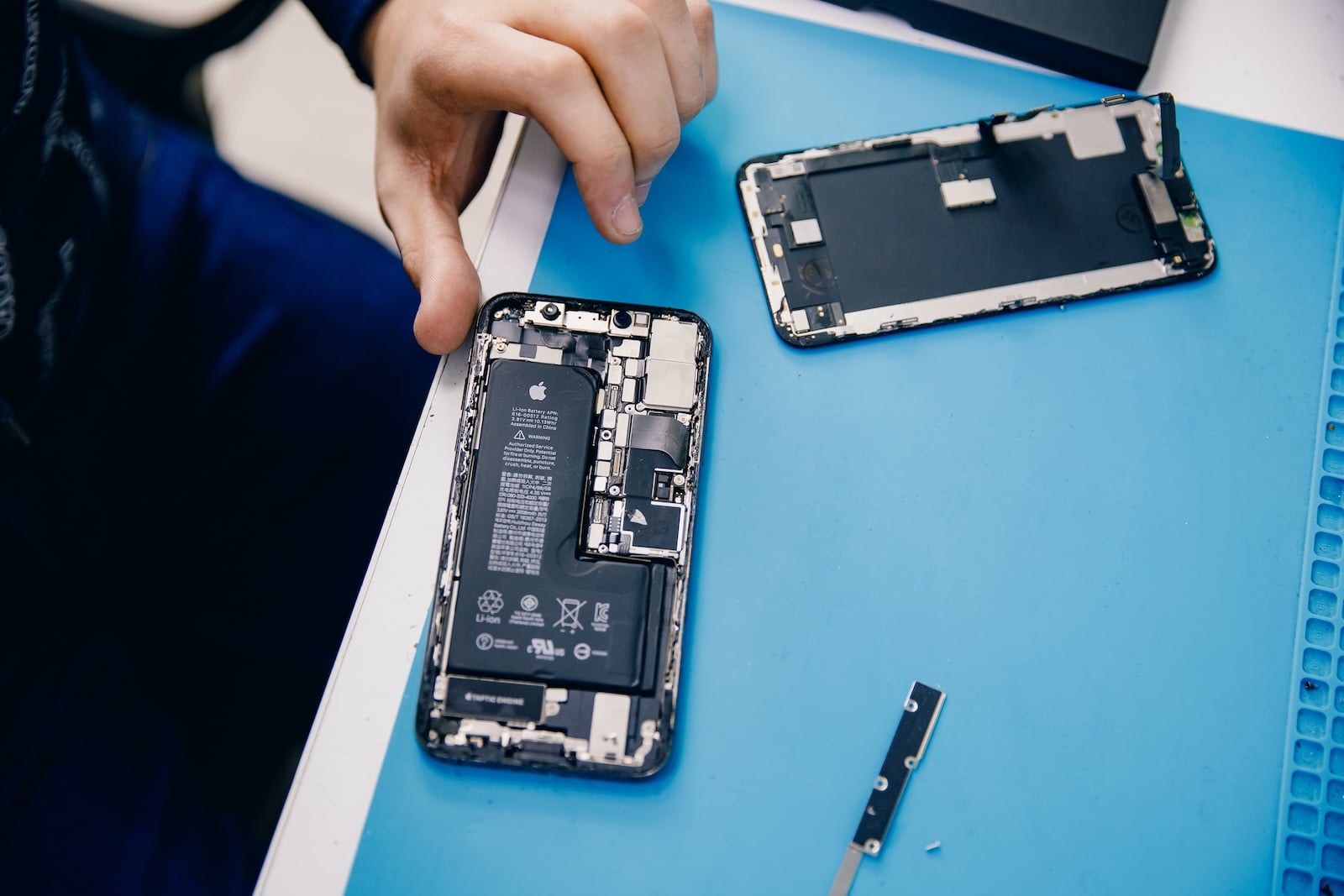
A new report by the US consumer organization PIRG gives Apple the worst possible marks for the repairability of iPhones and MacBooks. The only bright spot: the MacBook Neo.
How repairable are Apple products compared to the competition? Not very – at least according to the latest report from the US consumer organization PIRG (Public Interest Research Group). In a ranking based on official European repairability criteria, Apple came in last place for both smartphones and laptops. There is one notable exception, however: the MacBook Neo.
The ratings are based on the repairability criteria mandated by French law, which are also used in a similar form by the EU. PIRG analyzed a total of 105 devices from four smartphone and eight laptop manufacturers. The assessment considers seven factors: availability of repair manuals, ease of disassembly, spare parts availability, spare parts prices, fasteners used, tools required, and the duration of software updates.
Apple in last place
Among smartphones, Motorola received the best rating of B+, followed by Google with C-, Samsung with D, and Apple in last place with D-. This means that no other tested smartphone manufacturer performed as poorly as Apple in terms of repairability.
The situation is similar for laptops. Asus leads the ranking with a B+ rating, while Apple once again occupies last place with a C-. The high cost of spare parts, the limited availability of repair documentation, and the difficulty of disassembly likely contributed to the low ratings.
MacBook Neo as an exception
There is one bright spot, however: The MacBook Neo is highlighted in the report as a clear exception and praised for its excellent repairability. This aligns with iFixit's assessment, which already determined during its teardown in March that the MacBook Neo is the most repairable MacBook in fourteen years.
The MacBook Neo uses the A18 Pro chip instead of an M-series chip and is generally simpler in design than the more expensive MacBook Air and Pro models. This simpler construction seems to have a positive effect on repairability – whether this is a deliberate change in strategy by Apple or a side effect of the more affordable design remains unclear.
What this means for Apple
Poor repairability scores are not a new problem for Apple. The company has faced criticism for years for making repairs difficult through proprietary screws, glued components, and high replacement part prices. While Apple has taken steps in the right direction with its self-service repair program and by opening up to independent repair shops, this is apparently not enough in direct comparison with the competition.
In the EU, repairability is becoming increasingly relevant to regulation due to the Ecodesign framework. Since 2025, manufacturers have been required to provide repairability scores in several product categories. For Apple, this could mean that future product generations will have to be designed with a greater focus on easy repairability – similar to what the MacBook Neo already demonstrates. (Image: Shutterstock / Parilov)
- WhatsApp is getting a new CarPlay App with full Functionality
- Apple develops AI Tool for UI Prototypes
- Apple and Anthropic are jointly hunting for Security Vulnerabilities
- Studio Display XDR receives FDA approval for Radiology
- Apple Patent: Vision Pro could become modular and upgradeable
- Steam Link comes natively to the Apple Vision Pro
- Dark Matter Season 2 premieres on August 28th on Apple TV
- Apple Arcade May 2026: Nick Jr. Replay and new Games
- MacBook Neo: Demand exceeds Apple's Chip Supply
- Vision Pro: Insiders report on chaotic Store Launch
- China intensifies attacks on Apple's Chip Manufacturer TSMC
- Class action lawsuit accuses Apple of using YouTube videos for AI training
- App Store: Apple distributes mysterious App Updates
- Apple vs. Epic Games: Apple plans to take the case to the Supreme Court
- App Store records 84 percent more new Apps thanks to AI coding
- iOS 26.4.1: Apple prepares Bugfix Update
- Shrinking Season 3 ends – Co-Creator teases Season 4
- AirPods Max 2 Teardown: New Chip, Old Weaknesses