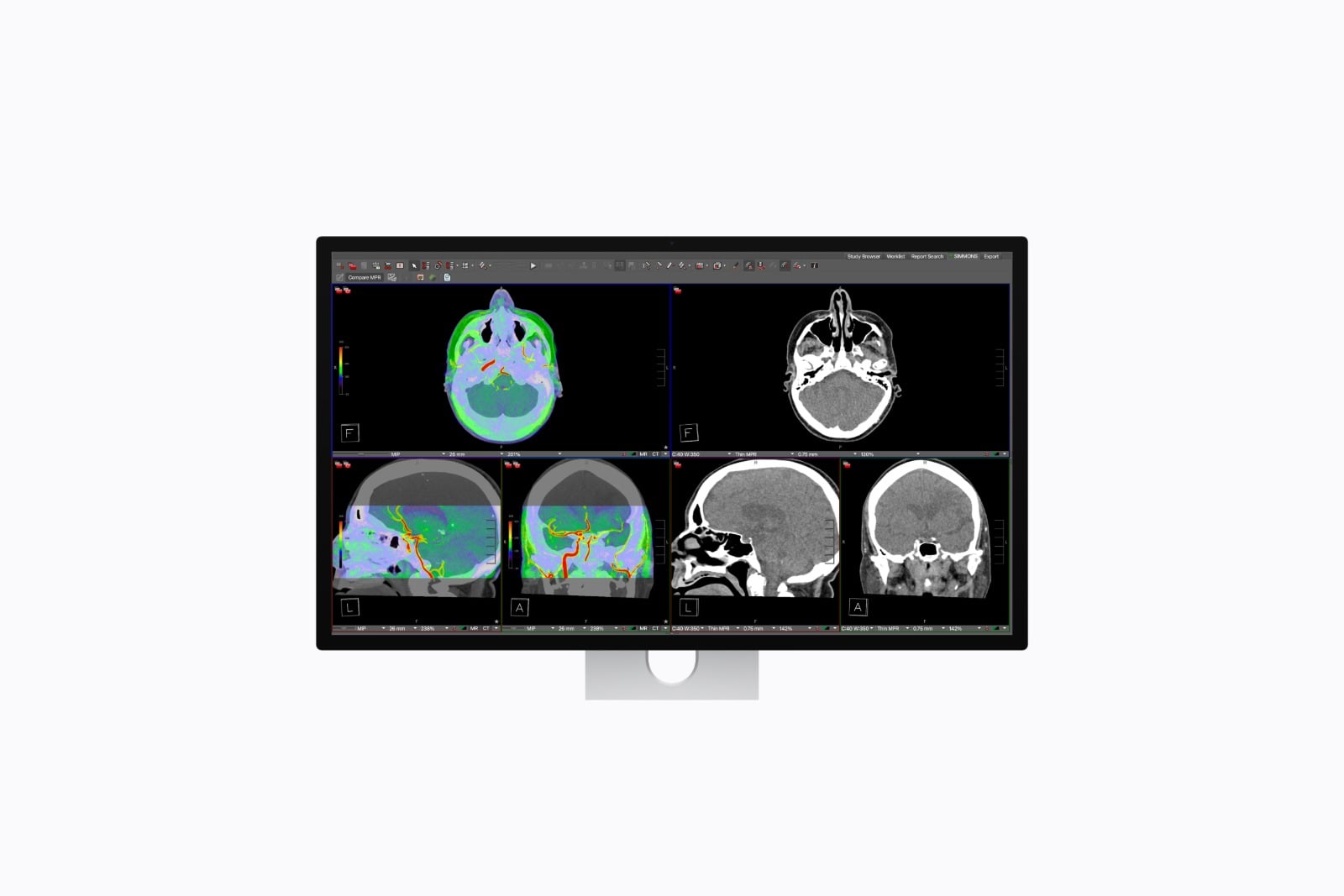
Apple's Studio Display XDR is now approved for use in diagnostic radiology in the US. The FDA has officially cleared the monitor's medical calibration function.
When Apple unveiled the Studio Display XDR in March, the company announced an unusual feature: a Medical Imaging Calibrator designed to qualify the monitor for displaying medical DICOM images. This feature has now received FDA approval. Apple's marketing chief, Greg Joswiak, confirmed that US radiologists can now use the monitor for diagnostic purposes with a Mac running macOS 26.4.
DICOM (Digital Imaging and Communications in Medicine) is the standard for storing and transmitting medical images in radiology. Monitors used for diagnostic evaluation must meet stringent requirements for brightness, contrast, grayscale, and color accuracy. Until now, specialized medical monitors were necessary, which are often significantly more expensive than consumer displays. With FDA approval, Apple is positioning the Studio Display XDR as an alternative in this market.
What the approval means
Radiologists in the US can now use the Studio Display XDR to view diagnostic images – such as X-rays, CT scans, or MRI scans. To do this, the monitor must be switched from standard display mode to radiology mode, which activates DICOM calibration.
The Studio Display XDR is available with a VESA mount starting at $2,899 (€3,499). Compared to many specialized medical monitors, which often cost $5,000 or more, this is a significantly lower entry price – for a display that remains usable for all other professional applications.
Initially only in the USA
The FDA approval applies exclusively to the United States. Separate approval processes are required for use in other countries – including the EU. Apple will need to apply for corresponding approvals in other markets before the feature can be legally used for diagnostic purposes outside the US.
Apple in the healthcare market
The radiology feature joins Apple's growing presence in the healthcare sector. The Apple Watch already offers ECG, blood oxygen measurement, and sleep apnea detection; the iPhone serves as the platform for the Health app; and the AirPods Pro feature a clinical hearing aid function. With the Studio Display XDR, Apple is now addressing the professional medical market with hardware for the first time.
For hospitals and radiology practices, the Studio Display XDR could be an attractive option: a multi-purpose monitor that serves as a high-quality work tool in everyday use and can be switched to medical diagnostics when needed – without requiring a separate specialized display. (Image: Apple)
- Apple Patent: Vision Pro could become modular and upgradeable
- Steam Link comes natively to the Apple Vision Pro
- Dark Matter Season 2 premieres on August 28th on Apple TV
- Apple Arcade May 2026: Nick Jr. Replay and new Games
- MacBook Neo: Demand exceeds Apple's Chip Supply
- Vision Pro: Insiders report on chaotic Store Launch
- China intensifies attacks on Apple's Chip Manufacturer TSMC
- Class action lawsuit accuses Apple of using YouTube videos for AI training
- App Store: Apple distributes mysterious App Updates
- Apple vs. Epic Games: Apple plans to take the case to the Supreme Court
- App Store records 84 percent more new Apps thanks to AI coding
- iOS 26.4.1: Apple prepares Bugfix Update
- Shrinking Season 3 ends – Co-Creator teases Season 4
- AirPods Max 2 Teardown: New Chip, Old Weaknesses
- Apple Q2 2026: Quarterly figures will be released on April 30th
- Apple LGTM: New AI Framework for improved Vision Pro Graphics
- Apple disables Payments in Russia for App Store and Services
- Apple TV: First Teaser for the psychological thriller series Cape Fear
- Apple's Fitness Chief Jay Blahnik will retire in July
- Amazon wants to buy Globalstar – what threatens Apple