Apple achieved the strongest growth of all major smartphone brands in China in Q1 2026: a year-on-year increase of 20 percent. At the same time, the overall Chinese market fell by 4 percent – Apple's pricing strategy is clearly having an effect here as well.
Apple's growth strategy of sacrificing margins for market share isn't limited to the Mac – it's also proving effective for the iPhone in Apple's most important international market. According to new data from Counterpoint Research, Apple climbed to second place in the Chinese smartphone market in Q1 2026, while the overall market shrank by 4 percent. This 20 percent year-over-year increase represents the strongest growth among the top six brands.
The decline in the Chinese smartphone market has two main causes: a high base effect from last year's government subsidy program and rising global memory chip costs. Although the Lunar New Year promotions in February provided a slight boost, the discounts were limited by increased component costs. Rising prices for new and used devices are further dampening demand – and this pressure is expected to continue into the second quarter.
Why Apple is growing in China
Apple's growth in China is based on three factors: strong demand for the iPhone 17 series, targeted pricing promotions, and participation in government subsidy programs. Counterpoint highlights that Apple is best positioned among all manufacturers to overcome the global memory chip crisis – thanks to its premium portfolio and supply chain management.
The analysis firm expects Apple to absorb the rising costs internally in the short to medium term, thereby further expanding its market share. This aligns with the global analysis, which shows that Apple is one of the few major manufacturers that has so far refrained from price increases – while Samsung has already raised prices on several models.
China as a strategic key market
The Chinese market remains strategically crucial for Apple. It is the world's second-largest smartphone market and simultaneously the one with the strongest local competition: Huawei, Xiaomi, Oppo, and Vivo dominate with aggressively priced devices. Apple's ability to achieve 20 percent growth here against this competition underscores the strength of the iPhone brand in the premium segment.
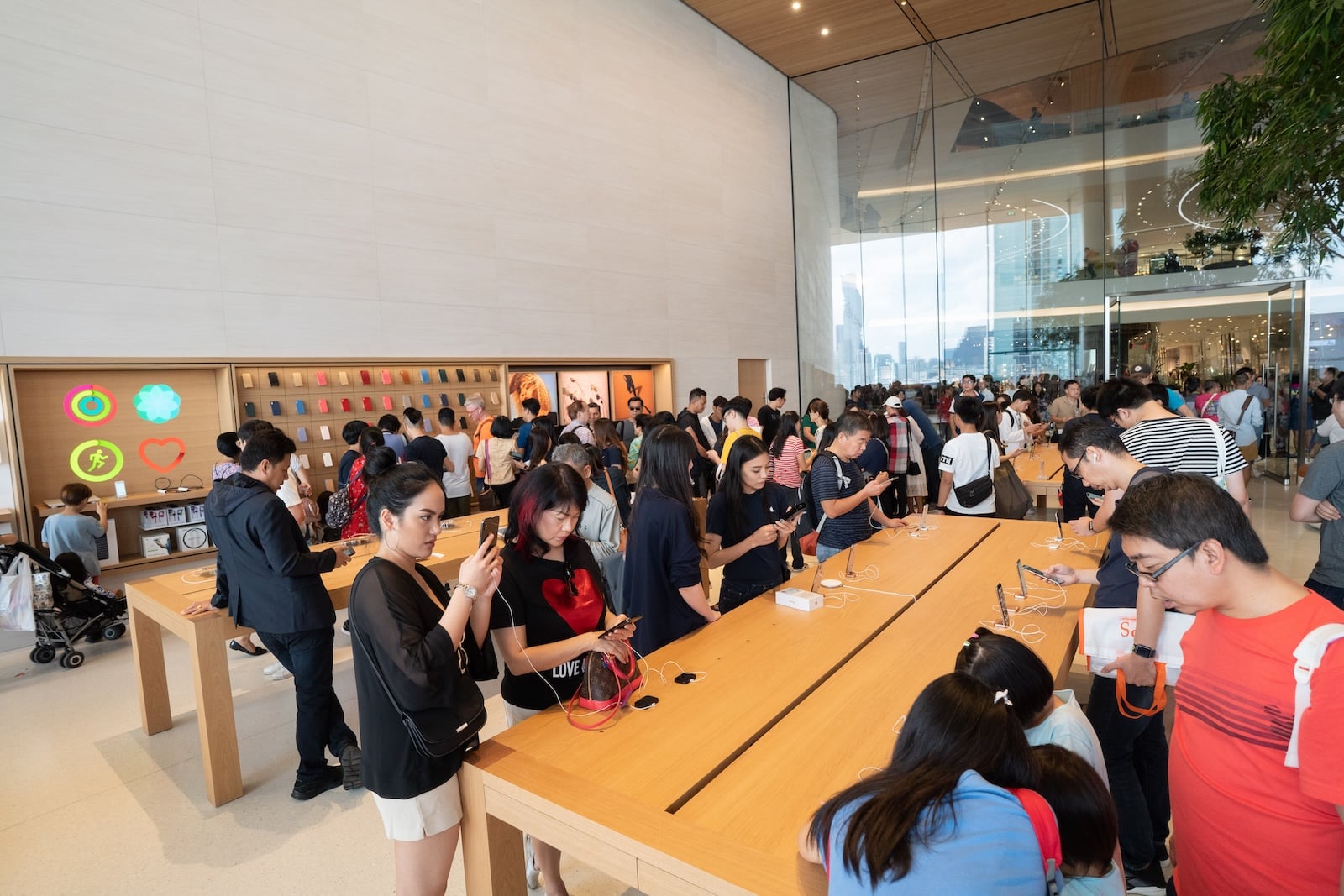
This result joins a series of positive quarterly figures: According to Counterpoint, Apple was the global smartphone market leader for the first time in a first quarter in Q1 2026. The figures from China confirm that this growth is not only taking place in Western markets, but also in the world's most competitive region. (Image: Shutterstock / charnsitr)
- OpenAI Codex can now control the Mac, generate images, and remember workflows
- Anthropic introduces Claude Opus 4.7: Focus on sophisticated Software Development
- Apple achieves new record for recycled materials
- Apple is becoming the driving force behind the OLED notebook market
- Apple executives discuss the MacBook Neo, biggest flops, and smart glasses
- Pluribus Season 2: Filming starts in autumn 2026
- Claude Code for Mac: Anthropic completely rebuilds its Desktop App
- Smartphone market shrinks – Apple's pricing strategy pays off
- Apple threatened to remove Grok from the App Store
- OpenAI introduces GPT-5.4-Cyber: AI model for cyber defense
- Apple launches new Business Platform for Device Management and Customer Contact
- Apple vs. Jon Prosser: Leaker continues to refuse cooperation
- Analysts: Apple sacrifices margin for growth – Mac user base could double
- Amazon acquires Globalstar: Apple Satellite Services switch to Amazon Leo
- What Analysts expect from Apple's Q2 2026
- Hackers are attacking iCloud backups via fake Apple websites
- iOS 26.5 Beta 2: Apple continues testing phase
- Apple's AI chief John Giannandrea is leaving the Company
- Mac mini & Mac Studio: Apple stops orders for some models
- Apple becomes smartphone market leader for the first time in a first quarter