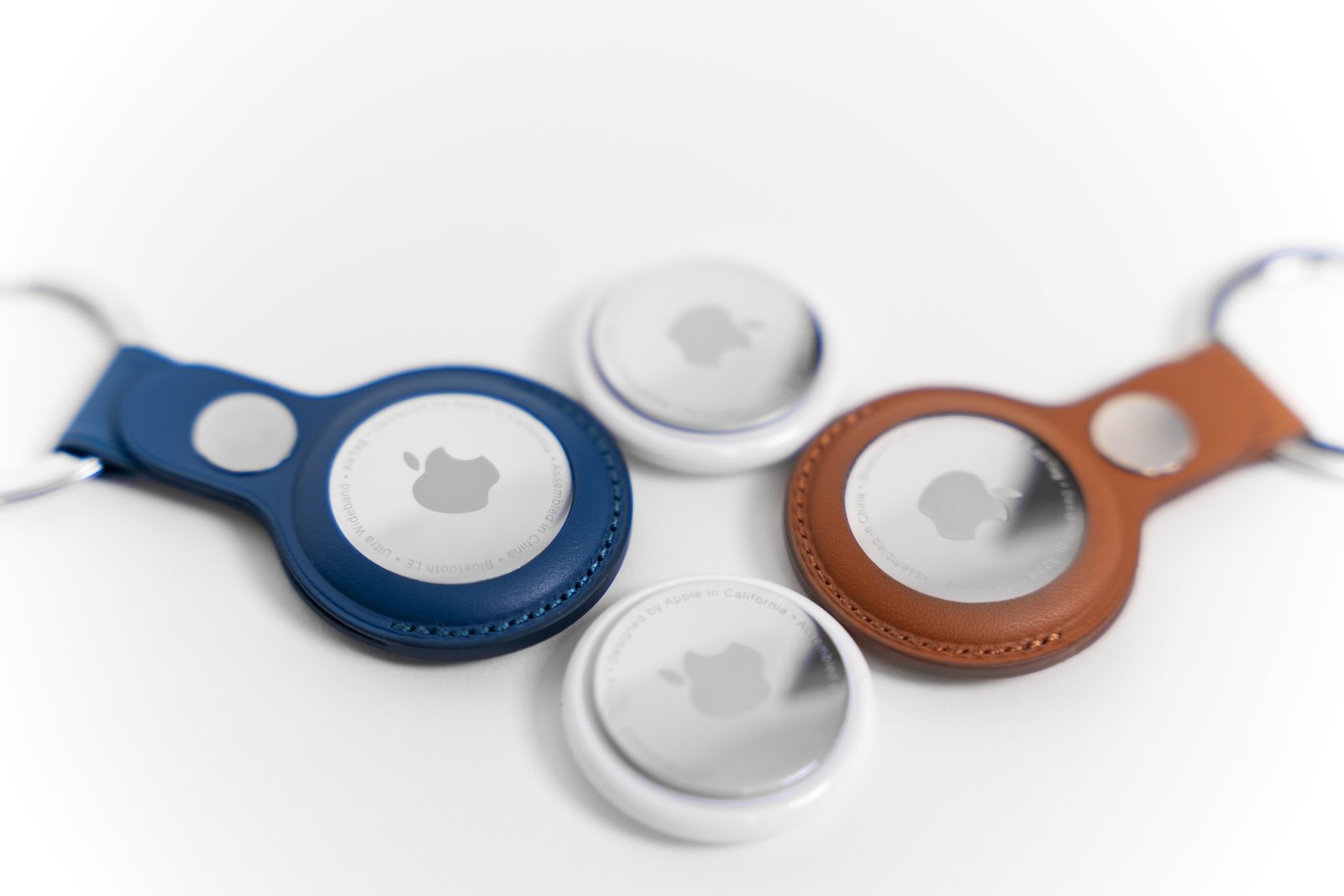
With the AirTag 2, Apple is launching a successor to its Bluetooth tracker after five years. Externally, almost everything remains the same, but there are targeted technical improvements. The focus is clearly on greater range, better detectability, and enhanced privacy features. These were precisely the points that were repeatedly criticized about the first AirTag.
The original AirTag quickly became a popular tool for finding keys, bags, or luggage. At the same time, it sparked controversy, primarily due to the relatively short audibility of its signal and the possibility of unwanted tracking.
With the AirTag 2, Apple isn't focusing on a new concept, but rather on technical advancements. The changes may seem minor at first glance, but they can make a noticeable difference in everyday use. Users of the first AirTag will recognize many of the features, but will benefit from increased range and additional safety measures.
Improved precision finding thanks to a new ultra-wideband chip
Precision Finding remains one of the core functions of the AirTag. It uses the iPhone to locate a lost item with directional arrows, distance information, and haptic and audible feedback.
The AirTag 2 is the first to use a second-generation ultra-wideband chip. This allows the tracker to be located from a distance that, according to Apple, is up to 1.5 times greater than the first model. This requires an iPhone that technically supports this extended range.
Also new is support for precision finding on compatible Apple Watch models. The AirTag 2 can now be located directly on the watch. The original AirTag does not offer this feature on the Apple Watch.
Improved Bluetooth for greater tracking range
Apple has incorporated an improved Bluetooth chip into the AirTag 2. This is intended to increase the range within which objects can be detected and anonymously reported by nearby Apple devices.
Apple hasn't released specific figures. However, it's clear that the AirTag 2 should connect more reliably with passing devices. This could be particularly advantageous in larger apartments, buildings, or densely populated areas.
Significantly louder audio signal
A frequent criticism of the first AirTag was its quiet speaker. This issue was specifically addressed and improved in the AirTag 2.
According to Apple, the integrated speaker is up to 50 percent louder than the previous model. Additionally, the alert tone should be audible from up to twice the distance. This increases the chances of finding the AirTag more quickly, especially if it's under furniture, in bags, or in jackets.
New data protection measures against unwanted tracking
The first AirTag was sometimes misused for unwanted tracking. Apple responded with several software updates, but with the AirTag 2, they also added new hardware and system protection mechanisms. According to Apple, the AirTag 2 was designed exclusively for tracking objects. The new privacy measures include:
- Cross-platform warnings for unknown AirTags
- Bluetooth identifiers that change regularly
Apple speaks of a "series of industry-unique protective measures," but does not publicly disclose whether this list is complete or whether further changes have been integrated.
- AirTag 1 or AirTag 2: How to tell the difference
- AirTag 2: Which airlines support baggage tracking
- Precision Finding on the Apple Watch requires AirTag 2
- AirTag 2: These iPhones are compatible with improved tracking
What has remained the same: battery, design, size and price
Despite the technological innovations, many properties remain unchanged.
The battery life remains at over a year. Like its predecessor, the AirTag 2 uses a replaceable coin cell battery. The design and dimensions are also identical. Visually, the two models are almost indistinguishable, so the exact model can often only be identified by the packaging or technical details.
One advantage of this continuity is full compatibility with existing accessories. Keychains, mounts, and special battery cases can still be used. The price also remains unchanged.
AirTag 2: Familiar concept with targeted improvements
The AirTag 2 is a targeted evolution, not a complete redesign. The increased range for precision finding, improved Bluetooth, significantly louder speaker, and enhanced privacy measures address key weaknesses of the first model.
At the same time, battery life, design, accessory compatibility, and price remain unchanged. This combination makes the AirTag 2 a worthwhile update: familiar to use, but noticeably improved technically. The best products for you: Our Amazon storefront offers a wide selection of accessories, including those for HomeKit. (Image: Shutterstock / Masarik)
- AirTag 2: Meaningful improvements without a complete overhaul
- AirTag 2: All the improvements in tracking and technology
- Apple plans to use Siri as an AI chatbot: All the details on iOS 27
- iPhone 2026: All new models and Apple's big plans
- Apple has big plans for AI's future: Siri 2.0 is just the beginning
- Apple 2026: These five new products are in focus
- Apple Creator Studio or Adobe Creative Cloud Pro?
- Apple plans a major Health app offensive with iOS 26.4
- Apple & Google: New AI deal fundamentally changes Siri
- Apple will modernize its Mac line in 2026 with two new products
- New Siri 2026: Overview of Apple's planned innovations
- iOS 27 is coming: All iPhone updates and dates for 2026
- iPhone Fold: Everything about the design, technology & possible price in 2026
- Apple will launch four new MacBooks in 2026
- iPhone 17e: More power and modern features at a bargain price
- Siri before relaunch: When will the big AI update be released?
- Apple is preparing to launch AI-based smart glasses
- MacBook innovations 2026: Three models launch at the beginning of the year
- iOS 27 in detail: New services, AI and focus on stability
- Apple in January 2026: These products and updates are coming
- iPad Air 2026: All the information on technology, design and release
- Apple TV 4K: All the rumors about the big 2026 update
- Apple 2026: An overview of all new devices, leaks, and dates
- Apple 2025: How broad and strong the product year was
Frequently Asked Questions about the AirTag 2
The AirTag 2 is the second generation of Apple's Bluetooth tracker. It's designed to help locate lost items such as keys, bags, or luggage. Compared to the first model, it offers significant technical improvements, particularly in range, volume, and data privacy.
The AirTag 2 features a new second-generation ultra-wideband chip, increased precision finding range, a louder speaker, improved Bluetooth, and enhanced privacy features. Design, size, battery life, and price remain the same.
According to Apple, the precision finding function works from a distance up to 1.5 times greater than the original AirTag. This requires an iPhone that supports this extended range. This includes the iPhone 15, 15 Plus, 15 Pro, 15 Pro Max, and all newer models such as the iPhone 16, iPhone 17, and iPhone Air. The iPhone 16e is explicitly excluded.
Yes. The AirTag 2 can be found using Precision Finding with compatible Apple Watch models. This feature was not available on the first AirTag. Apple Watch Series 9 or later and Apple Watch Ultra 2 or later are supported.
Yes. According to Apple, the AirTag 2's speaker is up to 50 percent louder than its predecessor. The signal tone should be audible from up to twice the distance, making it much easier to find.
The AirTag 2 features cross-platform alerts for unknown AirTags and regularly changing Bluetooth identifiers. These measures are designed to make unwanted tracking more difficult.
No. The battery life remains unchanged and is still more than a year. Like its predecessor, the AirTag 2 uses a replaceable coin cell battery.
Yes. Since the design and size have remained the same, existing accessories such as keychains, mounts or battery cases can still be used.
The price is the same as the first model. A single AirTag 2 costs 35 euros, the 4-pack costs 119 euros.
Upgrading is particularly worthwhile if greater range, a louder alarm, and improved data privacy features are important. Those satisfied with the first AirTag won't get any fundamentally new features, but noticeable improvements in the details.