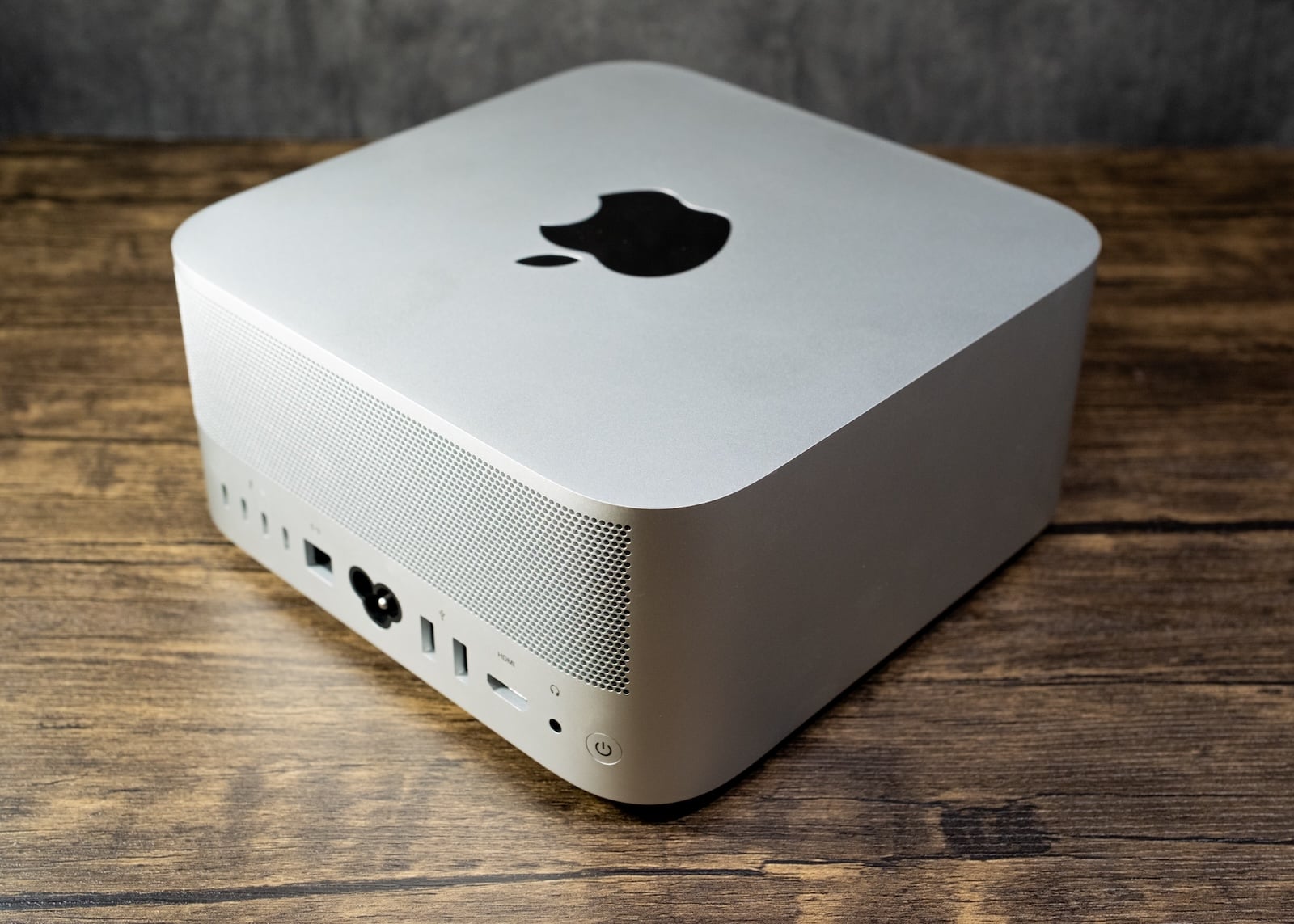
Apple is reportedly planning to design the upcoming M7 Ultra to support up to 1.5 terabytes of unified memory – twice as much as the M5 Ultra, putting it on par with the 2019 Intel Mac Pro for the first time. The catch is in the subordinate clause: whether Apple can even offer this configuration depends on a market that has been in turmoil for months.
From the very beginning, RAM has been the Achilles' heel of Apple's Silicon Macs. Because Apple places the memory directly next to the processor on the same chip, enormous transfer rates are achieved – but the amount is limited by the size of the chip package. According to a recent report, the M7 Ultra is supposed to close this gap and be able to support up to 1.5 TB of unified memory. The timing of the announcement is remarkable, as the memory chip shortage has been noticeably slowing down Apple's desktop plans for months.
What's in the air for the M7 Ultra
The new Ultra chip is said to be designed to address up to 1.5 terabytes of memory - roughly double what is planned for the M5 Ultra. The M5 Ultra, which is expected to debut in the Mac Studio later this year, would therefore offer up to 768 GB of unified memory, setting a new record for Apple Silicon.
However, Bloomberg also points out a crucial caveat: whether Apple actually sells the 1.5 TB version ultimately depends on market developments. The widespread shortage of memory chips makes the components harder to source and more expensive. Apple is therefore designing the chip for this capacity without any guarantee of product availability.
The comparison with the last Intel Mac Pro
Should the 1.5 TB version actually materialize, Apple Silicon would have finally caught up with the maximum storage capacity of the 2019 Intel Mac Pro after more than half a decade. The fact that this record stood for so long illustrates the compromise inherent in the Unified Memory architecture: it delivers bandwidths that pluggable DDR modules can only dream of – but at the cost of a hard upper limit, because the storage cannot be expanded indefinitely.
This is precisely the bottleneck for local AI workloads. How much RAM a Mac actually needs, depending on its intended use, has long since become a central question when buying one – in the professional segment, the amount of memory now determines which model sizes can even be run locally. A look at the suitable RAM configurations for Apple Silicon Macs shows just how wide the gap has become between everyday needs and professional requirements.
The contradiction to the current market situation
This is where it gets interesting, because the announcement comes at a time when Apple is scaling back rather than expanding its storage options. With the current Mac Studio featuring the M3 Ultra processor, the company first removed the 512GB configuration from its lineup and subsequently eliminated further storage tiers. For a time, only the 96GB base configuration remained at the top end.
The reason is the same one that triggered the price increases for Macs, iPads, and the Vision Pro: The expansion of AI data centers is draining the global market for memory chips, and Apple is competing with corporations that are buying on a massive scale. The fact that a chip is being designed for 1.5 TB, while the top-of-the-line model can currently barely be ordered beyond its base configuration, is the real contradiction in this news.
What that would mean in terms of price
A rough calculation makes the scale tangible: Based on Apple's current pricing for RAM, a jump from a 128 GB base to 1.5 TB would theoretically result in a surcharge well into the five-figure dollar range. This isn't an official Apple price, but a rough estimate – and it underscores one thing above all: Such a configuration wouldn't be a product for the ambitious user, but rather for studios, research institutions, and AI teams with corresponding budgets.
For buyers in the DACH region (Germany, Austria, and Switzerland), the storage crisis has already driven up Euro prices. If the situation doesn't improve significantly before the M7 Ultra is released, the final cost is likely to be even more unpleasant.
A chip waiting for better times
Ultimately, the report describes less of a product promise than a technical readiness. Apple would open the door to 1.5 TB and leave the key with the storage industry. If the market eases by the time the M7 Ultra launches, Apple Silicon would finally have overcome the storage limit that, until now, has been reserved for the Intel-era Mac Pro.
If the shortage persists, the M7 Ultra could suffer the same fate as the discontinued M3 Ultra configurations: technically possible, but not available for order. Until the official unveiling, all of this remains speculation – more revealing than the number itself is the caveat Apple is keeping open. (Image: Shutterstock / Graeme J Baty)
- New Apple Pencil with replaceable battery – due to pressure from the EU
- iPhone 17: Report predicts significantly lowered demand forecast
- iPhone Ultra: New leak reveals battery capacity
- Apple is testing significantly larger AI models directly on the iPhone
- iPhone 18 Pro Max: Component costs could rise by almost $300
- More affordable Vision Pro: Display project apparently on the verge of collapse
- iPhone Ultra: Mass production underway, no delays expected
- The iPhone 18 Pro could be noticeably thicker
- iPhone Air 2: First hint of a larger battery
- iPhone 18 Pro: Regulatory leak reveals battery capacities
- iPhone Ultra: Why sales might start later than the launch
- MacBook Pro: Entry-level models will get the redesign as early as 2027
- Apple Watch Series 12: New health sensor possibly only in the wristband
- Camera-enabled AirPods Pro: Leaker reports development halt