
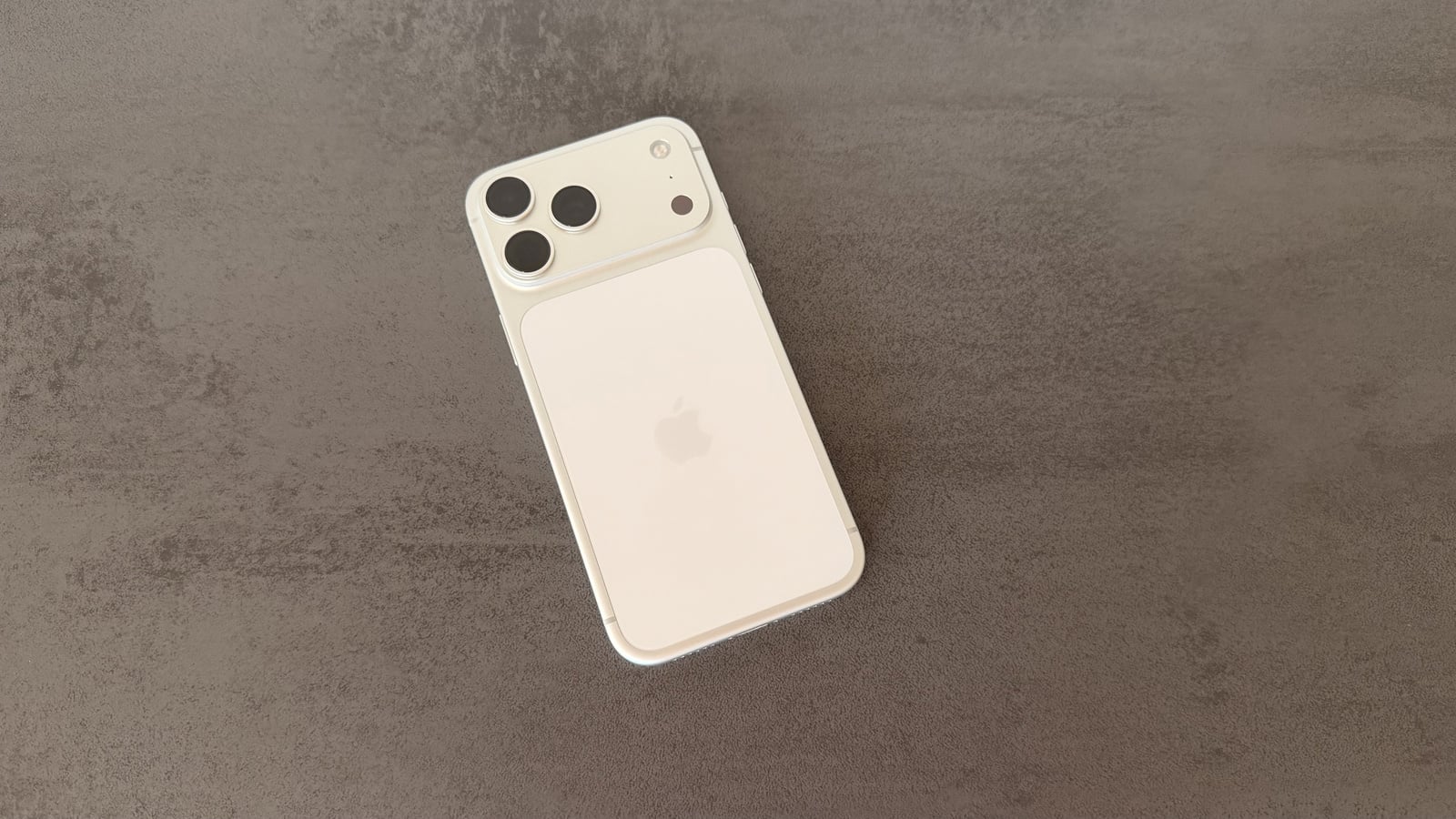
The storage in the iPhone now costs Apple more than the display and processor combined. A new market analysis puts the markup on the components of the iPhone 18 Pro at 38 percent – and assumes that Apple absorbs some of that cost itself.
The storage crisis has been affecting Apple's product line for months. In June, it impacted Macs, iPads, and the Vision Pro; the iPhone line was spared that round. Now, for the first time, it's possible to quantify how expensive the next generation of storage will be for Apple.
Market research firm TrendForce has estimated the material costs of the upcoming model and published the results in a report on the smartphone market. TrendForce works with supply chain and pricing data and regularly publishes memory market indices; this is an estimate based on this data, not a disassembly of a finished device or a statement from Apple.
Key Facts at a Glance
- The material costs of the iPhone 18 Pro with 256 GB are expected to be around 38 percent higher than those of its predecessor.
- Memory would thus be by far the most expensive component, pushing the display and processor out of the top spots.
- Apple is expected to absorb part of the surcharge through its own margin, instead of passing it on entirely.
- The prices of older iPhone models could also be raised with the launch of the new generation.
Memory replaces display and processor
The material costs – referred to in the industry as the Bill of Materials – include only the installed components, not manufacturing, development, or marketing. Within this calculation, the weight of the components has shifted fundamentally within a year.
| Period | Percentage of storage in material costs |
|---|---|
| One year ago (Pro model, 256 GB) | approximately 10 percent |
| Third quarter of 2026 | approximately 34 percent |
| First half of 2027 | over 40 percent |
Display and application processor, currently the two largest components, are expected to fall to single-digit percentages by then. Not because they will become cheaper, but because memory will dominate the rest of the cost.
The background to this is the memory market itself: Prices have increased five- to sevenfold since the beginning of 2025. The tense situation is further demonstrated by the fact that Apple is now testing memory from a Chinese manufacturer that is politically sensitive and, moreover, not cheaper.
Why the invoice doesn't end up one-to-one in the store price
A 38 percent increase in component costs does not result in a 38 percent more expensive iPhone. Material costs make up only a portion of the total costs, and Apple traditionally calculates with a gross margin that allows for some flexibility.
The analysis sees precisely this leeway as a buffer. TrendForce expects Apple to follow the pattern of recent MacBook launches and sacrifice some of its margin to keep the price increase palatable for customers and secure sales volumes. The price increase for Macs was also lower than what the pure costs would have warranted.
Specific price predictions for the iPhone 18 Pro are already circulating; most recently, a price increase of up to $300 was mentioned. These dollar figures cannot be converted into euro prices – Apple staggers price increases differently for each market, as the June round showed.
Even older models could become more expensive
One point of the analysis concerns not the upcoming device, but those already available. Apple could therefore raise the prices of older iPhone models simultaneously with the launch of the new generation, thus distributing the cost recovery across the entire product line.
Android manufacturers are hit harder
Apple isn't alone in facing this problem, but it's in a better position. Companies operating with lower margins can pass on less of it – Android providers, on the other hand, would have to pass on a larger share of the costs to their customers and therefore adjust their prices more drastically.
The situation will be particularly tight in the entry-level and mid-range segments. The analysis predicts that individual product lines in these segments could slip into the red and therefore be discontinued. TrendForce thus expects continued downward pressure on global smartphone production until 2027. The fact that the memory crisis is affecting manufacturers to varying degrees has already been reflected in their market shares.
What cost accounting means for buyers in this country
The figure itself is an estimate, not a price tag. What it does provide is an indication of the trend: a component that accounted for a tenth of the material costs a year ago and a third today isn't going to disappear from the calculation. We therefore expect the next iPhone generation to be more expensive – and that the increase will be more noticeable in the storage options than in the entry-level price, because that's where the actual costs are incurred.
In practical terms, this means that if you're eyeing a current iPhone 17 Pro, you should buy it now. If, on the other hand, you want to wait for the new generation, you should pay attention to storage capacity when comparing models, not just the starting price – the question of what 512 GB or 1 TB costs will likely become more important in September than before. Our buying guide for the iPhone 17, Air, and 17e will help you determine which model best suits your needs.
What Apple will actually charge in September is related to everything expected for the new series – all compiled in our overview of the iPhone 18 Pro. (Image: Apfelpatient)
- iPhone Ultra 3: Larger displays for the third generation
- Apple Upgrade: iPhone should arrive fully set up
- Apple Watch: Round display and devices without a screen tested