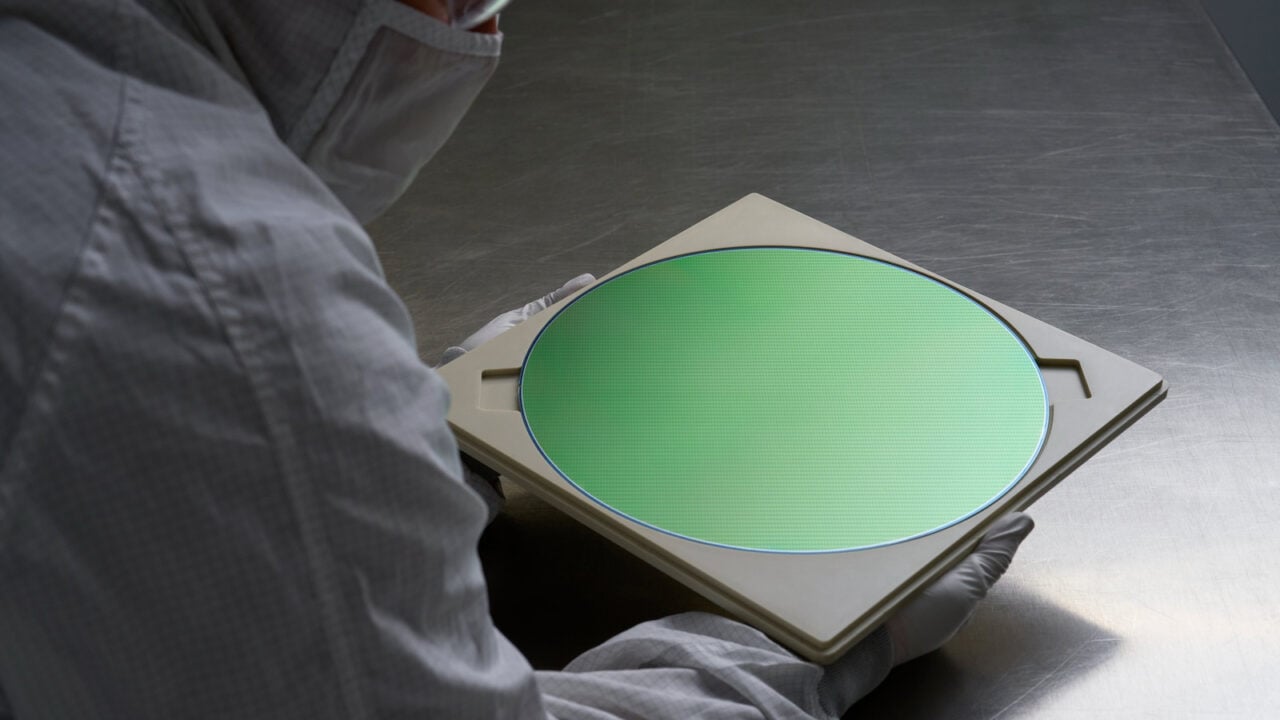

For days, an impressive figure has been circulating: processors worth around one billion dollars are said to be sitting at TSMC, waiting for memory. Now a second analyst has weighed in, claiming the figure is exaggerated – while explicitly confirming the actual bottleneck.
Memory shortages are shaping Apple's production year; that much is undisputed. What's been debated since today is how exactly these shortages are impacting the factories. A report from semiconductor analyst Tim Culpan last week painted a picture of a massive backlog at Apple's contract manufacturer, suggesting tight inventories and long delivery times at launch. Ming-Chi Kuo, in a detailed statement on X, now comes to a different conclusion – attributing it to the way Apple and TSMC coordinate their planning.
Key Facts at a Glance
- A media report mentioned unfinished Apple processors worth around one billion US dollars that are supposedly waiting for memory at TSMC.
- A second analyst disagrees: Apple plans its processor production at least three months in advance based on expected memory availability, instead of building up inventories.
- Both sides agree that the storage shortage is real and that Apple has reduced its production numbers for this year.
- The inventory figure from TSMC's quarterly report, cited as evidence, cannot be clearly attributed to Apple.
- The dispute changes little about the basis for the sales launch in September.
What the dispute is about
The original report was based on two points. Firstly, the claim that TSMC had unfinished Apple processors worth approximately one billion US dollars in storage, which could not be further processed due to a lack of DRAM. Secondly, a public statement: In the conference call for the second quarter of 2026, TSMC had explained that the increased inventory was primarily due to the ramp-up of its 2-nanometer manufacturing process.
Technically, the connection is plausible. The A20 Pro is the first chip to be manufactured using a process in which the RAM is integrated with the processor directly at the wafer level. If the memory is missing, it cannot be added later – the manufacturing process is halted.
Why the calculation shouldn't add up
This is where the contradiction lies. According to industry sources, Apple plans its processor production at TSMC at least three months in advance, based on the amount of memory expected to be available during that period. The contract manufacturer is therefore not building up large quantities of semi-finished goods on spec, which would then have to wait for components.
The objection doesn't claim that TSMC isn't building up any inventories at all. The point is different: If the bottleneck isn't with TSMC, but with memory, pre-production offers little benefit – and Apple would have little incentive to compensate the manufacturer for this additional effort. Both companies closely coordinate their supply chains; a backlog of this magnitude would be unusual in this relationship.
The inventory key figure does not support the document
The publicly verifiable part of the evidence also fails to withstand scrutiny according to this interpretation. Three points argue against interpreting the increase in TSMC's inventory as a backlog from Apple.
| Objection | Significance for the classification |
|---|---|
| Start-up effect | Inventory range typically increases when a new manufacturing hub ramps up production – this is not a special effect this year. |
| Definition of the key figure | TSMC includes not only unfinished goods but also finished goods, raw materials, operating supplies, and spare parts. |
| Other customers | Apple is not the only 2-nanometer customer; AMD and MediaTek, among others, also manufacture using this process. |
The figure from the quarterly report thus confirms a ramp-up, but not a stack of waiting Apple chips.
What both sides agree on
What remains undisputed is noteworthy. Even the contradiction confirms that Apple has scaled back its delivery plans for this year due to the memory shortage. The bottleneck exists, it affects production numbers – the only point of contention is whether it manifests as a dramatic backlog in TSMC's facilities or as a quiet reduction in planning months in advance.
This distinction is not splitting hairs. A backlog could be resolved as soon as storage becomes available. A downwardly revised plan, on the other hand, is a decision that has already been made and cannot be reversed in the short term.
How resilient are the two positions?
Both reports originate from analyst circles and are based on undisclosed contacts within the supply chain. Culpan has reported on the semiconductor industry for years and now publishes on his own portal, Culpium; Kuo works for TF International Securities and is considered well-connected in supply chain matters. Neither side presents independently verifiable evidence, and both have been both right and wrong in the past. Apple and TSMC generally do not comment on manufacturing details.
The difference lies in the nature of the statement. The figure of billions is a concrete claim that can later be confirmed or refuted. Kuo's objection, on the other hand, is primarily a plausibility argument about planning routines – harder to refute, but also harder to prove. We are therefore conducting the conflict openly, instead of choosing a side.
What buyers get out of it
In practical terms, the dispute changes little about the initial situation. Whether the chips are located in Taiwan or were never manufactured at all, both narratives point to the same conclusion: fewer devices will be available this fall than in a normal year. Anyone wanting to buy a device in September shouldn't delay pre-ordering – regardless of which analyst is right.
The point regarding pricing is more interesting. A temporary backlog would be a temporary problem, whereas permanently higher procurement costs would not. The fact that component costs are rising structurally is already evident elsewhere: the material costs of the iPhone 18 Pro are expected to increase by 38 percent, driven by the storage capacity. We anticipate that pricing in September will be more strongly influenced by this cost trend than by the availability of individual batches.
Which further drives the storage train
This development is part of a longer series of events. Apple's attempt to exert downward pressure on prices through an alternative supplier failed last week, and in parallel, the company is testing memory chips of Chinese origin for iPhones and MacBooks. We are continuously updating our overview of the iPhone 18 Pro to show how the situation develops leading up to the sales launch.
The discrepancy will likely only be resolved after the market launch – namely, when delivery times and subsequent deliveries reveal how many devices were actually available. (Image: Apple)
- OLED iMac: Fifth layer designed to prevent burn-in
- iPhone 18 Pro: Material costs increase by 38 percent
- iPhone Ultra 3: Larger displays for the third generation