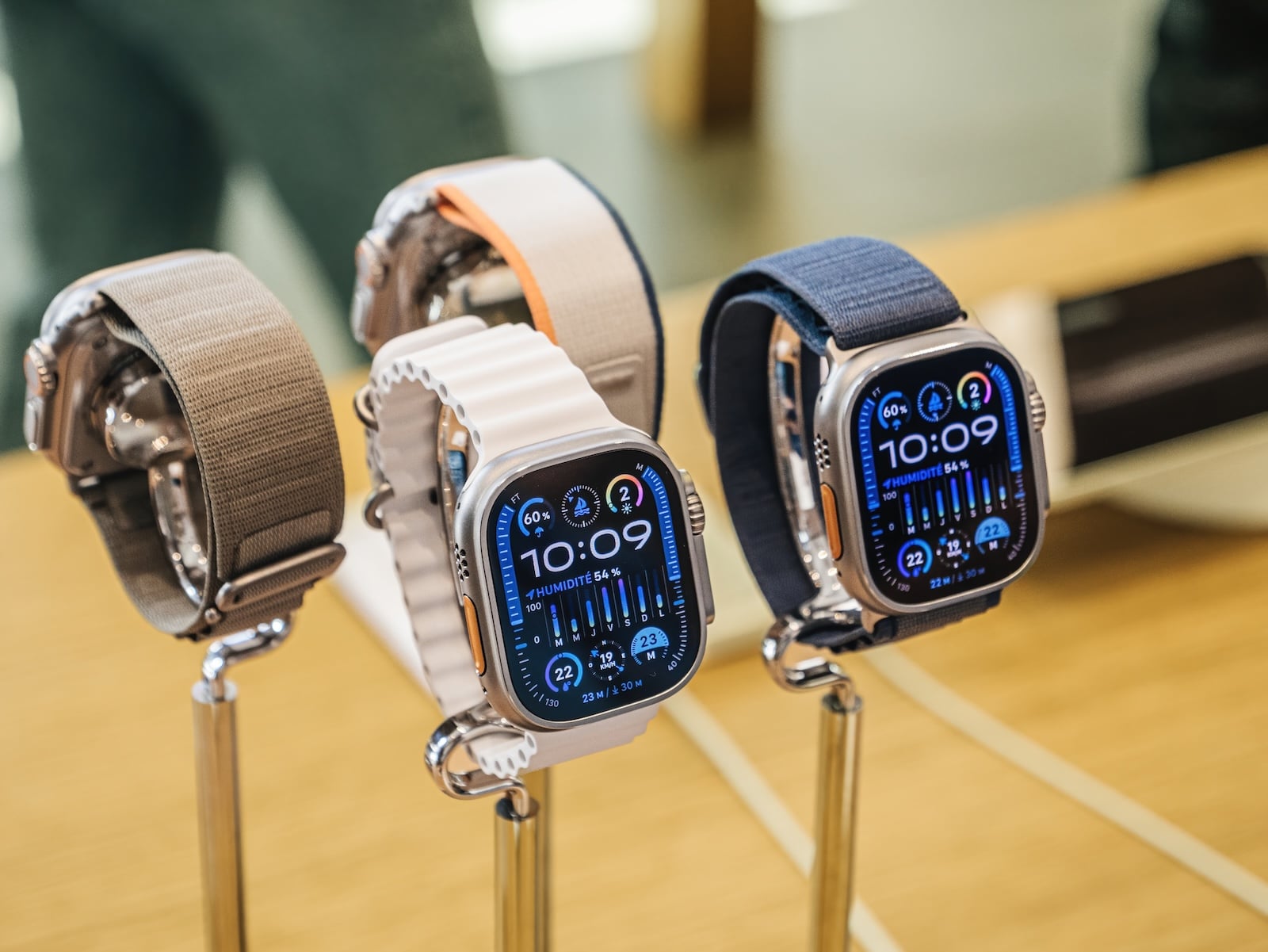
Apple is reportedly testing a new display technology that could make upcoming Apple Watch models significantly more energy-efficient. A report from Korea identifies the wrist as the first application – and thus as a precursor to a technology that is likely to later find its way into the iPhone.
Energy efficiency is perhaps the most important factor for a smartwatch, as every milliampere saved noticeably extends battery life. A new report from the Korean tech publication The Elec addresses this very point: Apple is reportedly evaluating a next-generation OLED driver that would reduce the display's power consumption. While this year's lineup surrounding the Apple Watch Series 12 is rather understated, a significant technological advancement could be taking place beneath the surface in 2027. Nothing has been confirmed, but the described development aligns with Apple's previous approach to displays.
What's behind the new display technology
At the heart of the technology is the so-called backplane – the transistor layer that controls each individual OLED pixel. LG Display is reportedly developing a technology called High-Mobility Oxide (HMO) for this purpose, which is intended for use in the sixth-generation production lines for small and medium-sized OLED panels. According to the report, Apple is considering HMO as a successor to LTPO (Low-Temperature Polycrystalline Oxide), the backplane technology currently in use. LTPO enables features such as the always-on display and variable refresh rate in the iPhone and Apple Watch.
The decisive advantage of HMOs lies in their higher electron mobility – that is, how easily electrons move through the transistor material once an electric field is applied. High mobility is crucial for driving an OLED panel while simultaneously keeping power consumption low. According to the report, currently mass-produced oxide transistors typically achieve values below 10 cm²/Vs (square centimeters per volt-second), while the industry is aiming for around 30 to 50 cm²/Vs for the next generation of OLEDs. Such a leap would translate directly into lower energy consumption.
Two suppliers, two paths
It is noteworthy that the two major OLED suppliers are reportedly pursuing different strategies. LG Display is using a sputtering process for HMO, which can be integrated relatively easily into existing production lines. This could shorten the path to mass production.
Samsung Display, on the other hand, is reportedly taking a different approach: atomic layer deposition (ALD), in which extremely thin layers are applied atom by atom. This process is slower, but suggests that Samsung is aiming for a particularly finely controlled transistor layer than would be possible with HMO. Which approach ultimately prevails will likely depend on which variant best meets Apple's requirements for efficiency and manufacturing.
Why the Apple Watch is leading the way
The fact that the technology is slated to debut in the Apple Watch follows a familiar pattern. Apple has repeatedly tested new backplane technologies in the past before rolling them out to products with significantly higher production volumes. The relatively small displays of the Apple Watch are well-suited as a testing ground because yield and reliability can be assessed with less risk.
A successful launch on the wrist would therefore not be the end, but the beginning: In the medium term, the next major area of application would be the iPhone, whose display components are already distributed between Samsung and LG. A wider adoption of the more efficient OLED technology would be the logical next step.
Nothing has been decided yet
Despite the promising prospects, the hurdle to mass production remains high. LG Display must first validate HMO for mass production, and this involves several criteria: mobility, consistency, reliability, process temperature, and yield. Only when these aspects are satisfactory would commercial use be considered – so it is by no means guaranteed.
Furthermore, current rumors about the Apple Watch don't suggest a major update anyway. A comprehensive redesign is considered unlikely before 2028. However, this doesn't rule out a more energy-efficient display technology in 2027 – quite the opposite: a model without noticeable external changes could certainly benefit from improved efficiency under the hood.
The next generation of displays begins on the wrist
Should the report prove true, the real advancement of the next Apple Watch wouldn't be found in its optical specifications, but rather in a layer that no one ever sees. Longer battery life without a larger battery would be a significant benefit for a smartwatch. Until Apple actually incorporates such technology, however, it remains just a lead in the supply chain – an interesting one, but still unconfirmed. (Image: Shutterstock / Hadrian)
- iPhone Ultra: Liquid metal hinge and prototypes at network operators
- iPhone 18 Pro: Battery size expected to increase only slightly
- iOS 27: Split the Bill by Photo — but Only in the US
- iPhone Ultra: Vapor Chamber and September Launch in New Leak
- iPhone Ultra in white: Leaked image shows Apple's foldable
- Apple is already working on iOS 28 and macOS 28
- Apple TV 4K and HomePod mini are expected to arrive in the fall
- Apple Glasses: Market launch not until the end of 2027
- New Beats headphones appear on Lamine Yamal
- Apple Music: Is a cheaper subscription on the horizon?
- iPhone 18 Pro: New camera costs Apple 50 percent more
- iPhone 18 Pro: Four colors shown for the first time on a dummy
- Apple and Google: New details about the AI technology behind Siri
- iOS 27: Leak reveals the new Siri and a redesigned camera app
- Black Vision Pro components reappear online
- Android manufacturers want to copy Apple's split launch
- Apple Watch: Glucose project gets a new project leader
- iOS 27: The WWDC logo reveals the final Siri colors
- Titanium returns to the iPhone Pro? A second leaker dampens expectations
- iPhone Ultra: New production problems in pre-production