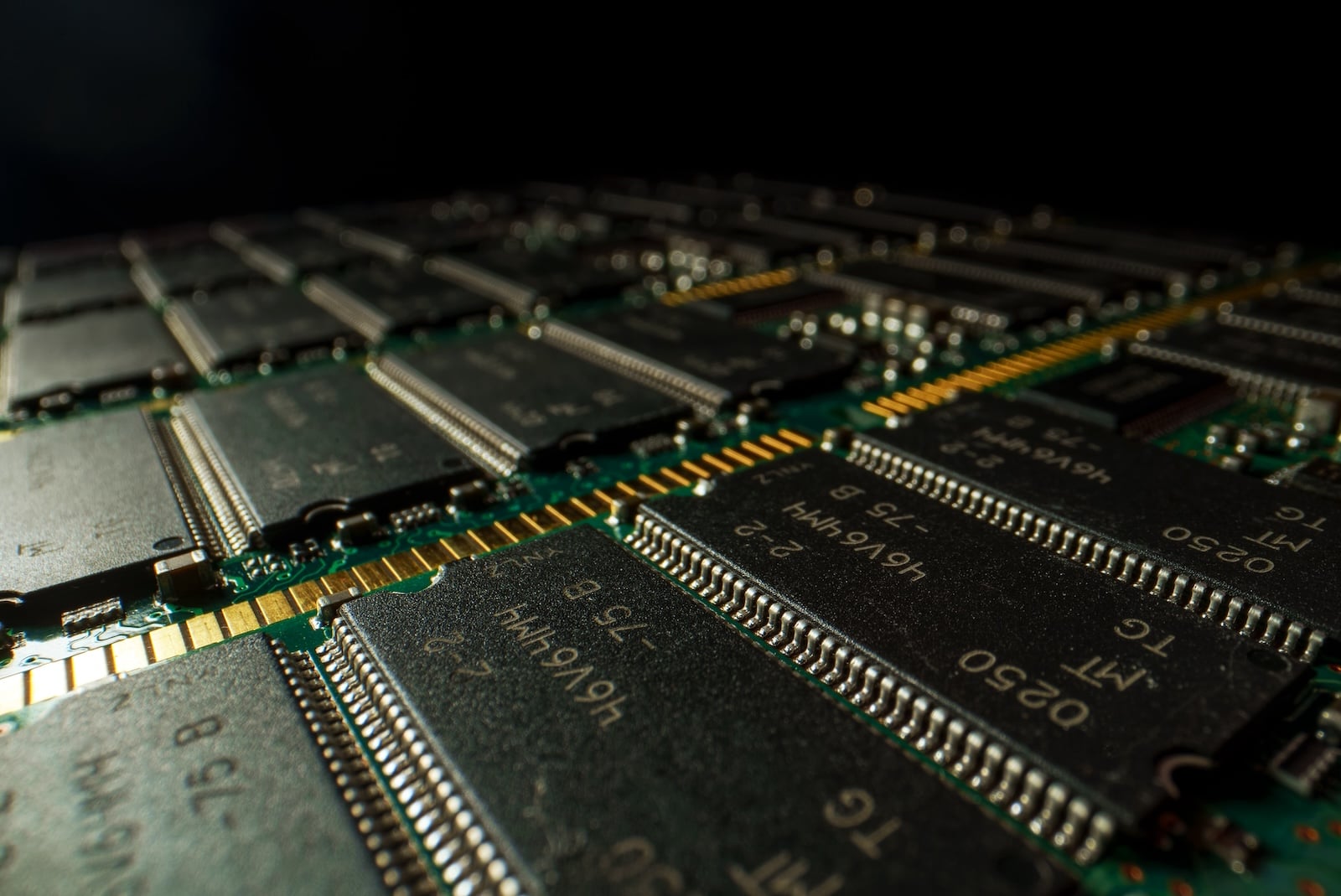
Apple has been lobbying for months to be allowed to source memory from additional manufacturers. When asked whether this would lower prices, Tim Cook gave an answer during the conference call – and then qualified it mid-sentence.
The cost of RAM and flash memory is the reason Apple raised prices for Macs, iPads, and the Vision Pro at the end of June. The company expects a further increase for the current quarter, as outlined in its outlook for the September quarter. At the same time, Apple is seeking approval in Washington to source memory from the Chinese manufacturers CXMT and YMTC, which are currently on a US blacklist. During the conference call, an analyst inquired about the purpose of this initiative.
Supply or price – the question was precisely posed
The analyst formulated an alternative: Is Apple's goal simply to obtain enough storage and cushion cost inflation – or to maintain the price-performance ratio for its customers?
Cook initially responded by addressing the market structure. The RAM market is dominated by three vendors. More vendors would be beneficial, as they would help on the supply side and perhaps also with prices. In the very next sentence, he retracted the second part: The effect on prices is unclear. On the supply side, it could help. Apple is examining all options.
This movement within a few seconds is the actual content of the statement. Cook mentions a potential price effect and then retracts it before the sentence is finished. From our perspective, this isn't a slip of the tongue, but a deliberate correction: Leaving the price effect in place would create an expectation that Apple might later be unable to fulfill.
The surcharges are likely to remain
This answers the question that has been on the minds of many buyers since June. According to this explanation, the €100 price increase for the MacBook Neo and the other increases for Macs, iPads, and the Vision Pro are not a temporary dip that will resolve itself once the storage market calms down.
This aligns with Cook's explanation of the logic behind Apple's pricing decisions. He cites unit sales, revenue, and margin as the common basis and emphasizes the long-term perspective. A price reduction would require a sustained turnaround in costs – something Apple says it doesn't expect. The company anticipates that market prices for memory will continue to rise beyond the September quarter.
The Chinese memory would be intended for devices outside the USA
For buyers in German-speaking countries, the most interesting point lies in the intended use. Reports indicate that Apple plans to use components from Chinese manufacturers in devices sold outside the United States. The aim would be to free up the capacity of its existing suppliers for the US market.
Should the approval be granted, it would mean that devices sold in Germany, Austria, and Switzerland would contain Chinese memory, while American buyers would stick with established manufacturers. Whether this will happen is uncertain: the approval faces significant hurdles in Washington, and the dispute between Apple and Micron over it has reached the White House.
According to Cook himself, the price would hardly change as a result. The benefit would lie in availability – that is, in the fact that the devices would actually be available.
What this means for purchasing decisions
Anyone planning to buy a device in the coming months shouldn't expect prices to fall back to their May levels. The price difference between the MacBook Air and MacBook Neo has already shifted due to the price increase, and a return to the old price structure is now less likely after this conference call.
It remains unclear how Apple will proceed with the iPhone models expected in September. Cook did not comment on this. (Image: Shutterstock / M-Production)
- Higher AI limits available for an additional fee with iCloud+
- How Apple decides on price increases
- Apple warns of significantly larger supply shortages
- Tim Cook's last conference call as Apple CEO
- Customs refunds boost Apple's margin
- Apple invests $11.73 billion in research – a new record
- Apple has 1.5 billion paid subscriptions
- Apple Q3 2026: $109.4 billion in the best June quarter
- Qualcomm loses Apple business faster than expected
- DOJ wants to overturn Apple's access to government records