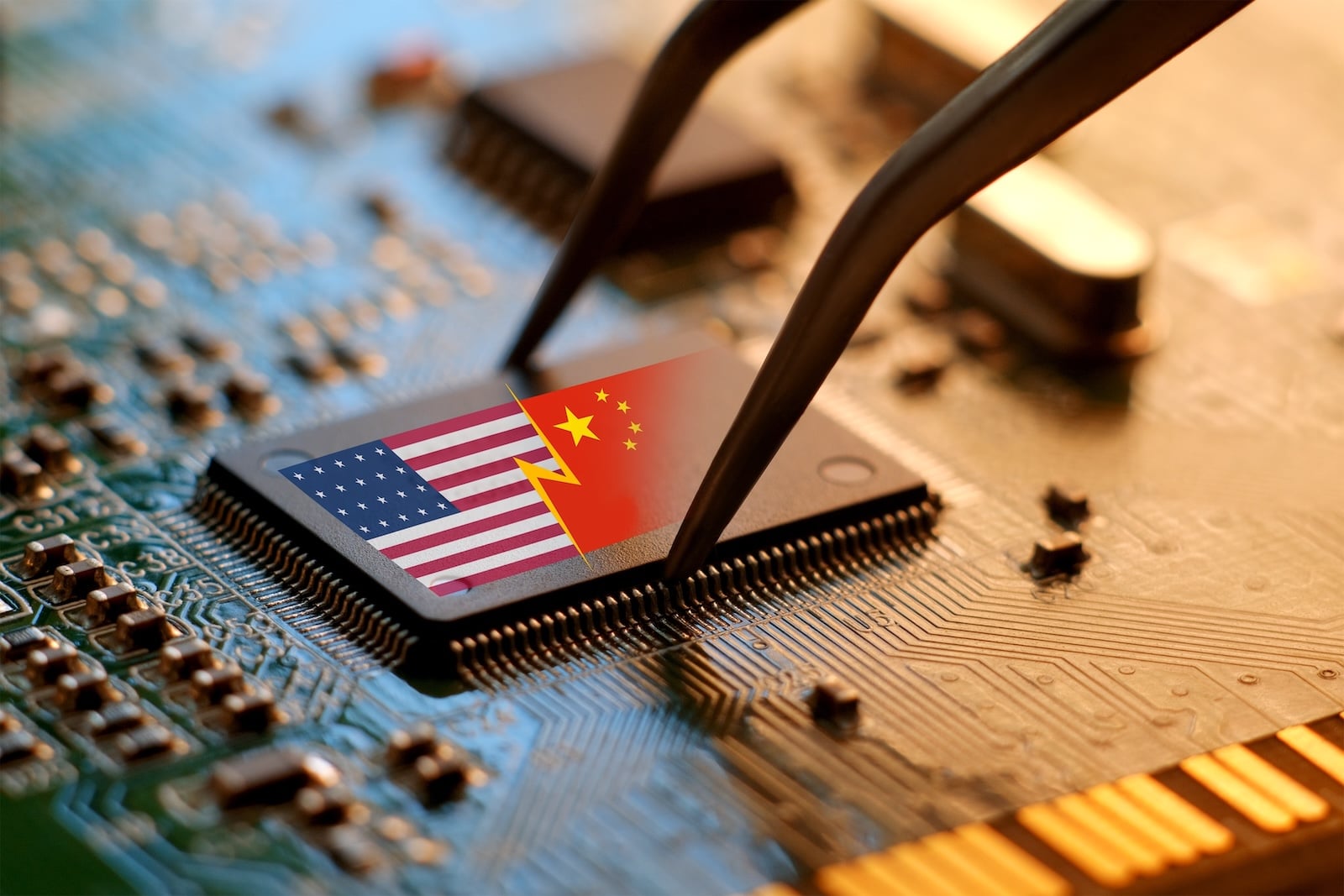
Apple plans to use memory chips from Chinese manufacturers in devices sold outside the US. The last major American memory manufacturer is vehemently opposed to this – and has taken the conflict all the way to the White House. The decision will be made in Washington, but the outcome will be felt in European price lists.
For weeks, Apple has been seeking approval from the US government for memory manufactured in China. In early July, it was revealed that Apple was already testing DRAM chips from ChangXin Memory Technologies – a step that would be inconsequential without political approval. A report in the Wall Street Journal now identifies who is opposing the project: Micron, generally considered the only major American memory manufacturer, is actively working against Apple's plan in Washington.
What Apple wants to achieve in Washington
According to the report, Tim Cook and other executives have lobbied Donald Trump, as well as Commerce Secretary Howard Lutnick and Treasury Secretary Scott Bessent, in recent weeks to advance their cause. The core issue: Apple wants to be allowed to use memory from ChangXin Memory Technologies (CXMT) and Yangtze Memory Technologies (YMTC) in products sold outside the United States – not just in devices for the Chinese market.
This represents a significant expansion compared to the original request. At the end of June, it was revealed that Apple was lobbying the US government for approval of CXMT memory. At that time, the request was only for a preliminary commitment. Now, the company is negotiating the scope of this approval – and even the first stage was considered politically difficult to achieve.
The resistance of the last major US memory manufacturer
According to the report, Micron CEO Sanjay Mehrotra and other executives warned Lutnick and other government officials that selling Chinese memory chips to US technology companies could destroy domestic industry – regardless of which region of the world the finished devices ultimately end up in. The American steel and manufacturing industry served as a comparison.
The underlying argument is price: storage devices from heavily state-subsidized Chinese production consistently undercut American suppliers. Micron is offering to alleviate the bottleneck by accelerating the expansion of its own factories in the US.
The friction between the two companies is not new. At the end of June, a Micron manager publicly stated that Apple's aggressive purchasing policy had contributed to the memory shortage – low prices during the 2023 market downturn had made investments in additional capacity unattractive.
Two lists with very different consequences
CXMT and YMTC are on the Pentagon's 1260H list, which identifies companies with suspected ties to the Chinese military. This classification does not prohibit business between private companies, but it damages their reputation and excludes them from US defense contracts.
The list has had an eventful year. In February 2026, a revised version appeared, omitting both memory manufacturers; the document disappeared again within hours. The regular update from June 8, 2026, reinstates CXMT and YMTC and adds 65 entries to the list.
The US Department of Commerce's Entity List carries considerably more weight. YMTC has been on this list since December 2022, prohibiting American companies from exporting certain technologies without a license. CXMT is not yet on this list – and that's precisely what Apple's concern is about: an assurance that this will not change. Without it, any long-term supplier relationship would be an incalculable risk.
Why the devices for Europe are the focus
The crucial point for buyers in Germany, Austria, and Switzerland lies in the scope of the application: it concerns products sold outside the US. These are precisely the Macs, iPads, and iPhones that are on store shelves here. Whether your next Mac contains memory manufactured in China is currently being decided in Washington.
The cost increase is already a reality. At the end of June, Apple raised prices for Macs, iPads, Apple TV, HomePod, and Vision Pro, by up to €400 for some models, while iPhones, Apple Watches, and AirPods were spared for the time being. The main driver was storage costs. Additional pressure is being exerted by the announced price increase at TSMC, which affects the rest of the component pricing.
Cheaper storage from China would be Apple's quickest way to avoid further price increases. If the approval doesn't come through, the company will price the next product generations at global market prices – and those prices are where they triggered the price hikes in June.
What speaks against Micron's counter-proposal
The offer to close the bottleneck by accelerating factory expansion clashes with Micron's own timeline. Mehrotra himself stated at the end of June that the shortage would persist well beyond 2027 because new semiconductor plants take years to build and modern memory is more complex to manufacture. The most advanced project in Boise, Idaho, is not expected to ship its first chips until mid-2027. In July, Micron increased its investment program for US factories to over $250 billion.
This presents the government with a timing problem: The American approach solves the shortage, but not within the timeframe in which end-customer prices rise. Trump would have to choose between two stated goals – lower consumer prices and the development of domestic semiconductor manufacturing.
Apple has created leeway for such moments. As part of its $600 billion American Manufacturing Program, the company recently signed a chip contract with Broadcom worth more than $30 billion. Whether this political leverage will be enough for an exception regarding Chinese memory is the open question. The White House has not yet committed to a particular course of action.
When will the dispute reach its next test?
A government decision is pending, and no timeline is known. The next date Apple is scheduled to comment on its costs is July 30, with the release of its third-quarter results. Until then, two American corporations will be working on the same government department, but in opposing directions. (Image: Shutterstock / Sushitsky Sergey)
- Trump threatens the EU with tariffs over tech fines
- Claude Opus 5: Anthropic's new AI model is here
- macOS 27: Hidden Siri interface with 13 voices discovered
- iPhone Ultra: 25 percent market share expected for foldables
- Apple TV: The Morning Show ends with season 5
- Apple Maps will be permanently installed in Ford electric cars by 2027
- EU imposes €890 million fine on Google
- Apple is preparing an AI shopping assistant for the Apple Store app
- WhatsApp: New features for CarPlay, iPad and Apple Music