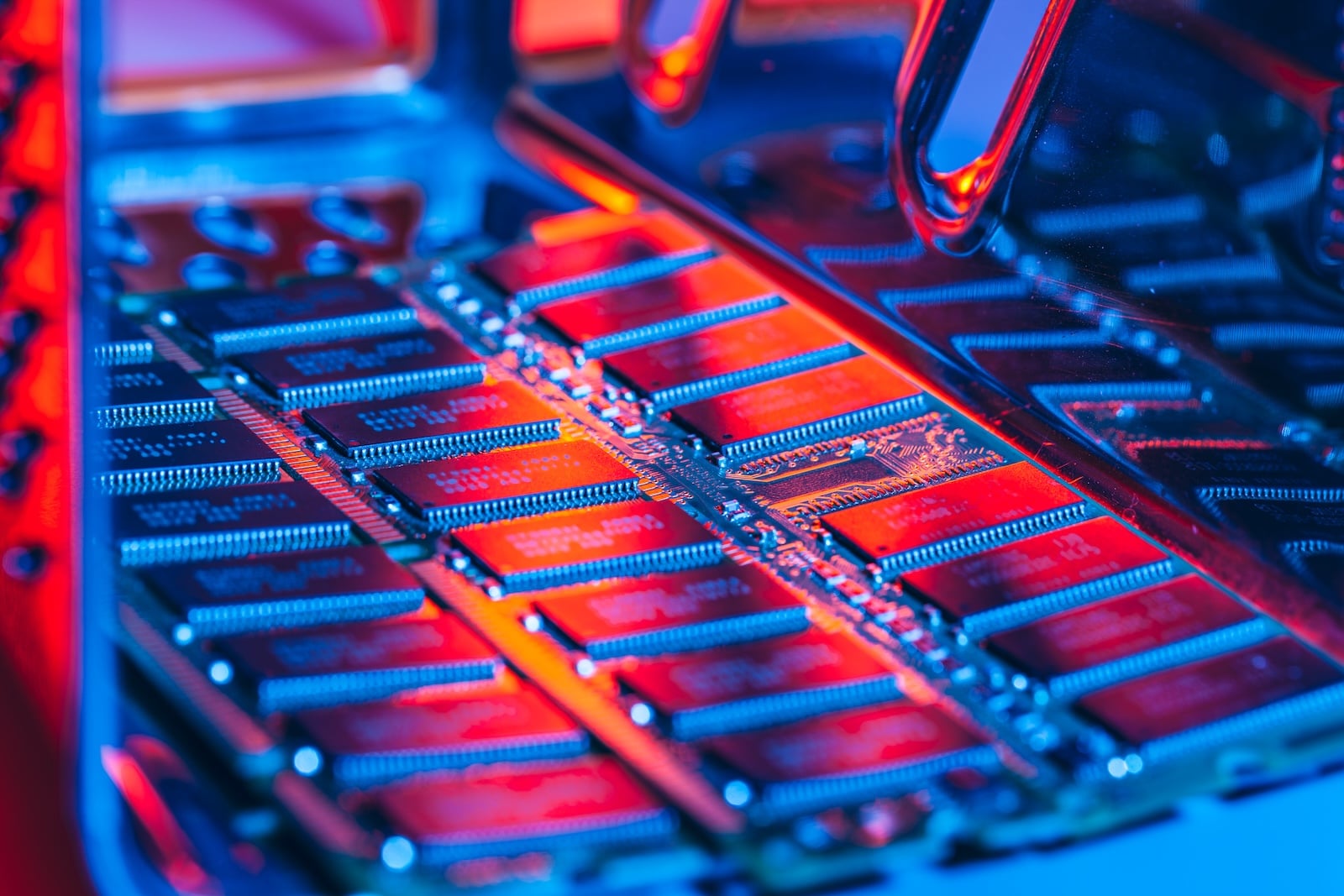
Apple is taking a risky approach in its fight against memory shortages: The company is seeking permission from the US government to source RAM from a Chinese manufacturer that is on a Pentagon blacklist. This is a direct reaction to the sharply increased chip prices.
The global shortage of memory chips is hitting Apple hard – so hard that the company raised prices for Macs, iPads, and the Vision Pro this week. Now, it's becoming clear how far Apple is prepared to go to ease the situation. According to a Financial Times report, the company is lobbying in Washington to be allowed to buy memory chips from a supplier whose business dealings with US corporations are hampered by security concerns.
What Apple is advertising in Washington
At the center of the controversy is the Chinese manufacturer CXMT. According to the Financial Times, citing six people familiar with the matter, Apple is conducting a lobbying campaign to obtain White House approval for sourcing memory chips from this company. The aim is to alleviate the financial pressure caused by rising prices.
Apple first contacted the Commerce Department about a month ago and has recently expanded its efforts. This move is intended to help meet production demand while the shortage persists.
Why a blacklist is an obstacle
Legally speaking, Apple is not prohibited from purchasing from Chinese memory manufacturers – neither CXMT nor the Chinese supplier YMTC. The difficulty lies elsewhere: The Pentagon has placed both companies on its list of Chinese military contractors. This so-called 1260H list includes dozens of Chinese corporations allegedly linked to the People's Liberation Army and deemed by the US to undermine national security. US corporations would therefore likely require licenses to do business with listed companies – and this is precisely where Apple's initiative comes in.
A move with a history
The current campaign didn't come out of nowhere. Just a week earlier, Apple CEO Tim Cook had told the Wall Street Journal that the company had no choice but to raise prices. In the same interview, Cook hinted that Apple was indeed interested in sourcing memory chips from Chinese companies, provided they received the necessary approval.
China has leading companies in the field of workstations and data storage, Cook stated; however, due to security regulations, US companies would likely need licenses to collaborate. When asked whether these restrictions should be relaxed, Cook replied that everything needed to be laid on the table and all sources of supply should be examined.
When price increases alone are not enough
Apple's increased push for the Chinese option can be interpreted as a consequence of disappointing results. Neither last week's interview nor this week's price increases have alleviated the pressure on margins. Apple explicitly justified the price hike itself with the increased costs of memory and storage chips.
This puts the company in a difficult position, caught between economic considerations and security policy requirements. Whether the government will grant the request remains to be seen – however, the decision will likely reveal how much leeway Washington grants domestic tech companies when making purchases in China. (Image: Shutterstock / FabrikaSimf)
- The US partially releases Claude Mythos 5
- Data leak at Tata: Apple and suppliers react
- OpenAI poachs Apple's Vision Pro and glasses chief
- Storage crisis: Apple is also said to be partly responsible
- Apple is heading towards record market shares in 2026
- Apple hints at further price increases
- Apple is raising prices: Macs, iPads and more are getting more expensive
- Siri AI should clearly reject URL summaries
- Stolen iPhone: Apple tightens its recommendations
- Eddy Cue promises Apple TV „better and more“
- App Store fees: Antitrust complaint against Apple in China
- Eddy Cue honored as Entertainment Person of the Year
- iOS 27 Beta 2: These are the new features included in the update
- Siri AI on HomePod and Apple TV: Code provides clues
- Prime Day 2026: The best Apple deals at the start
- Cyberattack on Tata: Confidential Apple documents apparently leaked
- Apple vs. Prosser: Judge overturns default judgment
- Apple confirms the end of the AirPort Utility app
- macOS Tahoe 26.5.2 is apparently just around the corner
- iOS 27 now updates Apple TV remotely
- iOS 27 Beta 2: Apple refines the new generation