
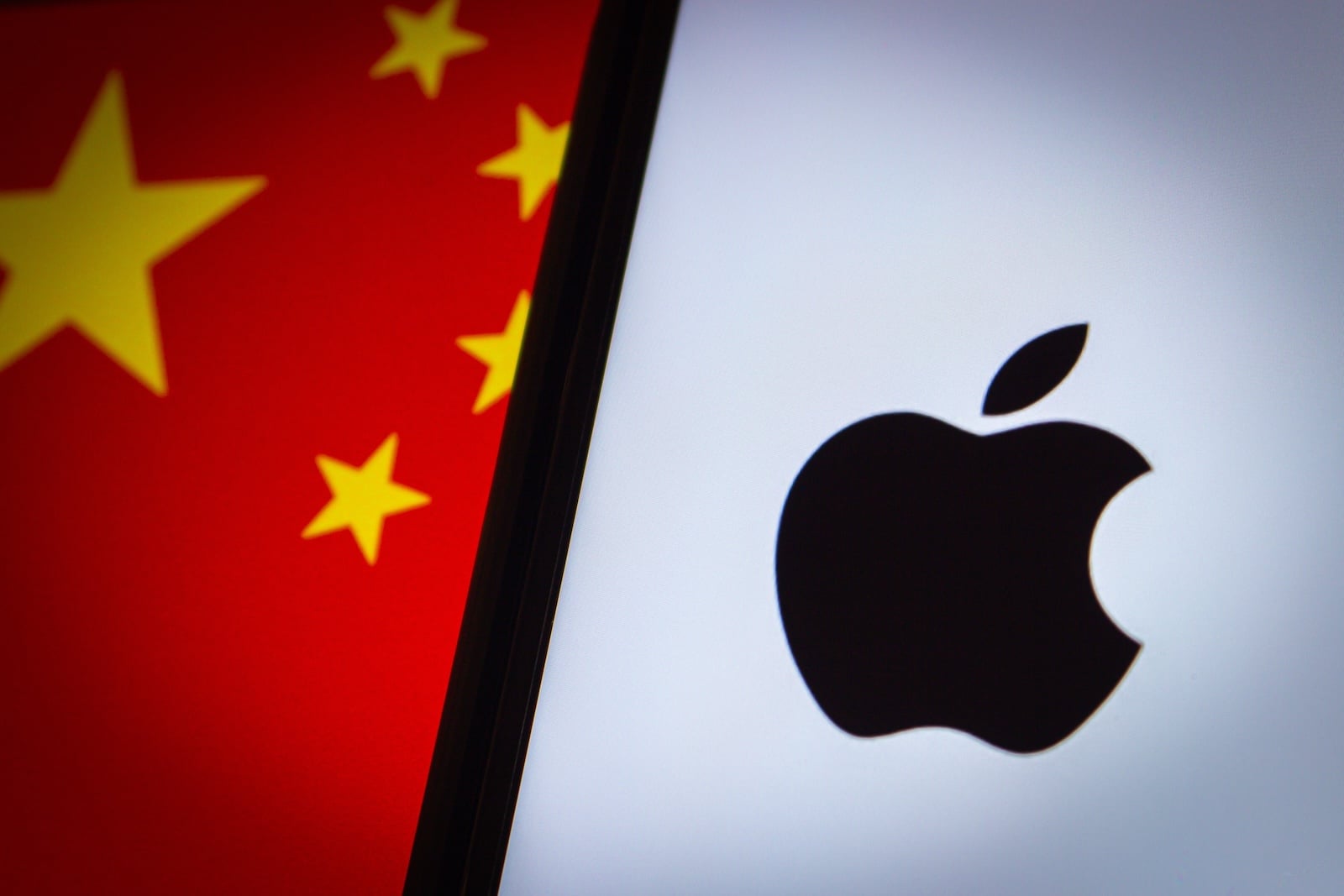
48 Chinese developers are taking Apple to the market regulator: they claim Apple's App Store fees are excessive and its distribution rules too rigid. The commission reductions implemented in March don't go nearly far enough for them – and the accusation hits Apple precisely where the business is most sensitive.
A group of 48 developers has filed an antitrust complaint against Apple with the Chinese State Administration for Market Regulation. In an open letter, they accuse the company of abusing its market power and passing on unfair, excessive fees to local providers. The dispute over the amount of the App Store commission has now become a global issue for Apple – in the US, the case is currently before the Supreme Court, while in the EU, the Digital Markets Act is shaping the debate. With the complaint from China, another major market is now being added to the mix.
What the developers are accusing us of
The complainants have called on the Chinese competition authority to investigate and sanction Apple. One of the developers, Tian Junwei, publicly accused Apple of abusing its dominant market position to impose "unfair and excessive" costs in an open letter on his WeChat blog on Monday.
The core demands are twofold: lower fees and greater flexibility in distribution. From the developers' perspective, Apple's slight reduction in commission rates is insufficient as long as neither alternative app marketplaces nor more flexible payment options are permitted in China. Apple did not respond to a request for comment.
Apple's previous concessions in China
In March, Apple announced it would reduce the standard commission on paid apps and in-app purchases in China from 30 to 25 percent. For eligible developers, the rate can drop to as low as 12 percent. However, this is not enough for those complaining: the move does not change the fact that the App Store remains the only authorized distribution channel in China, and purchases must be made through Apple's payment system.
How much Apple is easing restrictions in other markets
The timing of the complaint makes it particularly significant. Just a few days earlier, Apple had introduced a new set of rules for Brazil, closely resembling the one implemented in Japan at the end of last year – and granting developers considerably more leeway than they have in China. Apple also had to adapt its App Store terms and conditions to the Digital Markets Act in the EU, although an Apple study found that lower fees there barely resulted in lower retail prices.
A comparison of the models shows why the Chinese developers feel disadvantaged:
| Market | Standard commission | Further conditions |
|---|---|---|
| China | 25 % (previously 30 %), up to 12 % for eligible developers | no alternative marketplaces, no flexible payment options |
| Brazil | 21 % (10 % for eligible developers) | Additionally, 5 % for payment processing (not applicable for alternative payment methods); 15 % for external payment links; 5 % Core Technology Commission for alternative marketplaces |
| EU | Store Services Fee of 5 % or 13 % (10 % for eligible customers) | 2 % Initial Acquisition Fee for external payment; 5 % Core Technology Commission |
While Apple allows alternative marketplaces and external payment methods in Brazil, Japan and the EU – albeit for its own fees – the Chinese App Store remains a closed system with only reduced rates.
Why the pressure on Apple is growing in China
The recurring pattern is clear: Apple primarily opens up its App Store model where courts or legislators compel it, otherwise maintaining its established control. With the complaint in China, the developers are attempting to apply precisely this leverage in a market that is enormously important to Apple economically. Whether the market regulator will take up the case remains to be seen – however, the complaint alone increases regulatory pressure in a region that is already strained for Apple. (Image: Shutterstock / Koshiro K)
- Eddy Cue honored as Entertainment Person of the Year
- iOS 27 Beta 2: These are the new features included in the update
- Siri AI on HomePod and Apple TV: Code provides clues
- Prime Day 2026: The best Apple deals at the start
- Cyberattack on Tata: Confidential Apple documents apparently leaked
- Apple vs. Prosser: Judge overturns default judgment
- Apple confirms the end of the AirPort Utility app
- macOS Tahoe 26.5.2 is apparently just around the corner
- iOS 27 now updates Apple TV remotely
- iOS 27 Beta 2: Apple refines the new generation
- WhatsApp brings animated messages back to the iPhone
- watchOS 27 discontinues five Apple Watch models
- Pluribus Season 2: The current status
- Apple Watch: Shipments increase by 21 percent
- Apple Music: The most streamed artists of all time
- Sugar: Season 2 premieres on Apple TV
- iPhone defies the shrinking smartphone market
- Brothers: Apple TV comedy with McConaughey and Harrelson
- Unpatchable vulnerability in Apple's A12 and A13 chips
- Apple opens iOS to App Stores and payments in Brazil
- Apple and Intel: Chips to be produced in the USA
- Tim Cook: Apple must raise prices
- iOS 27: Four new features for the Notes app