
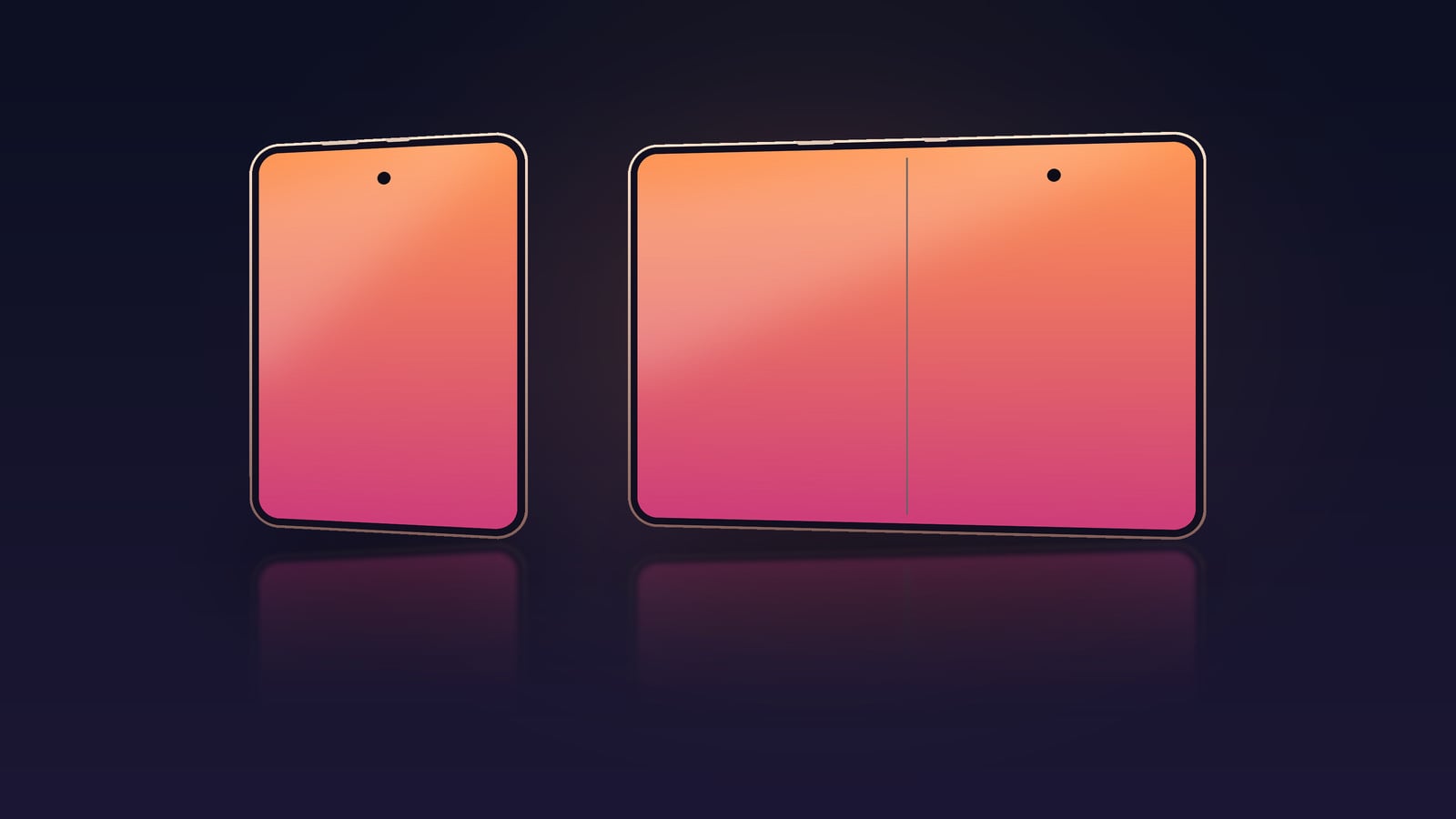
The foldable smartphone market is poised for its strongest year yet – and Apple is considered one of the reasons, even though the first device hasn't been unveiled. The final quarter is expected to be the decisive period. This aligns with a timeline that remains unclear for the iPhone Ultra.
Worldwide shipments of foldable smartphones are expected to increase by around 20 percent this year compared to 2025. This figure comes from the supply chain and is supported by industry sources who also told DigiTimes where the boost is expected to come from: wider form factors, a growing number of manufacturers – and Apple's entry into the category.
Samsung is expected to retain its leading position. Apple, Huawei, and other brands are cited as key drivers, with the category now considered mature after almost eight years of product development. A separate forecast is already circulating for Apple itself: a report from the end of July predicts the company will achieve around 25 percent market share in foldables in its first year.
Key Facts at a Glance
- Global shipments of foldable smartphones are expected to increase by about 20 percent in 2026.
- Samsung remains market leader, while Apple and Huawei are considered growth drivers.
- The fourth quarter is considered the most important sales period of the year.
- Scarce logic chips and rising memory prices are putting pressure on the overall market, but are not expected to slow the category down.
- When Apple will actually start selling the foldable iPhone remains unclear.
Why the final quarter will be key
The forecast is based on an observation from Samsung's own experience: While early pre-order phases generate strong sales around the market launch, the actual growth phase begins later. It starts when several manufacturers already have their models on the market and buyers can compare them.
This year, that exact time falls in the fourth quarter. For the German-speaking market, this means an overlap with the Christmas season – the period when smartphone sales are strongest in this country anyway.
A second point from the report concerns willingness to pay: Most buyers now expect prices to rise anyway. As long as the increases remain within the expected range, demand should therefore remain stable. Price estimates for the foldable iPhone range from $2,000 to $2,500, and the fact that prices for both the iPhone 18 Pro and the foldable model will rise has been considered a given for months.
What speaks against growth
The broader smartphone market is currently grappling with two problems simultaneously. Pre-stage logic chips have become scarcer, and memory prices have risen significantly. Both of these factors particularly affect foldable devices, which are already more expensive to manufacture.
The different ways in which this pressure is being received have already become apparent: The storage crisis is dividing the smartphone market because large manufacturers have secured their long-term allocations, while smaller providers have to buy at daily prices. Apple is on the more affordable side.
| Forecast | Value | Relation |
|---|---|---|
| Growth in foldable deliveries | approximately 20 percent | worldwide, 2026 compared to 2025 |
| Apple's share of the foldable market | approximately 25 percent | first year |
| Ordered iPhone Ultra units | approximately 10 million | for 2026 |
| Key sales period | fourth quarter | Overall category |
The figures come from different reports and time periods. The report that Apple had ordered around ten million units from suppliers was first published in early July and has not been revised since.
The open question remains the sales launch.
This is where things get contradictory. At the beginning of August, sources within the supply chain stated that the production line was up and running and any delays were no longer an issue. However, Ming-Chi Kuo had already argued in July that while the device would be unveiled in September, pre-orders might not be available until the fourth quarter – the reasoning behind this is explained in our report on why sales might start later than the unveiling.
The new market forecast doesn't resolve this contradiction, but rather shifts the emphasis slightly: If the fourth quarter is considered the crucial selling window, this fits a later market launch just as well as an early launch followed by a surge in demand. Both interpretations remain possible, and neither source directly contradicts the other.
What a forecast from the supply chain is worth
DigiTimes has a mixed track record with Apple predictions. Timelines and model assignments have been inaccurate on several occasions in the past, while information on production volumes and supplier movements has been more frequently accurate. This report falls into the latter category – it describes shipment quantities, not product details.
For you as a potential buyer, the number itself doesn't change much. What's interesting is the underlying trend: A category that was considered a niche for years is experiencing double-digit growth before Apple even entered the market. So, this growth isn't solely Apple's doing – but Apple will certainly capitalize on it.
In practical terms, this means one thing above all: Anyone hoping for a foldable iPhone in September shouldn't confuse the unveiling with its availability. The complete status of the device can be found in our iPhone Ultra overview, and our preview of the September event summarizes what else is expected in September.
The category is growing up
After almost eight years of development, the foldable device market has evolved from a technical feasibility study into a segment with several serious players. Apple's entry now follows a familiar pattern – the company is rarely the first manufacturer in a category, but often the one that popularizes it.
Whether this will also be successful here will only become clear in winter at the earliest. Until then, the timeline remains the more interesting question than the market figures. (Image: Apfelpatient)
- Apple is preparing for its September event: the date is approaching
- Apple breaks ten billion dollars in India for the first time
- OpenAI counters Apple's lawsuit with emails and chat histories