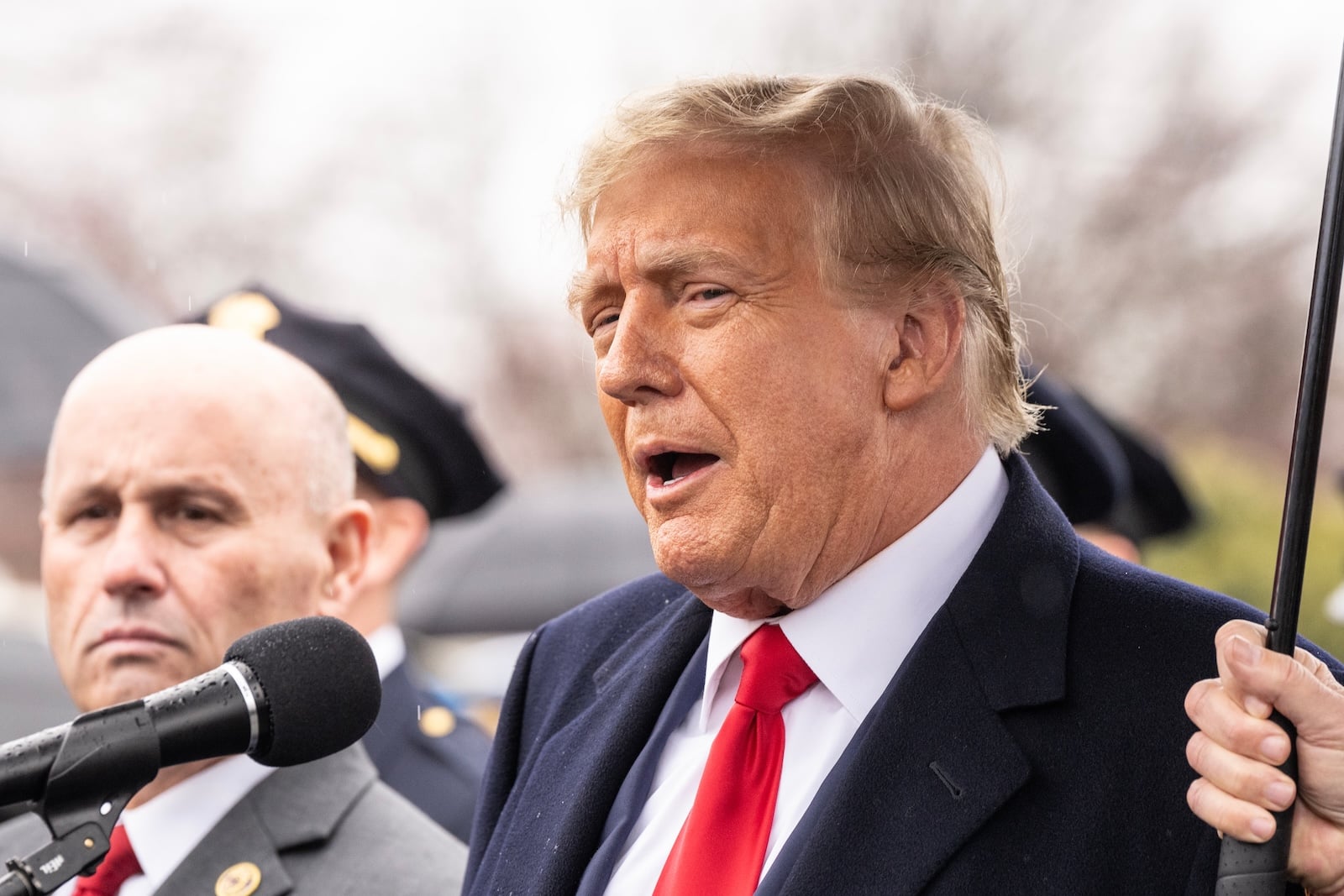
The US president has announced a trade investigation into the European Union and threatened tariffs. The trigger was the fines imposed on American technology companies, four of which he named with specific amounts. The comparison with the actual proceedings reveals inconsistencies.
Donald Trump announced on Friday on Truth Social that he would launch a Section 301 investigation against the European Union and impose tariffs. This was prompted by the €890 million fine that Brussels imposed on Google this week. In the post, he lists Apple, Meta, Amazon, and Google with specific sums, calls the EU's actions "illegal and highly unethical," and announces that he will completely reverse the penalties. At least one of the figures mentioned does not appear in any official Commission fine notice.
The sums mentioned and the actual procedures
| Company | Information in the article | Documented EU procedures |
|---|---|---|
| Apple | 15 billion dollars | €570 million DMA fine (April 2025) – the Commission's only penalty against Apple |
| Meta | $3 billion | $840 million (2024) and $200 million (2025) |
| over 18 billion dollars | approximately 12 billion euros since 2017 from five proceedings | |
| Amazon | $2.5 billion | not documented in the available reports |
The discrepancies are of a different nature. In Google's case, the stated sum is higher than the documented figure, but is within a real range: 2.42 billion euros in the Shopping case (2017), 4.1 billion for Android (2018, definitively confirmed by the European Court of Justice on July 2, 2026), 1.49 billion for AdSense (2019), 2.95 billion in the AdTech case (September 2025), and now 890 million under the Digital Markets Act.
Apple, however, does not fit into this category. The Commission has only imposed a single fine on the company: €570 million in April 2025 for violations of the Digital Markets Act.
Where the largest single item is likely to have come from
The article doesn't specify the source of the 15 billion euros. The only obvious explanation is the state aid case concerning Apple's tax arrangements in Ireland, which the European Court of Justice concluded on September 10, 2024 (Case C-465/20 P). This case involved approximately 13 billion euros, equivalent to about 14.5 billion dollars. This attribution is plausible, but only a hypothesis – the case itself isn't named.
If this is true, the description as a penalty would be inaccurate in two respects. It is a tax payment, not a fine: Apple is paying back taxes that, according to the court, the company would have owed anyway, based on tax rulings from 1991 and 2007. And the money did not go to the EU, but to the Irish state – a member state that itself granted the agreement and had fought for years against its revocation.
What's behind a 301 investigation
Section 301 of the U.S. Trade Act of 1974 authorizes the U.S. Trade Representative to investigate practices by other countries that are detrimental to U.S. trade. If the investigation reveals such practices, the government can impose tariffs or other trade restrictions. This same instrument formed the basis for the tariffs on China during Trump's first term.
The procedure works exclusively through American countermeasures. It has no effect on European penalty notices.
Why Washington cannot lift the penalties
Fines under the Digital Markets Act are imposed by the EU Commission, and can only be reviewed by the courts of the Union – firstly by the Court of Justice of the European Union in Luxembourg, then by the European Court of Justice.
Apple is already pursuing this path, so far without success. In early July, the court dismissed the lawsuit against the classification of the App Store and iOS as gatekeepers, thereby confirming the basis on which the DMA regulations apply. An announcement from Washington changes nothing. What a trade conflict can generate is political pressure on future decisions – not the reversal of decisions already made.
An accusation that mixes two types of proceedings
The threat is not new. The US government already described the fines against Apple and Meta as economic extortion last year, and the American trade representative has repeatedly raised the possibility of tariffs and restrictions against European suppliers.
What's new is the underlying calculation. It conflates procedures that are legally unrelated: fines under the Digital Markets Act penalize current market behavior and flow into the EU budget, while retroactive claims under state aid law correct completed periods and are borne by the member state concerned. This conflation creates a picture of European sanctions practice that doesn't align with the Commission's decisions – by more than twenty times in the case of the largest item on the list. (Image: Shutterstock / lev radin)
- Claude Opus 5: Anthropic's new AI model is here
- macOS 27: Hidden Siri interface with 13 voices discovered
- iPhone Ultra: 25 percent market share expected for foldables
- Apple TV: The Morning Show ends with season 5
- Apple Maps will be permanently installed in Ford electric cars by 2027
- EU imposes €890 million fine on Google
- Apple is preparing an AI shopping assistant for the Apple Store app
- WhatsApp: New features for CarPlay, iPad and Apple Music