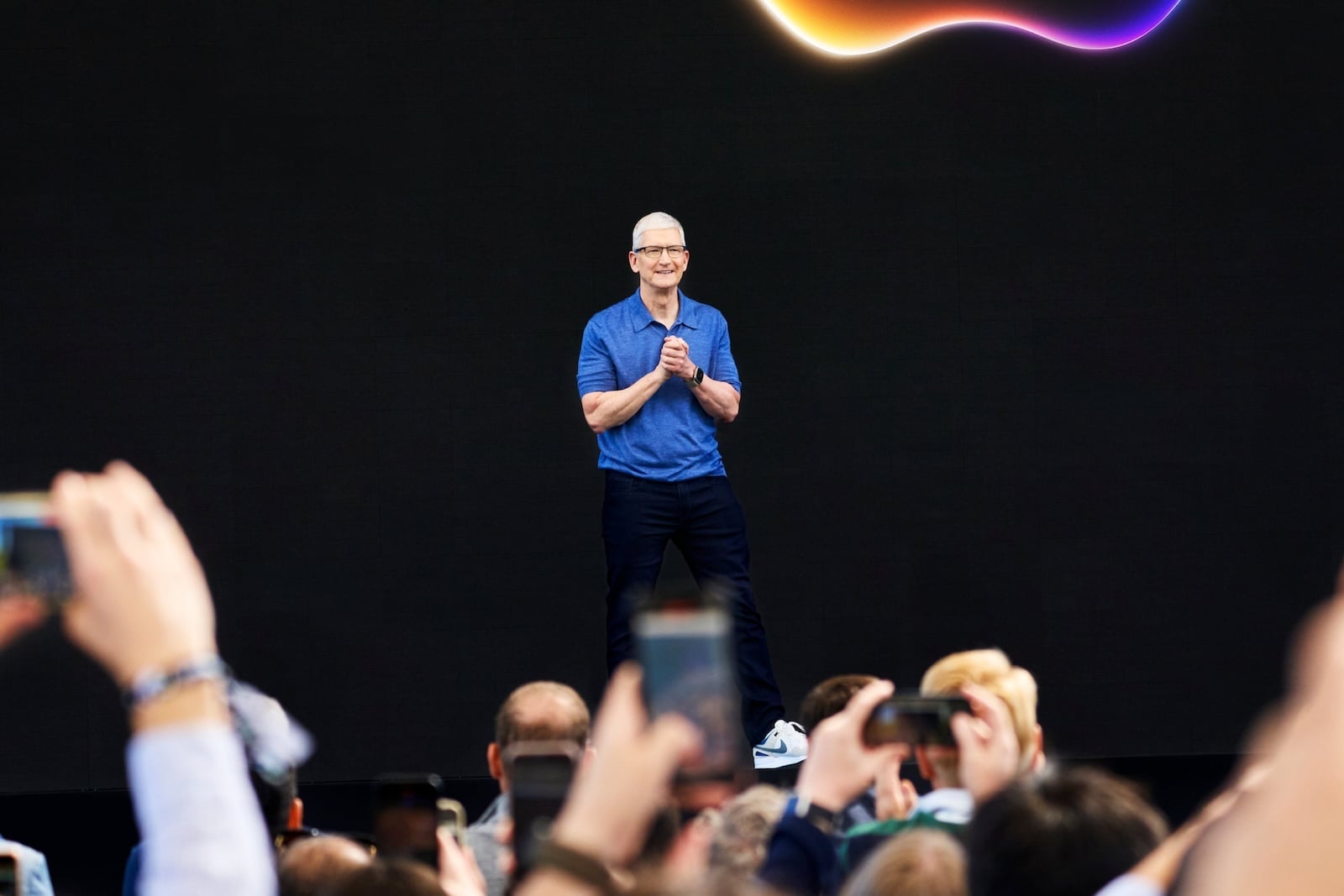
After fifteen years, Tim Cook chaired the quarterly conference call with analysts for the last time. Before the Q&A session, he took a few minutes to say goodbye – and answered a question that had remained unanswered until the very end.
The conference call regarding the third fiscal quarter largely followed the usual format: prepared statements from the CEO and CFO, followed by questions from analysts. The discussion focused on the $109.4 billion in revenue for the June quarter. Before Cook gave the floor to the analysts, however, he broke with the format for a personal interlude – clarifying how these meetings would proceed after September 1st.
Ternus will lead the conferences in the future
The real news value of the departure lies in a subordinate clause. Cook confirmed that John Ternus will lead the quarterly conferences going forward.
This was an open question until then, as there is no obligation to attend. A CEO is not required to participate in these meetings; the company fulfills its reporting obligations through notifications and filings with the Securities and Exchange Commission. Steve Jobs had largely delegated the conferences to his then-CFO and Cook, speaking himself only in exceptional cases. Ternus could have followed this path, but chose not to.
For analysts and investors, this is a significant decision. They will have the same direct access to the CEO as they have for the past fifteen years. Ternus will make his debut in this role in the fall when Apple presents its September quarter results. He has already gained some initial experience: In April, he made a brief appearance at the second-quarter earnings call, at that time still as the designated successor.
The farewell was brief
Cook's words, like his address at WWDC in June, remained reserved. He thanked the shareholders, especially the long-term investors, and the analysts who had followed the company over the years. The transition was proceeding smoothly, and he was confident in Ternus, its leadership team, and its workforce. There was no one better suited to take over the company. He had never been more optimistic than he was now.
After that, things returned to normal. The analysts who subsequently spoke thanked Cook in turn for his time at the helm.
Fifteen years without a single gap
Since taking office in August 2011, Cook has chaired every single one of these conferences – around sixty in total – without missing a single one, not even when suffering from a noticeable cold. This is in addition to the years prior, when he attended these meetings as Chief Operating Officer, together with the then Chief Financial Officer.
The format has hardly changed during this time. The prepared figures are followed by a Q&A session in which analysts try to glean details about upcoming products and regularly receive the same answer: The company does not comment on unannounced products. Cook himself described in 2020 how he takes a walk around Apple Park after every conference to unwind.
A single quarter now surpasses an entire Cook year
The gap between the beginning and the end can be seen in a single comparison. In fiscal year 2011, in the final stages of which Cook took office, Apple generated $108 billion in revenue and earned $26 billion. The June quarter just reported alone brought $109.4 billion in revenue and $29.8 billion in profit.
Apple now generates more revenue in three months than in the entire fiscal year in which Cook took office – and also earns more. Its market capitalization was just under $350 billion on August 24, 2011; by the end of July 2026, the company had temporarily surpassed the $5 trillion mark.
That evening, however, it became clear that records alone are not enough. For the current September quarter, Apple projected revenue growth of 9 to 11 percent, falling short of the roughly 12 percent analysts had expected. Cook cited supply bottlenecks as the reason, primarily affecting the Mac and, to a lesser extent, the iPhone and iPad – not due to weak demand, but because both product lines are performing better than anticipated and the company is reaching its limits in terms of expediting deliveries. Combined with services revenue that fell short of expectations, this temporarily pushed the stock down by around 8 percent in after-hours trading.
Responsibility changes on September 1st.
The handover of power will take place on September 1, 2026, after which Cook will move to the board of directors. The company's choice of this particular date is related to the fiscal year's cycle and the iPhone launch in the fall.
The two men's paths diverged: Tim Cook came to the top from logistics and operations, while John Ternus came from hardware development. This is the real break in this succession – for the first time since Steve Jobs, Apple is filling the position with someone who comes from product development. (Image: Apple)
- Customs refunds boost Apple's margin
- Apple invests $11.73 billion in research – a new record
- Apple has 1.5 billion paid subscriptions
- Apple Q3 2026: $109.4 billion in the best June quarter
- Qualcomm loses Apple business faster than expected
- DOJ wants to overturn Apple's access to government records
- App Store: Apple fights back against London's regulatory plans