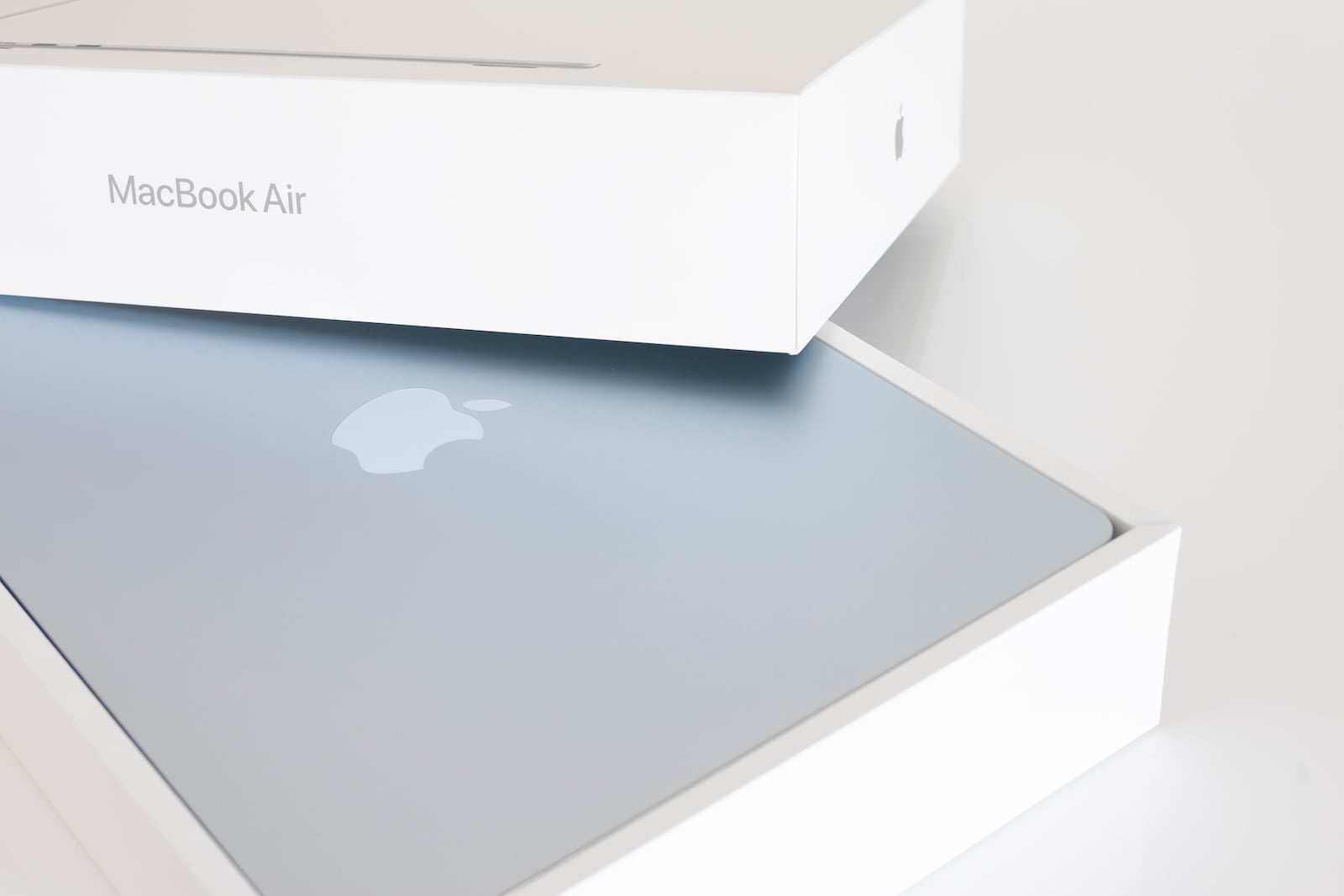
The MacBook Air has been one of the most popular notebooks in Apple's portfolio for years. With each new generation of Apple Silicon chips, the performance of the devices also improves. Now, for the first time, there are concrete benchmark results for the new MacBook Air with the M5 chip, showing just how significant the difference is compared to its predecessor with the M4 chip.
A Geekbench 6 benchmark, shared by Lance Ulanoff of TechRadar, provides the first measurable figures on the performance of the new model. This allows for a relatively accurate assessment of the performance leap the current MacBook Air represents compared to the previous generation.
While the figures are interesting, the result is not surprising to many observers. Apple has already used the M5 chip in other devices, which allowed the expected performance level to be estimated beforehand.
Why benchmarks are important for the MacBook Air
Benchmarks play a crucial role when new devices like the MacBook Air are released. They provide an objective basis for comparing different processors and device generations.
Geekbench 6 is particularly commonly used for this purpose. Among other things, the benchmark measures a device's CPU performance and outputs it as a score. An important metric is the multi-core score, which indicates how well a processor can utilize multiple processing cores simultaneously.
Modern applications in particular benefit from this capability. These include, for example:
- Video editing
- Software development
- Rendering
- Multitasking with multiple programs
A higher multi-core score often means that complex tasks can be processed faster. Therefore, Geekbench results provide a good indication of how powerful a new MacBook Air actually is.
First Geekbench results for the MacBook Air with M5 chip
The Geekbench 6 benchmark published by Lance Ulanoff shows for the first time concrete performance figures for the new MacBook Air with M5 chip.
In the multi-core CPU benchmark, the device achieves 17,073 points.
For comparison: The MacBook Air with M4 chip achieves 14,731 points in the same test.
This means the new model offers approximately 16 percent more performance than its predecessor. For an ultrathin notebook without active cooling, this is a remarkable performance increase.
The performance difference is particularly noticeable in tasks that utilize multiple processor cores simultaneously. These include, for example, working with multiple applications in parallel or running computationally intensive programs.
Geekbench comparison of different Mac models
To better assess the performance, it is worth taking a look at the Geekbench 6 multi-core results of various current Apple devices.
- MacBook Pro (M5 Max) – 29,233 points
- Mac Studio (M3 Ultra) – 27,726 points
- MacBook Pro (M4 Max) – 25,702 points
- MacBook Pro (M4 Pro) – 22,490 points
- MacBook Pro (M3 Max) – 20,960 points
- MacBook Air (M5) – 17,073 points
- MacBook Pro (M3 Pro) – 15,260 points
- MacBook Pro (M2 Max) – 14,740 points
- MacBook Air (M4) – 14,731 points
- MacBook Pro (M2 Pro) – 14,451 points
- MacBook Pro (M1 Max) – 12,345 points
- MacBook Pro (M1 Pro) – 12,345 points
- MacBook Air (M3) – 12,020 points
- MacBook Air (M2) – 9,709 points
- MacBook Neo (A18 Pro) – 8,668 points
- MacBook Air (M1) – 8,342 points
The figures clearly show that the new MacBook Air with the M5 chip significantly outperforms all previous Air models. At the same time, it still falls short of the more powerful Pro devices with Max or Ultra chips, which aligns with its positioning within the product line.
Why the result is not surprising
The benchmark results of the new MacBook Air are not unexpected for many observers. The reason for this is that the M5 chip has already been used in other Apple devices.
The 14-inch MacBook Pro and iPad Pro were already equipped with this processor last year.
These devices already gave a first impression of the performance the M5 chip is capable of delivering. The Geekbench result of the new MacBook Air therefore fits well with the performance profile of the current Apple Silicon generation.
Market launch and pre-order of the new MacBook Air
The MacBook Air with the M5 chip is now available for pre-order. The official sales launch is Wednesday, March 11th.
With this new generation, Apple continues its strategy of developing powerful yet energy-efficient processors for thin and light notebooks.
MacBook Air M5 achieves significantly higher benchmark scores
The first benchmark results clearly show that the MacBook Air with the M5 chip represents a noticeable performance leap compared to its predecessor. With 17,073 points in the Geekbench 6 multi-core test, the device performs approximately 16 percent better than the MacBook Air with the M4 chip.
This further establishes the MacBook Air as a powerful notebook that delivers solid performance despite its slim design. With its upcoming market launch on March 11, Apple is once again expanding its Mac lineup with a model that combines performance, efficiency, and portability. (Image: Shutterstock / Kaspars Grinvalds)
- Apple is restructuring its leadership: New names in management
- MacBook Neo: Apple focuses on design despite the low price
- iPhone 17e: Initial benchmarks show strong CPU performance
- Apple TV confirms: Silo season 4 has already been filmed
- Apple TV releases teaser for Ted Lasso Season 4
- Apple TV wins two awards at the GLAAD Media Awards
- Apple and Sydney Opera House support creative talent
- MacBook Neo: Initial benchmarks reveal its potential
- Apple M5 Max sets a true benchmark record
- Mac Studio: 512GB RAM upgrade no longer available for order
- OpenAI introduces GPT-5.4: More performance for ChatGPT
- John Ternus talks about MacBook Neo, AI and CEO rumors
- MacBook Neo could drastically change the notebook market
- MacBook Neo: New Studio Displays only usable to a limited extent
- Pentagon decision on Anthropic draws criticism
- macOS informs about USB-C limit on the MacBook Neo
- MacBook Neo: Why Apple chose this name
- New MacBook models will ship in Europe without a power adapter
- Apple Music introduces transparency tags for AI content
- Apple TV series "Stick" gets prominent reinforcements
- Apple's new Studio Displays use different chips
- Subscription apps: Why only a few apps are growing strongly
- iOS 26.3.1 & Co.: Apple releases new updates