Apple Watch, fitness trackers, and iPhones collect health data around the clock. But what do all these numbers actually mean – and how are they related? The Lune app aims to answer precisely this question by combining various measurements into a single, easy-to-understand score.
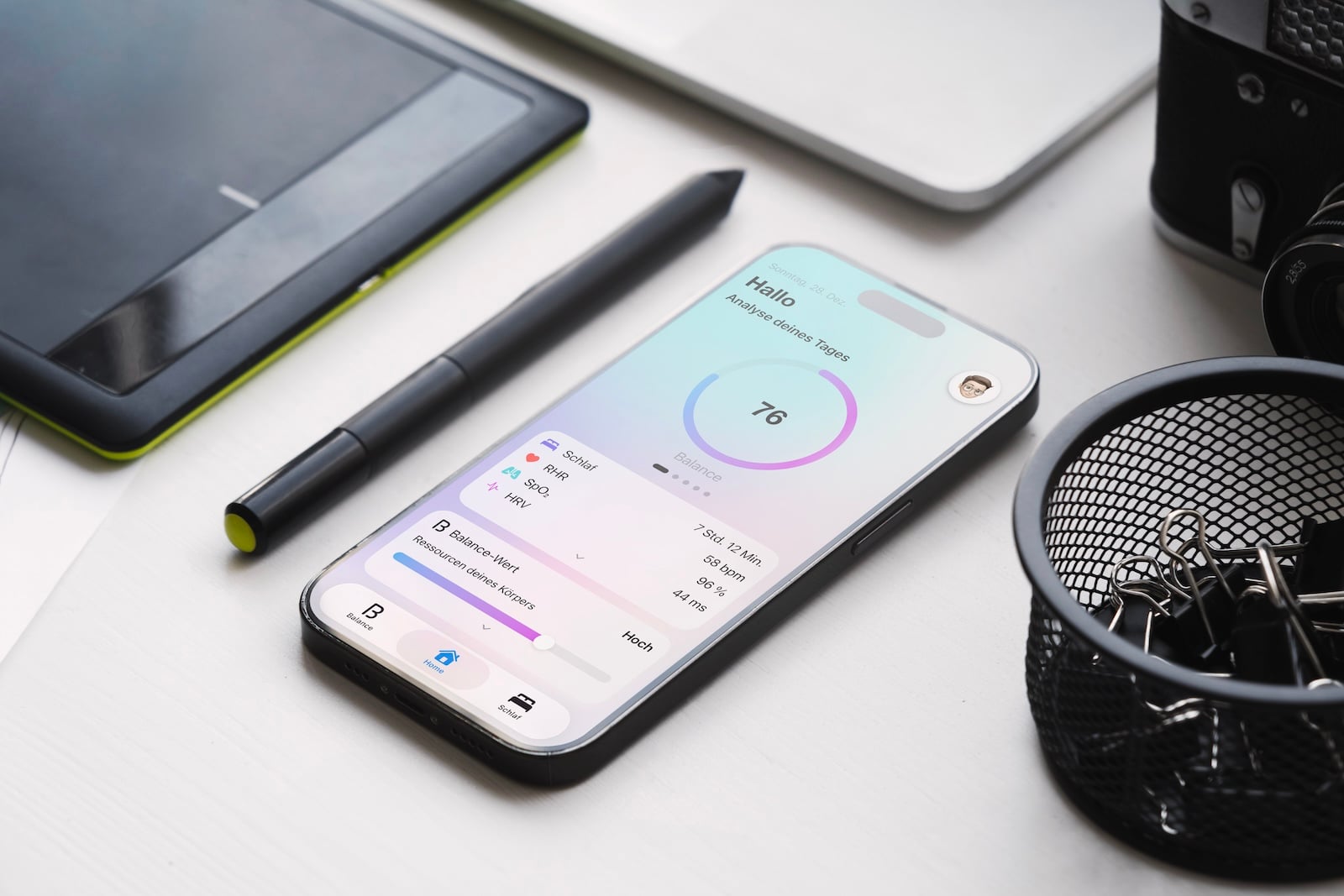
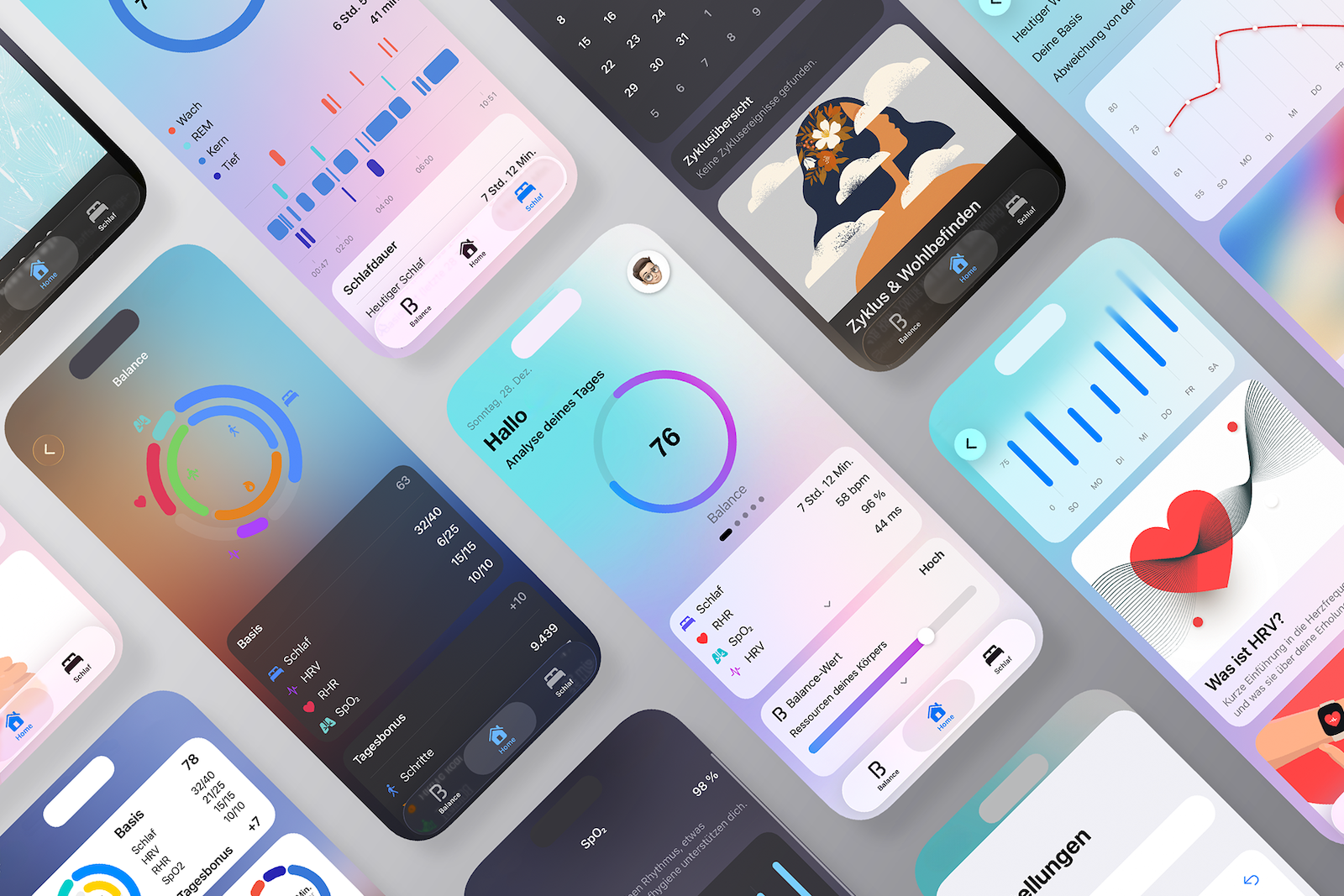
Heart rate, sleep stages, oxygen levels – anyone wearing a wearable device receives dozens of data points daily. The problem: individual values often mean little without context. Lune accesses the data in Apple Health and calculates a so-called balance score between 0 and 100. This score is intended to show at a glance the relationship between stress and recovery.
What is included in the balance value
The score is based on five areas: sleep duration and quality, heart rate variability (HRV), resting heart rate, blood oxygen saturation, and daily exercise in the form of steps, calories burned, and training minutes.
The app distinguishes between two levels. The foundation is nighttime recovery – that is, how well the body regenerated during sleep. Additional exercise during the day can further improve this value. The underlying principle is that without solid rest, activity is of little use.
Personal assessments twice daily
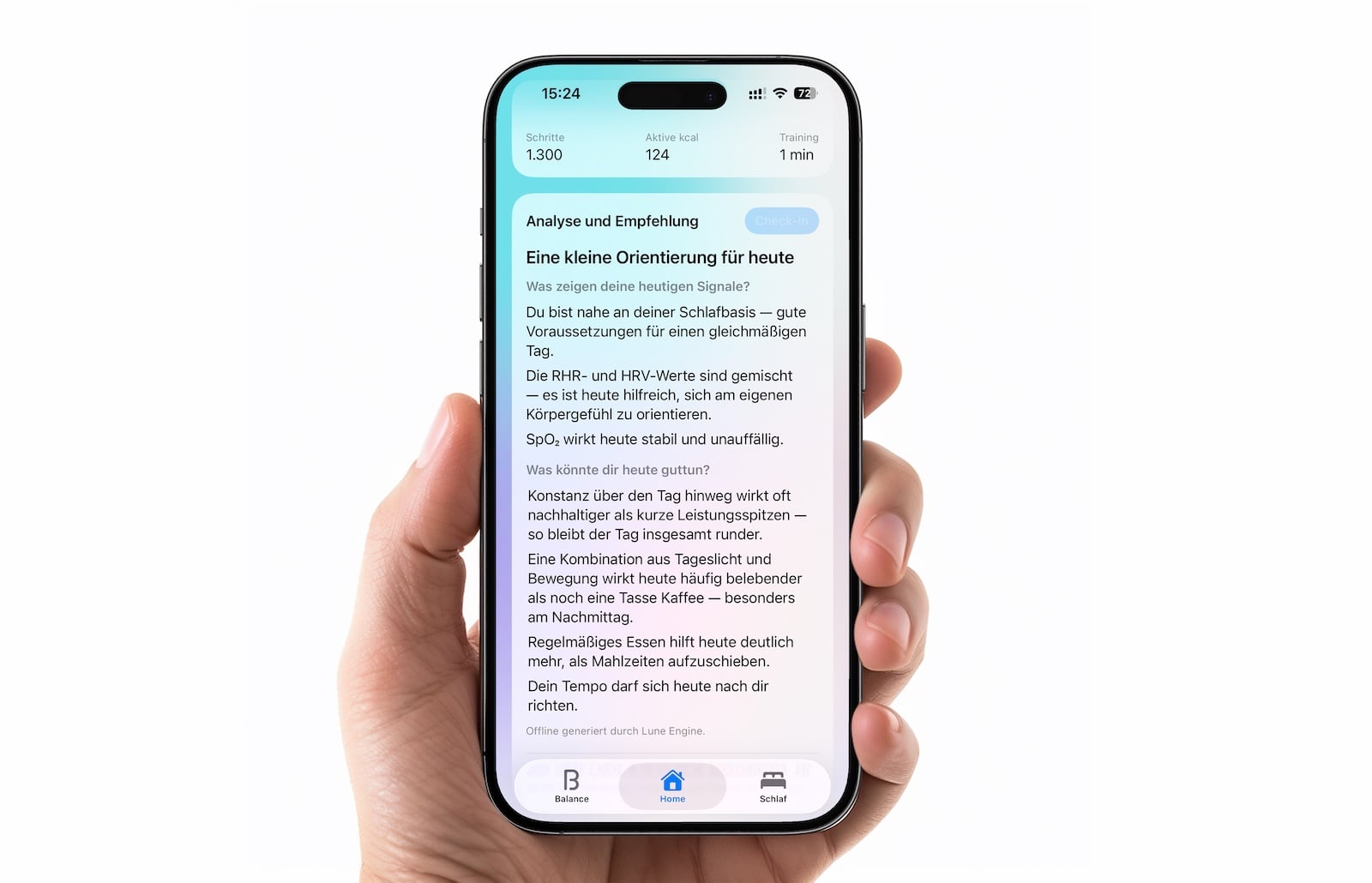
The analysis is powered by the so-called Lune Engine. It analyzes the collected data and provides an individual assessment in the morning and evening – including specific recommendations for the day or night.
What sets Lune apart from a simple data display is that the app compares current values to the user's personal average. For example, someone with an unusually low HRV not only sees the number but also the deviation from their normal value. This makes fluctuations tangible that would be lost in an isolated view.
Cycle data is included in the analysis
In addition to classic vital signs, Lune also incorporates the female cycle into its calculations. The app tracks the cycle's progression and considers the respective phase in its assessments and recommendations. This allows for a better understanding of the connections between cycle phase, energy levels, and regeneration.
Identify trends instead of reading individual values
Health doesn't change from day to day – it manifests in patterns. Lune visualizes this through a 7-day view with daily trends and a 28-day heatmap. Instead of individual data points, the app displays daily ranges with minimum and maximum values. This makes long-term trends visible and helps identify recurring patterns in everyday life.
All data remains on the iPhone
A key aspect of the app: all calculations and analyses take place exclusively locally on the iPhone. There is neither a cloud connection nor data transfer to external servers. Lune reads the existing data from Apple Health but does not modify it. For users who are particularly concerned about handling sensitive health data, this should be a decisive factor.
Lune: More than just another health app
Lune follows a clear approach: less data overload, more guidance. Instead of leaving users to grapple with individual values, the app combines various metrics into a comprehensible overall picture. The combination of daily score, historical trends, and context-based recommendations is aimed at anyone who wants to not just collect their Apple Health data, but actually use it.
The app is available in the App Store – with a free 7-day trial. After that, the subscription costs €7.99 per month or €59.99 per year. The best products for you: Our Amazon storefront offers a wide selection of accessories, including those for HomeKit. (Image: Lune)
- NSA uses Anthropic's Mythos despite dispute with the Pentagon
- The Savant: Apple's cancelled Thriller is coming this Summer
- Apple wins against Masimo: ITC ends import ban proceedings for Apple Watch
- BNP Paribas raises Apple price target to $300 – thanks to storage crisis
- India distances itself: Apple does not have to pre-install the government app
- Apple presents nearly 60 AI studies at ICLR 2026
- Apple grows by 20 percent in China – despite a shrinking smartphone market
- OpenAI Codex can now control the Mac, generate images, and remember workflows
- Anthropic introduces Claude Opus 4.7: Focus on sophisticated Software Development
- Apple achieves new record for recycled materials
- Apple is becoming the driving force behind the OLED notebook market
- Apple executives discuss the MacBook Neo, biggest flops, and smart glasses
- Pluribus Season 2: Filming starts in autumn 2026
- Claude Code for Mac: Anthropic completely rebuilds its Desktop App
- Smartphone market shrinks – Apple's pricing strategy pays off
- Apple threatened to remove Grok from the App Store
- OpenAI introduces GPT-5.4-Cyber: AI model for cyber defense
- Apple launches new Business Platform for Device Management and Customer Contact
- Apple vs. Jon Prosser: Leaker continues to refuse cooperation
- Analysts: Apple sacrifices margin for growth – Mac user base could double
- Amazon acquires Globalstar: Apple Satellite Services switch to Amazon Leo