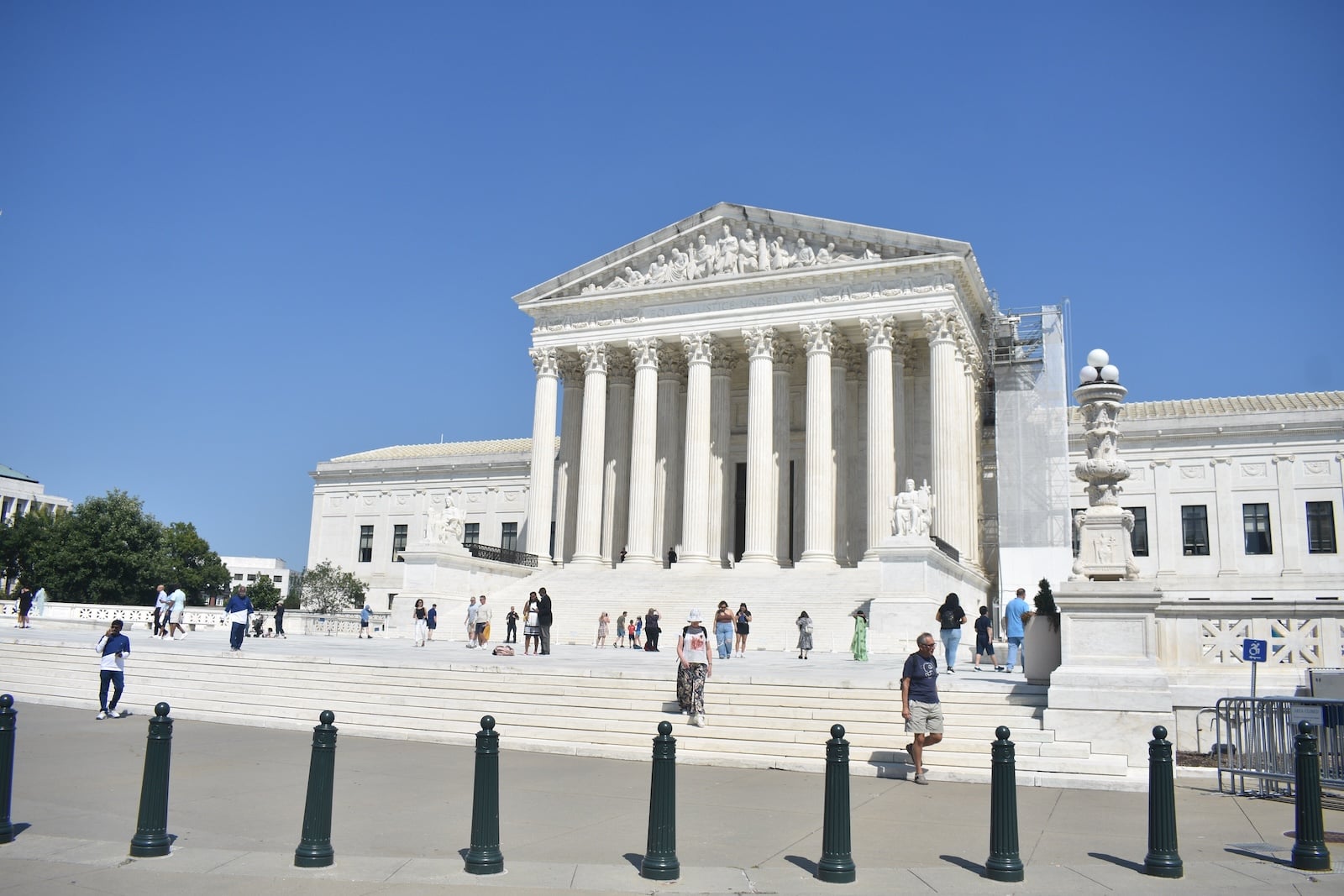
Apple today filed a petition with the US Supreme Court seeking to overturn two key lower court rulings in the dispute over the App Store rules. The petition focuses on the finding of contempt of court and the scope of the original order. This move marks the next escalation in a legal battle that has been ongoing since 2020 – and which could fundamentally alter the architecture of the App Store.
Following its defeat in the appeals court and the rejection of its emergency motion a few weeks ago, Apple is now resorting to its strongest remaining legal tool: a petition to the US Supreme Court. The announced path to the Supreme Court is thus becoming a concrete proposal. In the documents, Apple poses two questions whose answers could extend far beyond its own case. It is no longer just about commissions on external payment methods – it is about the fundamental question of how far US courts can go in holding individual companies accountable through preliminary injunctions.
The two questions Apple asks
Apple's petition challenges two aspects of the proceedings so far. Firstly, it concerns the finding that Apple disregarded the original court order. Secondly, it addresses the scope of the associated injunction.
Point of contention one: The determination of disregard
The original 2021 ruling only prohibited Apple from forbidding developers from indicating external payment options - buttons, external links, and calls to action. The ruling did not address the amount of any potential commission on such external purchases. This is precisely where Apple's argument begins: if the order does not explicitly address the issue of commission, Apple should not be held liable for collecting a commission in violation of the order.
The appeals court had taken a different view on this point in December. While it acknowledged that the wording of the order did not mention commissions, it based its contempt ruling on the argument that a party could also violate the "spirit" of an order. Apple is now challenging this argument precisely: A court order must clearly and unambiguously prohibit the objectionable conduct before someone can be held liable for contempt.
Point of contention two: The scope of the order
The second point of contention is even more fundamental from a legal perspective. The injunction applies not only to Epic Games, the original plaintiff, but to all registered developers worldwide who are represented in the US App Store – including Epic's direct competitors. From Apple's perspective, this contradicts a 2025 Supreme Court decision in Trump v. CASA, which explicitly limited the federal courts' authority to issue general orders extending beyond the parties directly involved.
Apple argues in the petition that the appeals court effectively created an exception for antitrust or competition cases – even though Epic was unable to enforce its nationwide antitrust claims in the original proceedings.
How the case got to this point
The dispute began in 2020 when Epic Games circumvented Apple's in-app purchase system in Fortnite via a server-side update, after the app had already passed App Review. Apple immediately removed Fortnite from the store, and Epic filed a lawsuit. In the years that followed, Epic lost its far-reaching antitrust claims, and the core of the App Store's business model was essentially upheld.
One point, however, went to Epic: In 2021, the court ruled that Apple could no longer prohibit developers from indicating alternative payment options outside of its own system. Apple adjusted the rules but introduced new fees and added further implementation requirements. Epic sued again – in April 2025, the relevant district court in Northern California ruled that Apple had violated the original ruling.
Apple appealed. The Ninth Circuit Court of Appeals overturned the district court's blanket ban on commissions, but upheld the contempt finding and remanded the case. The district court is now tasked with determining what commission Apple may charge on purchases made outside the App Store.
In early May, Apple attempted to halt these proceedings with an emergency motion to the Supreme Court – the court rejected the motion. This cleared the way for the district court to specifically address the issue of commissions. Apple is now launching the full petition at precisely this stage.
What happens if the Supreme Court accepts
Acceptance of the petition would be a significant victory for Apple, as it would influence the entire subsequent proceedings in the lower courts. Overturning the contempt ruling would not only eliminate the basis for calculating the commission but also shift the public perception of the legal dispute. Apple has already argued in previous submissions that the contempt ruling carries weight, regardless of the eventual commission rate, because it shapes the public perception of the dispute.
Should the Supreme Court also follow the reasoning behind the CASA decision, the implications would extend far beyond the Apple-Epic dispute. Federal courts would then find it more difficult to issue orders binding entire industries instead of just individual parties.
What happens if the Supreme Court rejects it?
If the Supreme Court rejects the petition, the case will proceed to the District Court for the Northern District of California. There, the court will determine what commission Apple is allowed to charge on external purchases. A significantly lower commission than the originally announced 27 percent is realistic. For developers in the US App Store, the current situation, in which external links are permitted free of charge, would remain in effect during the transition period.
Experience from recent years dampens expectations of an Apple-friendly solution: The Supreme Court already rejected the applications from both Apple and Epic in 2024 and most recently dismissed Apple's emergency application in May.
Impact outside the USA
The regulatory impact of this case extends far beyond the US courts. In the European Union, Apple has already fundamentally restructured its App Store model under the Digital Markets Act. External payment methods, alternative stores, and reduced commissions are now standard practice there. However, the parallel US legal proceedings act as an additional lever: decisions in the US change global expectations regarding Apple's App Store policies – even in markets where no direct legal action is underway.
Apple's next stage in the App Store battle
The Supreme Court must first decide whether to even accept the petition. This hurdle is high: only a small fraction of all petitions submitted are admitted for a decision. Should the Supreme Court accept the petition, the case would be delayed by several more months. Should it reject it, the proceedings continue in the District Court, and Apple must prepare for a specific commission ruling. Both outcomes are crucial for the App Store architecture of the coming years - and for the question of how much leeway Apple will retain in monetizing third-party content in the future. (Image: Shutterstock / Julian Prizont-Cado)
- iPhone sales in Latin America: 31 percent growth, Mexico with record jump
- Silo Season 3: New teaser reveals crucial twist for Juliette
- Apple TV broadcasts its first major live sporting event entirely on iPhone 17 Pro
- tvOS 27 brings enlarged text to the Apple TV 4K
- Apple Music publishes open letter on its handling of AI music
- iOS 27 automatically subtitles personal videos
- Apple TV renews "Knife Edge: Chasing Michelin Stars" for season two
- Eddy Cue is honored as "Entertainment Person of the Year" at Cannes Lions
- App Store: Apple blocks over 2.2 billion dollars in fraudulent transactions in 2025
- WhatsApp is testing messages that disappear after being read
- Apple acquires Animato: Avatar technology and talent
- Apple TV makes summer 2026 Snoopy's season
- Anthropic expands Claude Managed Agents and brings in Andrej Karpathy
- Apple Sports 4.0 is here: World Cup mode for the iPhone
- Apple's voice control reveals what the new Siri will be able to do
- Apple Brings Apple Intelligence to Its Accessibility Features
- macOS 27: Four Intel Macs fall behind
- WWDC 2026: Apple confirms date, program and streaming details
- Indian antitrust case: Apple gets a two-month extension – but must deliver
- Apple's secret business: How defective chips become a multi-million dollar cost-saving model
- Apple and Epic set a timetable for new commission negotiations