
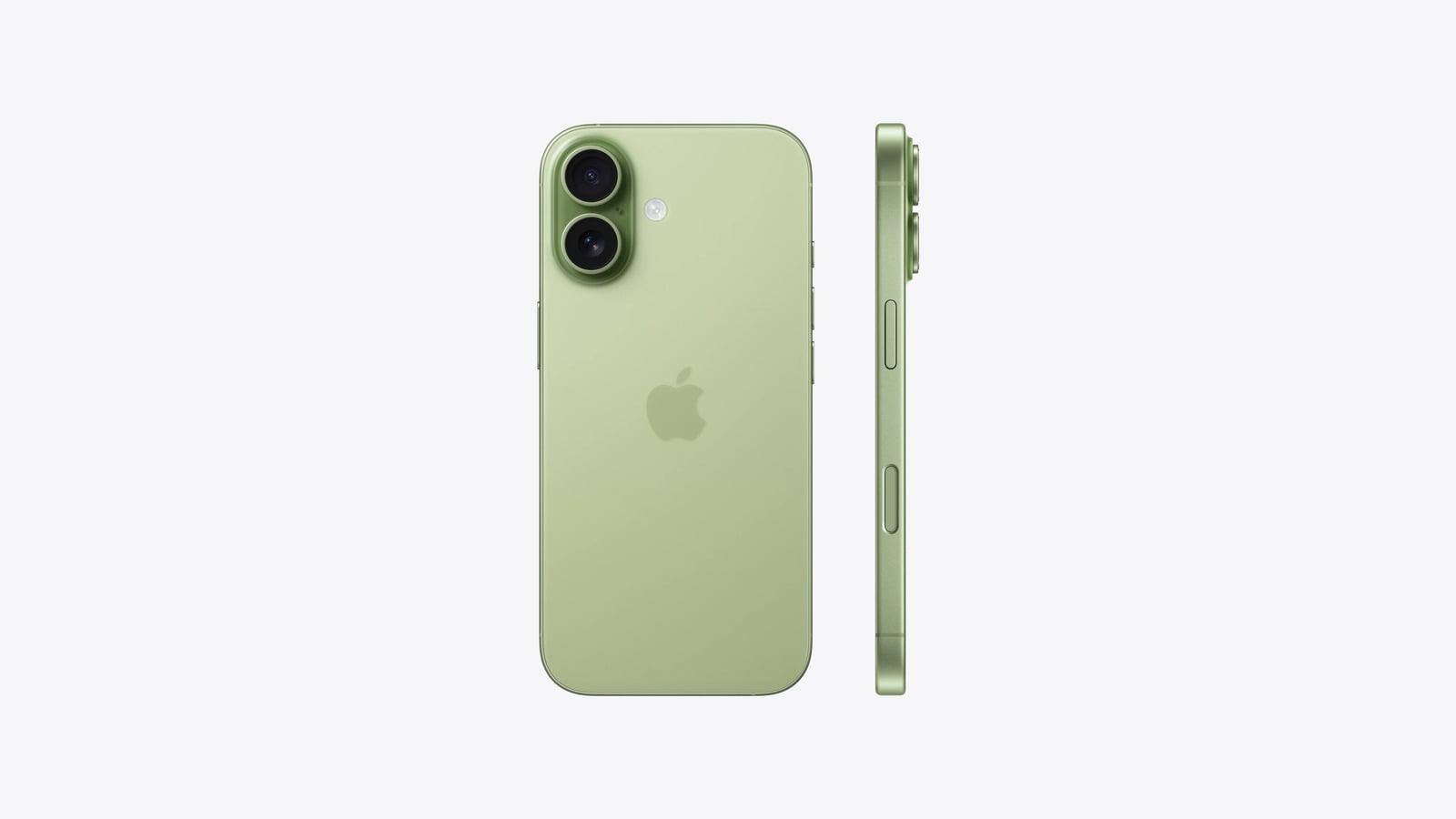
Two out of every three expensive smartphones worldwide are iPhones. And the expensive segment of the market is larger than ever: Almost one in three devices sold now falls into what market researchers consider the premium segment. For buyers in Germany, Austria, and Switzerland, however, this figure represents a different calculation than the headline suggests.
Counterpoint Research's analysis of the first half of 2026 confirms the trend of recent months: while the overall market is shrinking, the high-end segment is actually growing. The storage crisis has been splitting the smartphone market in two for months – budget devices are becoming disproportionately more expensive, while high-end devices continue to sell. The new figures show just how much Apple is benefiting from this, and at the same time, that the 65 percent market share is by no means a record high for the company.
Key Facts at a Glance
- According to Counterpoint, the premium segment starting at $600 accounted for 29 percent of all smartphones sold worldwide in the first half of 2026 – four percentage points more than in the same period of the previous year and the highest value ever recorded.
- Apple holds 65 percent of this segment, down from 63 percent in the first half of 2025. In 2022, it was still 74 percent.
- Samsung remains at 19 percent. Together, they reach 84 percent, down from 82 percent last year.
- The driving force at Apple is the iPhone 17 series, according to Counterpoint especially the base model.
- The $600 threshold is a segment boundary used by market researchers, not a retail price: In Germany, the cheapest current iPhone starts at €699.
A segment at record levels, a brand on its way back up
Counterpoint sets the boundary for the premium segment at $600. Whether this refers to the end-customer or wholesale price is not entirely clear from the published figures. This is irrelevant for market analysis, but very important for applying it to German price tags – more on that below.
Within this segment, market shares shift more slowly than the focus on individual quarters might suggest. Apple's 65 percent represents a year-on-year recovery, but is not a record high: in 2022, its share was nine percentage points higher. Samsung improved from 17 to 19 percent over the same period.
| Share of the premium segment | H1 2022 | H1 2025 | H1 2026 |
|---|---|---|---|
| Apple | 74 % | 63 % | 65 % |
| Samsung | 17 % | 19 % | 19 % |
| Apple and Samsung together | 91 % | 82 % | 84 % |
| Other manufacturers | 9 % | 18 % | 16 % |
Counterpoint attributes the nine percent increase in unit sales to the iPhone 17 series, specifically the base model. This reverses Apple's decline from the previous year, which analysts had attributed to increased competition in China. Samsung saw a three percent increase, even though the Galaxy S26 series launched later than usual; according to Counterpoint, the Ultra model accounted for more than half of all S26 sales. However, the strongest percentage jumps were recorded by Oppo with 69 percent and Vivo with 20 percent – from significantly smaller bases.
Why expensive devices win in an expensive market
The explanation from the responsible analyst, Harshit Rastogi, focuses on costs: Rising memory and component prices are pushing the entire price structure upwards. Because mid-range Android devices are becoming significantly more expensive, their price difference to older or discounted high-end models is shrinking. Someone who was planning to spend 500 euros anyway is more likely to end up with a discounted flagship model than a new mid-range device.
The same mechanism continues at a lower level. Apple's attempt to exert pressure on memory prices via a Chinese supplier has failed because the manufacturer lacks the necessary production technology. For Apple, the half-year report thus means one thing above all: The cost situation that causes the company problems in procurement gives it a sales advantage over manufacturers who rely on the entry-level segment.
Counterpoint explicitly mentions financing, trade-ins, and buyback programs as a second lever, which manufacturers use to cushion the entry into the high price segments. Samsung has extended its Galaxy Forever program to additional markets for this purpose.
600 dollars is a low hurdle in Germany
For buyers in Germany, Austria, and Switzerland (DACH region), the segment boundary is not very meaningful because it is almost always exceeded. The iPhone 17e costs €699 with 256 GB in the German Apple Store, the iPhone 17 starts at €949, the iPhone 17 Pro at €1,299, and the Pro Max at €1,449. Not a single current iPhone falls below this threshold – regardless of whether you read it as the end-customer price or the wholesale price.
In practical terms, this means that what Counterpoint describes as a global trend toward premiumization has long been the norm in German-speaking countries. The decision here isn't between mid-range and high-end, but rather within the iPhone lineup – a consideration that the comparison between the iPhone 17, Air, and 17e, with their specific differences in features, clearly illustrates.
Installment purchase yes, leasing no
The second lever mentioned by Counterpoint has a gap. Apple offers installment payments in Germany via Openbank Pay, with terms between 3 and 36 months and zero percent effective annual interest, plus the option to trade in your old device. However, the rental model, where the device is returned after the term, is missing: Apple Upgrade launched exclusively in the US at the end of July.
Counterpoint cites precisely this model as one of the reasons why expensive devices continue to sell despite increased prices. In the US, Apple is already using the tool that analysts describe as driving premiumization, but not yet in Europe.
Why 65 percent is not a record for Apple
The record-breaking news belongs to the segment, not the company. Apple's market share fell by nine percentage points compared to 2022, but recovered two of those points last year. This figure describes a recovery, not a meteoric rise – and it represents a share of a pie that is itself growing while the overall market shrinks. A rising percentage in an expanding segment is the most favorable scenario, but it says nothing about how many devices will ultimately end up on store shelves.
Anyone planning to buy a new iPhone this fall should therefore focus less on market share and more on availability. TSMC is already experiencing a backlog of processors due to a lack of suitable memory – a bottleneck that could ultimately prevent it from meeting demand in the premium segment.
What's putting pressure on the figure in the autumn quarter
The established starting point: a 65 percent market share with nine percent growth, driven by the base model of a series that has been on the market since September 2025. What will be added from September onwards depends on a generation whose composition and pricing are not yet finalized – the current status can be found in the overview for the iPhone 18 Pro.
From here on, we depart from the source material: We expect Apple to maintain its segment share in the second half of the year, but not to significantly increase it. This is supported by the fact that competitors in the entry-level segment continue to face cost pressures, leading buyers to upgrade to higher-end models. However, a supply bottleneck for its own new device is costing Apple precisely the sales volume needed to support its market share, and Oppo and Vivo are currently experiencing double-digit growth in the premium segment. This is an assessment, not a report – the next reliable figures will only be available with the full-year analysis.
Looking back helps to gauge expectations: Apple was already at the top of the premium segment last September, yet still under pressure. Its leading position is stable, but the size of its lead is not. (Image: Apple)
- Apple vs. Prosser: No contact for a month
- macOS Tahoe 26.6.1 closes a gap in screen sharing
- GPT-5.6 Sol: ChatGPT removes the limit in the free plan