The global smartphone market contracted by over 4 percent in Q1 2026, ending two and a half years of growth. Apple is among the few manufacturers that still managed to increase sales – thanks to stable prices, while the competition raised them.
The global memory chip shortage is now hitting the smartphone market hard. According to IDC, global smartphone shipments fell by 4.1 percent year-over-year in the first quarter of 2026 – marking the end of a two-and-a-half-year growth period. And it's getting worse: IDC expects the situation to worsen in the coming quarters. For Apple, however, the downturn seems to be more of an opportunity than a problem.
The cause of the market slump is clear: Rising memory chip prices – in some cases by over 100 percent – are forcing most smartphone manufacturers to pass the costs on to consumers. In some emerging markets, smartphone prices have risen by 40 to 50 percent, which is massively dampening demand. Apple, on the other hand, has kept its prices stable so far – and is profiting from this.
Apple and Samsung are growing – but differently
IDC notes that both Apple and Samsung increased their shipments in Q1 2026: Samsung by 3.6 percent and Apple by 3.3 percent year-over-year. Both companies have sufficiently high margins on their premium devices to absorb the increased component costs without raising prices.
However, Samsung yesterday raised prices for several devices – including the Galaxy Z Flip 7, the Galaxy S25 Edge, and the Galaxy S25 FE, as well as almost all current Galaxy tablets. The increases primarily affect storage upgrades and range from $40 to $80 per device. This could leave Apple as the only major manufacturer to keep its smartphone prices unchanged.
Apple's conscious decision
The IDC data confirms what analysts predicted last week: Apple is deliberately accepting lower hardware margins to gain market share in the current market environment. This strategy isn't just working for the Mac – it's also proving effective for the iPhone. According to Counterpoint, Apple was the smartphone market leader for the first time in a first quarter in Q1 2026, increasing its market share to 21 percent.
The rationale behind this is that every new iPhone user is a potential subscriber to Apple Music, iCloud+, Apple TV, and other services. The high margins in the services business compensate for the short-term decline in hardware margins.
What happens next
IDC warns that the decline in Q1 is just a taste of what's to come. The memory chip situation is likely to worsen in the coming quarters and could persist until the end of 2027. For manufacturers with thin margins—that is, most Android vendors—this means further price increases, declining demand, and shrinking production volumes.
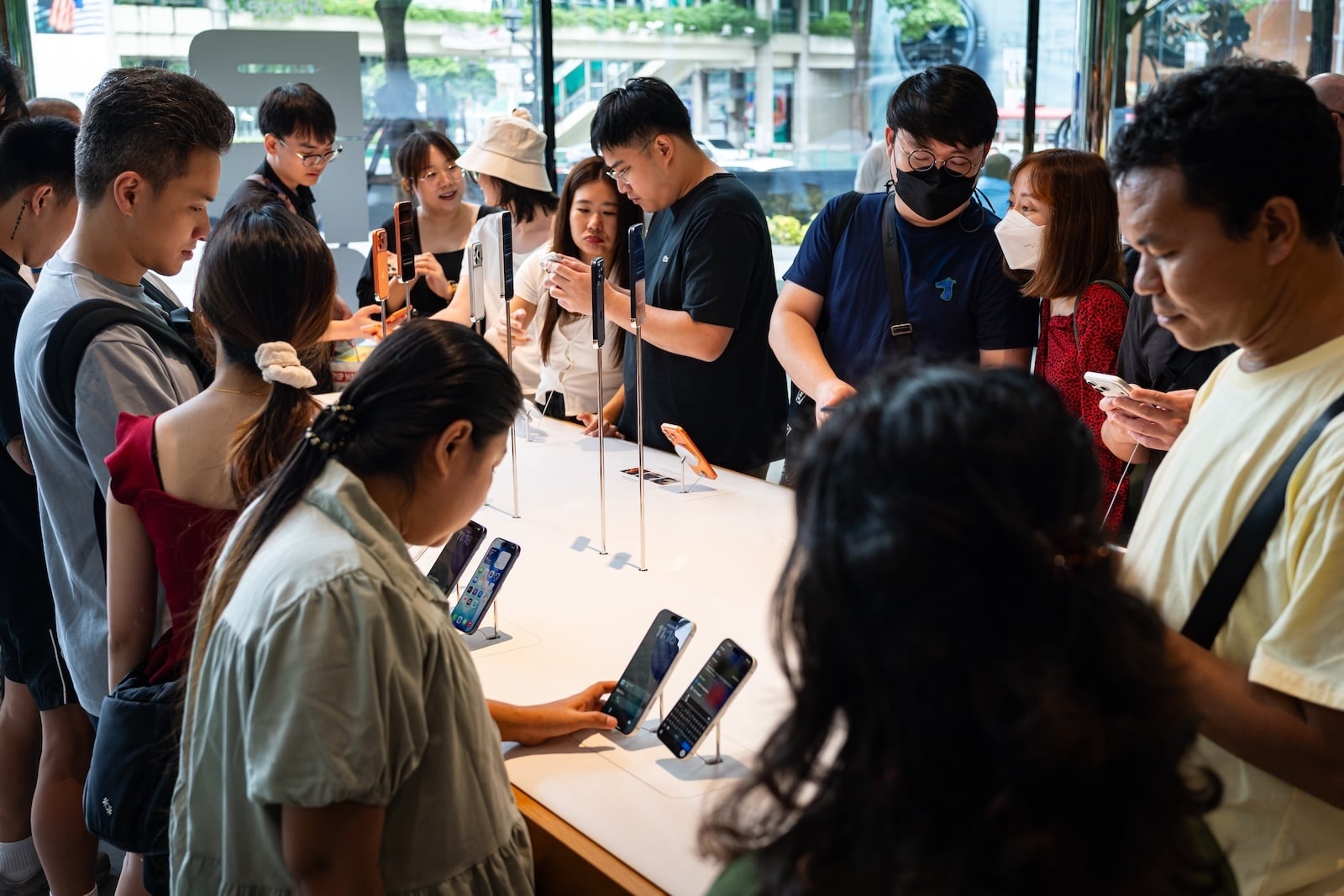
Apple is in the unusual position of being able to grow in a shrinking market. The sustainability of this strategy will be revealed in the earnings report on April 30th – that will show for the first time just how much pressure margins are actually under. (Image: Shutterstock / Wongsakorn 2468)
- Apple threatened to remove Grok from the App Store
- OpenAI introduces GPT-5.4-Cyber: AI model for cyber defense
- Apple launches new Business Platform for Device Management and Customer Contact
- Apple vs. Jon Prosser: Leaker continues to refuse cooperation
- Analysts: Apple sacrifices margin for growth – Mac user base could double
- Amazon acquires Globalstar: Apple Satellite Services switch to Amazon Leo
- What Analysts expect from Apple's Q2 2026
- Hackers are attacking iCloud backups via fake Apple websites
- iOS 26.5 Beta 2: Apple continues testing phase
- Apple's AI chief John Giannandrea is leaving the Company
- Mac mini & Mac Studio: Apple stops orders for some models
- Apple becomes smartphone market leader for the first time in a first quarter
- Apple showcases AI and AirPods Pro 3 Research at CHI 2026
- WhatsApp brings Status Updates to the Chats tab
- FBI recovered deleted Signal Messages via iPhone Database
- Mac sales grow by 9 percent and outperform the PC market
- OpenAI halves the price of ChatGPT Pro – with a focus on Codex
- macOS 26.4.1 released: Bug fixes for the Mac
- Apple Intelligence vulnerable to prompt injection attacks
- Apple requests Samsung Data in US Antitrust Case
- iOS 26.4.1 activates Theft Protection on Company iPhones
- Self-Service Repair: New parts for MacBook Neo & Co.