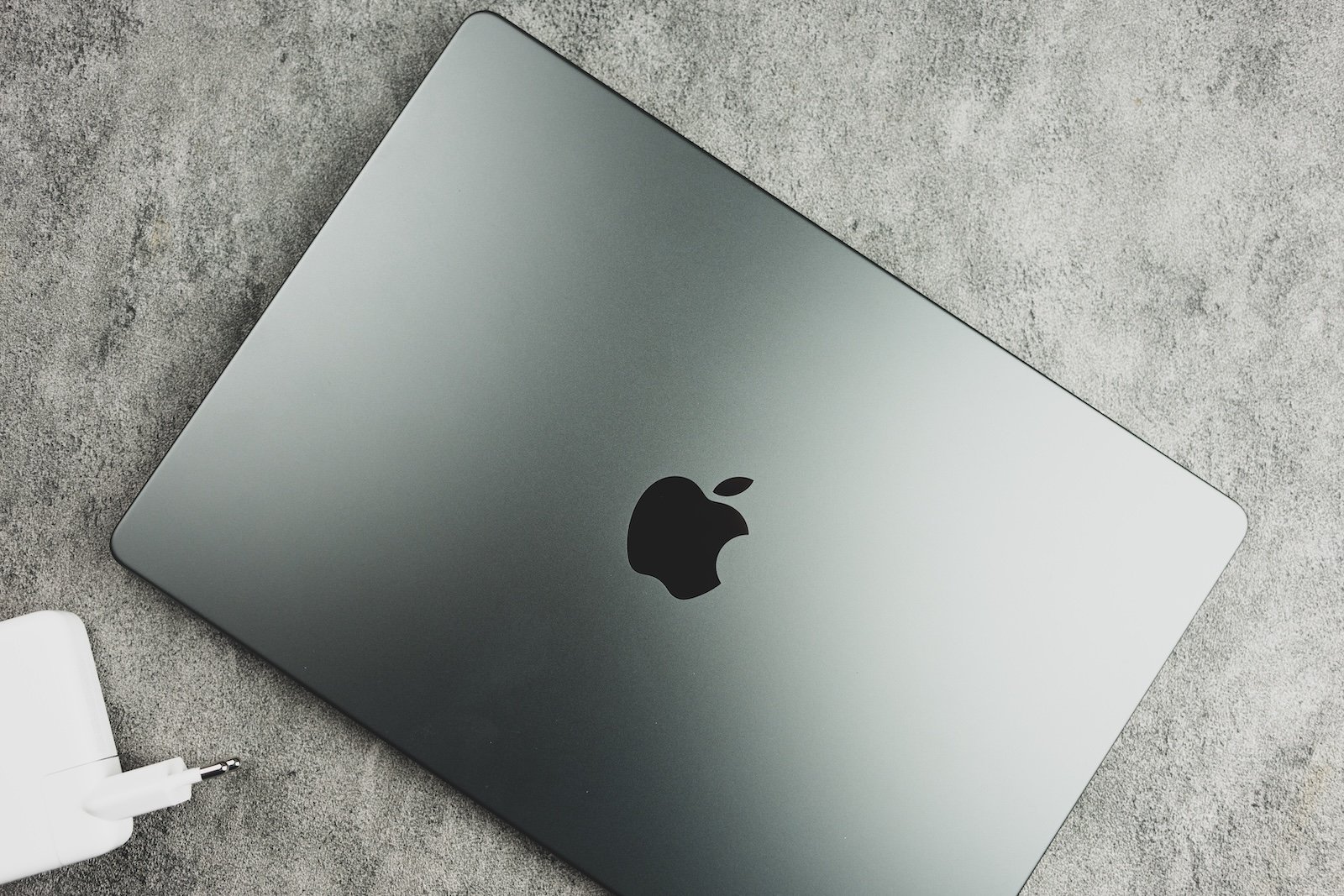
The MacBook could receive a fundamental privacy upgrade in the coming years. A recent report from market research firm Omdia suggests that Apple plans to integrate privacy-blocking technology into future MacBook models within the next three years. The goal is to protect screen content from side views, thus significantly increasing everyday privacy.
Data privacy on mobile devices is becoming increasingly important. Especially in public environments like trains, cafes, or open-plan offices, there is a risk of confidential information being unintentionally intercepted. This so-called "shoulder surfing" is precisely what is to be prevented directly at the hardware level in the future.
The Omdia report, picked up by the well-known leaker Ice Universe among others, suggests that Apple is working on a solution deeply integrated into the MacBook's display technology. This is not a simple overlay, but a technically complex implementation at the panel level.
Planned privacy technology in the MacBook
The planned technology is designed to deliberately restrict the viewing angle of the display. Specifically, this means that only those sitting directly in front of the MacBook will be able to see the screen content clearly. People sitting to the side will see a dark or blurry image.
This would give the MacBook a feature that previously could only be achieved using external privacy screens or special monitors. The difference is that the technology is integrated directly into the display.
According to Omdia, corresponding MacBook models should be equipped with a comparable solution by 2029 at the latest. This is a forecast based on analyst estimates and not confirmed insider information.
Comparison with Samsung's new privacy feature
Samsung will launch a similar concept later this year with the Samsung Galaxy S26 Ultra. Its integrated privacy function operates at the pixel level and combines special OLED hardware with software control.
Samsung states that the development of this technology took over five years. It utilizes so-called Flex Magic Pixel OLED hardware, which, in conjunction with software controls, enables precise adjustment of the viewing angle.
Unlike traditional privacy filters, this one doesn't apply a permanent filter to the entire screen. Instead, it allows for individual adjustments:
- Activating privacy mode only for specific apps
- Automatic activation upon password entry
- Protection for notification pop-ups
- Adjusting the intensity of the restricted viewing angle
- Option to completely disable the mode
Samsung describes this feature as an extension of its Samsung Knox security platform, speaking of "visible privacy and tangible security".
Samsung's concrete implementation of the technology increases competitive pressure on Apple.
Apple's patents against "shoulder surfing"
Apple already explored similar concepts in 2023. The company filed two patents aimed at preventing shoulder surfing.
A patent describes a privacy film for curved displays like those on the iPhone. This solution limits light emission to a narrow forward angle, so that content remains visible only when viewed directly from the front.
The second patent relates to flat screens like those in the MacBook. It describes a technology that uses louvers or liquid crystal elements to dynamically restrict lateral visibility. This would allow the viewing angle to be actively controlled.
It's important to note that patent applications are not a guarantee of market launch. They merely demonstrate that Apple is researching relevant solutions.
Connection to OLED displays in MacBook
Omdia's timeline aligns with general expectations for the transition of the MacBook product line to OLED displays. It is considered likely that the MacBook Pro will be equipped with an OLED panel either this year or by early 2027 at the latest. The MacBook Air is expected to follow shortly thereafter.
OLED technology enables precise control of individual pixels. This is a key requirement for a privacy screen solution that operates at the pixel level. Industry observers assume that Apple could rely on suppliers like Samsung for these panels.
Should this combination of OLED hardware and software control be implemented, an integrated privacy mode in the MacBook would be technically feasible.
MacBook display of the future: Many signs point to integrated data protection
Omdia's forecasts are based on analyst estimates and not on internal information from Apple's supply chain. At the same time, patents are not proof that a product will actually be released.
Nevertheless, several developments are intensifying: Apple's patents from 2023, the planned switch to OLED displays, and Samsung's market launch of a comparable technology in the Galaxy S26 Ultra.
Should the predictions prove accurate, the MacBook could feature integrated privacy screen technology by 2029, automatically shielding the display from side views. This would integrate data protection more directly into the device's hardware, rather than relying solely on additional accessories.
MacBook with integrated protection: A logical next step
The MacBook may be on the verge of a significant advancement in display security. Built-in privacy screen technology would offer clear added value, especially in public work environments.
There's still no official confirmation from Apple. But analyst reports, existing patents, and technological advancements in OLED panels paint a clear picture: The MacBook could become not only more powerful but also significantly more discreet in the future. (Image: Shutterstock / Dontree_M)
- Apple launches hardware offensive in spring 2026
- CarPlay in Teslas: Why it's taking longer
- Affordable MacBook: All the info on the March launch
- iOS 27 brings more stability and battery life
- iPhone 18 Pro: These changes are planned
- iPhone Flip: Prototype apparently already tested
- The iPhone Fold brings new life to the book format
- Siri: Apple struggles with AI upgrade problems
- iPhone 18 Pro: Will true internet via satellite be coming?
- iPhone 18 Pro: Prices likely to remain stable despite high costs
- AirPods Pro with cameras: This is what Apple is planning for 2026
- Apple M5 Leak: Pro and Max could be the same chip
- iOS 27: Focus on bug fixes and system performance
- Apple Fitness+ undergoes restructuring: What's next?
- iPad 12 & iPad Air 8 are coming soon: Here's what we know so far
- iPhone 17e just before release: Here's what's inside the new model
- MacBook Pro with M5 Pro and Max: Launch date leaked?
- iOS 26.4: New Siri features and information about the beta launch
- iPhone 18 Pro: Hints of two major camera changes
- Apple plans major CarPlay update with AI chatbots
- iPhone 18 Pro Max: Leaks suggest battery upgrade
- iOS 27: Apple Health+ will only appear in a scaled-down form