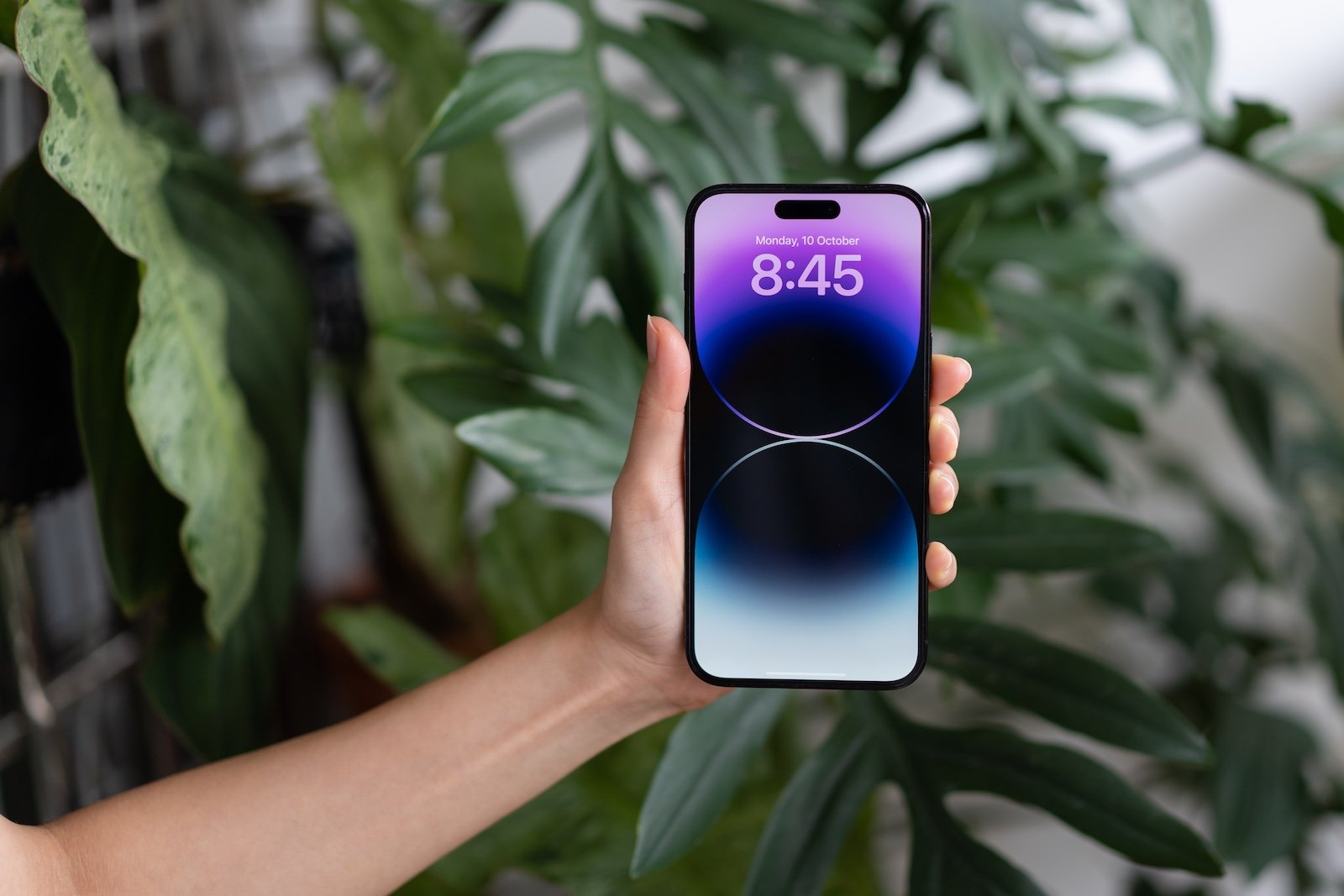
For years, there have been recurring hints that Apple intends to implement Face ID without a visible notch on the front of the device. Now, a signal from the display supply chain supports this direction. It concerns infrared technology under the display, which, while not yet confirming a finished product function, could lay important groundwork. This could be particularly relevant for the iPhone 18 Pro, as Apple is reportedly specifying precisely these requirements for upcoming high-end OLED displays.
Apple's display specifications for the next premium iPhones are expected to be further tightened. A Korean industry report from Monday claims that, in addition to advanced LTPO OLED backplanes, Apple is also requiring under-display infrared (UDIR). This is interesting because IR sensors under the panel are a key requirement for minimizing or even completely eliminating visible areas. However, this doesn't automatically mean that a completely seamless display is imminent.
What under-display infrared actually is and why it's important
Under-display infrared means that infrared sensors are located beneath the OLED panel, rather than in a notch or dynamic island area. Face ID uses infrared light to create a depth map of the face. Once the device has captured this topography, the resulting data is compared to the encrypted facial data stored on the iPhone.
An iPhone design without a visible notch would require IR components that function reliably throughout the entire display structure. UDIR overcomes this architectural hurdle. This explains why such specifications attract attention, even though no shippable device has yet been confirmed.
What this could mean for the iPhone 18 Pro design
UDIR does not automatically mean a finished feature in the final product. Apple could introduce under-display IR gradually. In such a transition scenario, some sensors could move under the display, while others remain visible.
This would also fit with the claims, such as a smaller Dynamic Island or a simple camera cutout. Apple has tested similar ideas before. Face ID under the display surfaced repeatedly in the supply chain over the years, often accompanied by changing timelines and contradictory descriptions. Importantly, none of these earlier reports ultimately led to an iPhone design that actually made it to market.
Why Samsung and LG are still considered the top choices, according to the report
Samsung Display and LG Display are described as the only suppliers capable of meeting Apple's combined LTPO and UDIR requirements at production scale. According to the report, both play a central role in Apple's premium iPhone roadmap.
Apple has been working for years to diversify its display sourcing, including by incorporating BOE into parts of its iPhone product line. This has reduced its reliance on a single supplier. At the same time, particularly advanced display features continue to favor established OLED manufacturers.
One reason for this is the additional technical stress caused by IR sensors under the display. OLED panels naturally absorb and scatter infrared light. This makes reliable sensor performance under the display more difficult and increases the manufacturing risk.
Samsung Display and LG Display are said to have invested in special materials and highly precise manufacturing processes to achieve acceptable yields while ensuring brightness, color accuracy, and durability. This specialization gives them an advantage if Apple continues to raise the technical standards.
Why Face ID under the display is not yet considered solved
UDIR strongly suggests that Apple is preparing the groundwork for Face ID under the display. However, it is explicitly not confirmation that Face ID will be completely free of Dynamic Island on the iPhone 18 Pro.
Face ID relies on the interplay of several components, including an IR floodlight, dot projector, and receiver. Concealing these components beneath an OLED without compromising accuracy or speed remains challenging, especially in low-light conditions. OLED layers reduce infrared transmission, which can negatively impact reliability and responsiveness.
Previous reports also indicated that timelines for this feature can shift from one iPhone generation to the next. Some claims lowered expectations to smaller cutouts or partial transitions. Others pushed back a full under-display solution by several years.
Apple has historically been more inclined to delay hardware changes than to accept performance compromises. Despite years of rumors, Touch ID under the display was never implemented in the iPhone. And Face ID itself evolved only slowly after its introduction. The Dynamic Island thus remains a functional compromise, bringing together sensors, cameras, and interface elements.
Why the iPhone 18 Pro could be more of a transition than an endpoint
The demand for under-display infrared in Apple's upcoming premium displays clearly indicates the direction the company might be taking technologically. For the iPhone 18 Pro, this primarily means that a change to the front design seems more plausible than before, but a completely eliminated notch is not automatically guaranteed. A gradual transition is more likely, with some components moving under the display while others remain visible. UDIR is an indication of the direction, not a final confirmation of the goal. (Image: Shutterstock / umitc)
- M5 Max MacBook Pro before release: Performance predictions
- iPhone 18 Pro: New front design with camera on the left?
- MacBook Pro with OLED takes a crucial production step
- iPhone Fold: New details on technology, AI & market strategy
- Apple and TSMC: AI boom puts the chip alliance to the test
- iPhone 17e: Dynamic Island is coming, display remains at 60 Hz
- iOS 26.4 could significantly improve Apple Notes
- iPhone Fold: Liquid metal hinge and titanium casing
- iPhone 18 Pro: Leak suggests major changes to the display
- Apple could unveil a high-end MacBook Pro on January 28th
- Apple is hit by the AI boom: Important chip components are in short supply worldwide
- Apple optimizes Gemini for Siri even without Google branding
- Apple Glasses: How the niche market finally becomes a mass market
- Apple and AI: Partnership with Google as a transitional solution
- Apple is preparing new AI server chips and data centers
- Apple, AI and TSMC: Why the balance of power is changing
- iPhone 2027: Why the anniversary model will be less radical
- iPhone Fold paves the way for a thinner display in the iPhone Air 2
- iPhone with 200 megapixels? Leaker tempers expectations
- Apple is exploring multispectral imaging for iPhone cameras
- iPhone 18: Apple breaks with its annual release schedule
- iPhone 17e: Mass production is expected to start soon
- Apple remains calm on AI and could ultimately win
- iPhone Fold: This is what Apple's first foldable is supposed to look like, according to leaks