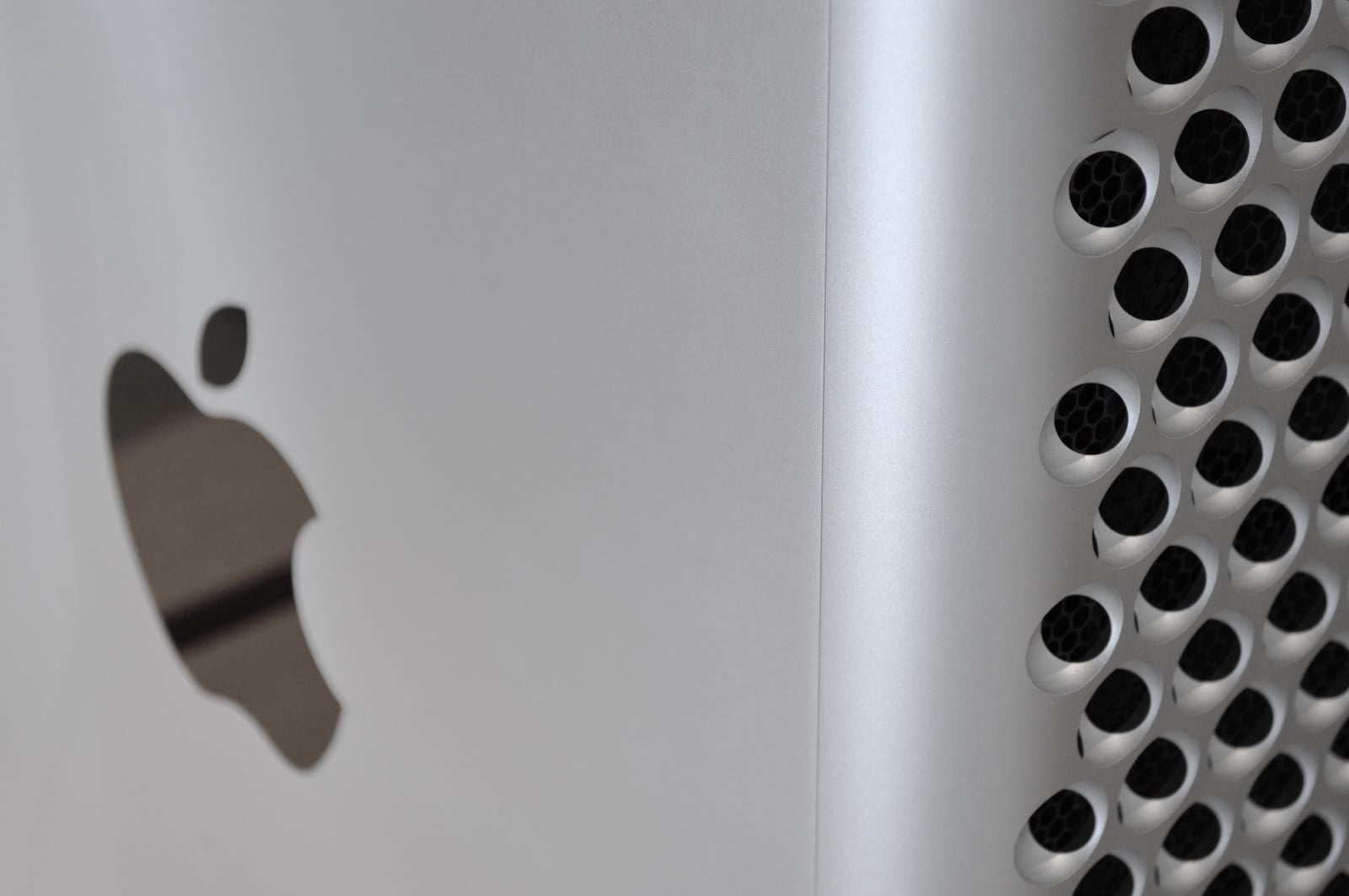
Above the Ultra class, another tier was once planned – but it never reached the market. Apple developed two of these high-performance chips for the Mac Pro, only to shelve both. New details now reveal how far the plans had progressed and why they failed.
The Mac Pro was Apple's most uncompromising workstation for over two decades before the company discontinued the model in March 2026 without a successor. Ironically, Apple worked on a processor specifically for this machine, one that was intended to significantly surpass anything the Ultra series could offer – but the project never progressed beyond the development stage. A recent report now reveals the reasons why these ambitious plans came to nothing.
Two Extreme chips that never appeared
According to Bloomberg journalist Mark Gurman, Apple developed both an "M2 Extreme" and an "M3 Extreme" for the Mac Pro but decided against releasing them. Gurman first brought up the topic in late 2022 and revisited it in his recent Power On newsletter. Both chips would have had twice as many CPU and GPU cores as their respective Ultra models.
The plans were reportedly scrapped for two reasons: the high production costs of such a mega-chip and the already low demand for the Mac Pro. For Apple, the effort ultimately disproportionate to the anticipated sales.
What would have been above the Ultra
Apple's chip tiers are hierarchical: the base chip is followed by Pro, Max, and finally Ultra. An Ultra is not a standalone design, but rather consists of two Max dies joined via UltraFusion – hence the doubled number of cores compared to the Max. An "Extreme" would have taken this logic further, theoretically combining four Max dies.
Based on the M2 Ultra with its 24 CPU and up to 76 GPU cores, such a chip would have had 48 CPU and up to 152 GPU cores. Whether Apple would actually have achieved the promised double performance remained unclear – scaling across four cores is considered technically challenging and was one of the reasons why for years it was only speculation whether such a chip would ever be released.
Why the effort didn't pay off for Apple
The low demand is reflected in the price structure. The Mac Pro with M.2 Ultra started at €8,299 in Germany, while the Mac Studio with the exact same chip was available from €4,799. Since both use the same M.2 Ultra, they deliver identical computing performance – the €3,500 price difference was practically solely due to the expandability via PCIe slots.
An even more expensive "Extreme" chip would have further narrowed this already small customer base. Anyone looking for maximum desktop performance from Apple today will instead opt for the Mac Studio, which is slated to receive an M5 Ultra in 2026.
Apple's desktop flagship still ends with the Ultra
With the discontinuation of the "Extreme" and the Mac Pro, the Ultra chip remains the top tier of Apple Silicon for the foreseeable future. The fact that Apple pushed the development so far over two generations and then abandoned it demonstrates one thing above all: the company consistently aligns its most expensive hardware with actual needs, not with what is technically feasible. A comeback of the Extreme class is therefore considered unlikely – at least as long as no product exists that justifies such computing power. (Image: Shutterstock / Around the World Photos)
- iPhone Ultra: Apple ramps up steam chamber orders
- iPad mini 8 with OLED: Apple aims for October market launch
- Apple is looking to acquire AI chip companies
- OpenAI's first device is intended to be a speaker with a camera
- iPad mini 8: Leak mentions 60Hz display
- iPhone 20: Factory apparently ready for glass design
- M6 Pro and M6 Max: AI is the reason for Apple's decision to forgo AI
- M7 Ultra: Up to 1.5 TB of RAM in Mac Studio
- New Apple Pencil with replaceable battery – due to pressure from the EU
- iPhone 17: Report predicts significantly lowered demand forecast