Mark Gurman confirms what was previously considered speculation: The radical iPhone redesign for the 20th anniversary is internally aligned with Liquid Glass – right down to the code name.
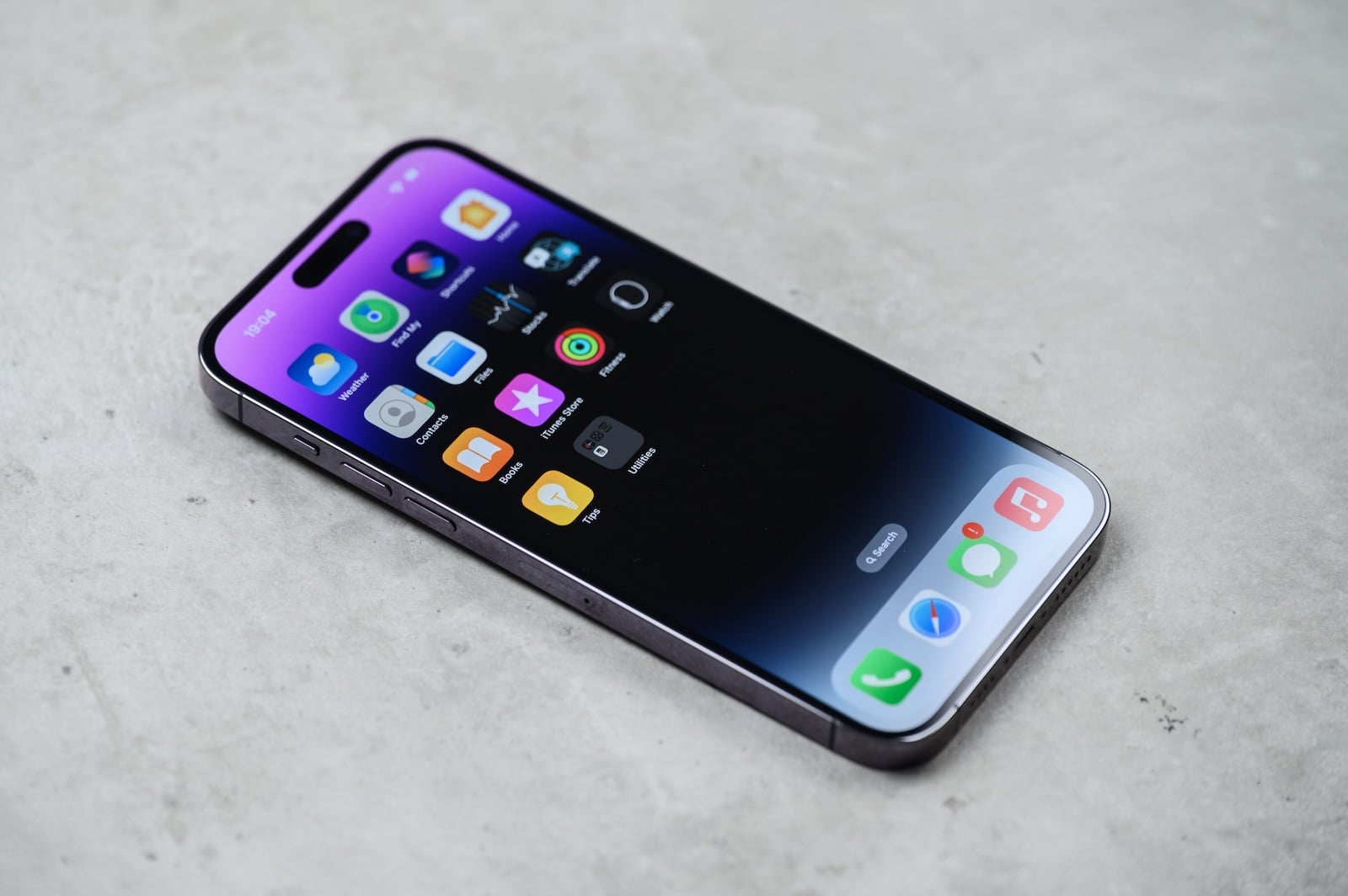
Several reports over the past few months have painted a picture of an iPhone that appears almost frameless and whose display curves slightly downwards on all four sides. What was missing until now was a clear connection between this hardware concept and Apple's Liquid Glass software design system, which was introduced in 2025. Mark Gurman now fills precisely this gap in his latest Sunday edition of the "Power On" newsletter. Apple is planning the anniversary iPhone from the outset as a hardware extension of Liquid Glass – including an internal codename that gives the concept its character: "Glasswing.".
"Glasswing": The code name with a program
The term is no coincidence, originating from the animal kingdom. "Glasswing" refers to the glasswing butterfly, whose wings are transparent. Apple is reportedly using precisely this image internally for the anniversary model – a device that not only seamlessly integrates its glass edges into the display, but also appears almost invisible.
Gurman describes how Apple deliberately interweaves the hardware design language and the Liquid Glass software. The software interface is not only intended to function on the new iPhone display, but to visually merge with it. This reflects a strategy Apple has pursued for years: the closest possible interplay between hardware and software. According to Gurman, the Glasswing iPhone implements this ambition even more consistently – the user interface is designed to appear as if it were an extension of the physical casing.
Pro models instead of special edition
This brings another important piece of information into focus: Analyst Jeff Pu recently clarified that there will be no separate special edition model for the 20th anniversary. Instead, the radical redesign will be incorporated directly into the regular iPhone Pro and iPhone Pro Max models of 2027. This means that Apple's anniversary model will not be an exclusive limited edition, but rather the flagship of a product generation that was already planned.
This departure from a special edition model has strategic reasons. Apple has restructured its iPhone lineup several times in recent years: The iPhone Air replaced the Plus model in 2025, and the foldable iPhone Ultra is slated for release in fall 2026. An additional anniversary model would have overloaded the portfolio. Instead, the radical redesign will be the true statement of the next Pro generation.
What's changing in the hardware?
Reports from the Korean supply chain point to a so-called "four-edge bending" display – a screen that curves slightly downwards on all four edges. Apple is said to have commissioned Samsung Display to develop a special micro-curved panel that is significantly thinner and brighter than current iPhone displays. This would allow Apple to seamlessly integrate its Liquid Glass concept with the display architecture of the anniversary model – an approach also reflected in the previously revealed iPhone 20 design leaks.
In addition, there are other components that Apple has been working on for years: the front camera and Face ID sensors are expected to disappear under the display, so the anniversary model could do without a notch, without Dynamic Island, and without a visible punch-hole camera. A switch to solid-state buttons instead of mechanical ones is also being considered. The final impression should be: an iPhone that looks like a single block of glass – a concept that was already considered a guiding principle under Jony Ive's leadership.
Liquid Glass was part of the plan from the very beginning
What makes Gurman's current report particularly interesting is its timing. Apple unveiled Liquid Glass at WWDC 2025 – at a time when, according to internal plans, the Glasswing iPhone had already been in development for some time. This suggests that the Liquid Glass software design language wasn't developed at the same time by chance, but rather was apparently designed to merge seamlessly with the hardware concept.
This aligns with Apple's approach to previous anniversary models. With the iPhone X in 2017, hardware (bezel-less display, Face ID) and software (gesture control instead of a home button) were reimagined together. The Glasswing iPhone is intended to repeat this approach – this time, however, under a unified design concept that encompasses both software and hardware identity. Apple is likely to continue preparing for this until 2027, for example, by making the Liquid Glass effects more refined and convincing with each iOS generation.
What this means for Apple's strategy
The Glasswing approach demonstrates how closely Apple now integrates hardware and software development. What appears to be two separate worlds from the outside – iOS design language here, iPhone industrial design there – is apparently a single, multi-year plan internally. With the anniversary model, Apple will make this plan fully visible for the first time. For competing manufacturers who already have experience with curved displays, this could be a turning point: Apple is taking this step not out of technological competitive pressure, but as a result of a brand strategy.
It's also a risk for Apple itself: If Liquid Glass doesn't run smoothly on the new display by 2027, the entire concept could be jeopardized. Previous Liquid Glass launch issues in iOS 26 show that the software is more complex in practice than it appears on screen. However, Apple still has over a year before the market launch to fine-tune the transitions.
Glasswing as the next big Apple narrative
What's currently taking shape around the anniversary model is more than just a single hardware update. It's a narrative with which Apple intends to open the next major chapter of the iPhone – carried by a codename that already embodies the design goal. Many more details are likely to emerge by fall 2027, from the specific curvature radius to whether Apple will actually manage to fit all the sensors under the display. But one thing is already clear: Glasswing isn't simply a new iPhone. It's Apple's attempt to unify software and hardware under a single design concept – and thus mark perhaps the biggest visual leap since the iPhone X. (Image: Shutterstock / Chikena)
- watchOS 27: Apple brings the Modular Ultra to all Apple Watches
- iPhone Pro 2027: Anniversary design instead of a separate model
- iPhone 18 Pro: Apple apparently planning an aggressive pricing strategy
- Apple Glasses are expected to support gesture control
- Vision Pro: Apple is said to have abandoned the project
- iPad Ultra: Apple is said to have abandoned the plans
- iPhone 18 Pro: Biggest camera upgrades ever
- iOS 27: Camera app gets its own Siri mode
- Apple is reportedly discussing the future of MagSafe internally
- iOS 27: Photos app to get three new AI features
- Liquid Glass iPhone: This is what Apple's anniversary model could look like
- Apple is planning two new Ultra products: iPhone Ultra and MacBook Ultra
- Ming-Chi Kuo: OpenAI is building an AI agent smartphone with Luxshare and MediaTek
- Apple's AI strategy brings three new Hardware categories
- Giant iPad Fold: Will it even be released?
- According to a leak, the iPhone 18 will get an important Pro feature
- Anniversary iPhone 2027: Samsung delivers micro-curved OLED Display
- Apple is working on six completely new product categories
- iPhone 18 Pro Max: Dummy shows thicker camera unit
- iPhone Ultra Dummy: How it compares to the iPad mini and iPhone 17 Pro Max
- iPhone 18: Display and chip reportedly receive downgrades according to leak
- iPhone 18 Pro launches Apple's four-stage plan for camera upgrades
- iPhone 18 Pro: Leaker confirms Dark Cherry as a key color
- Siri CEO Rockwell is reportedly considering stepping down