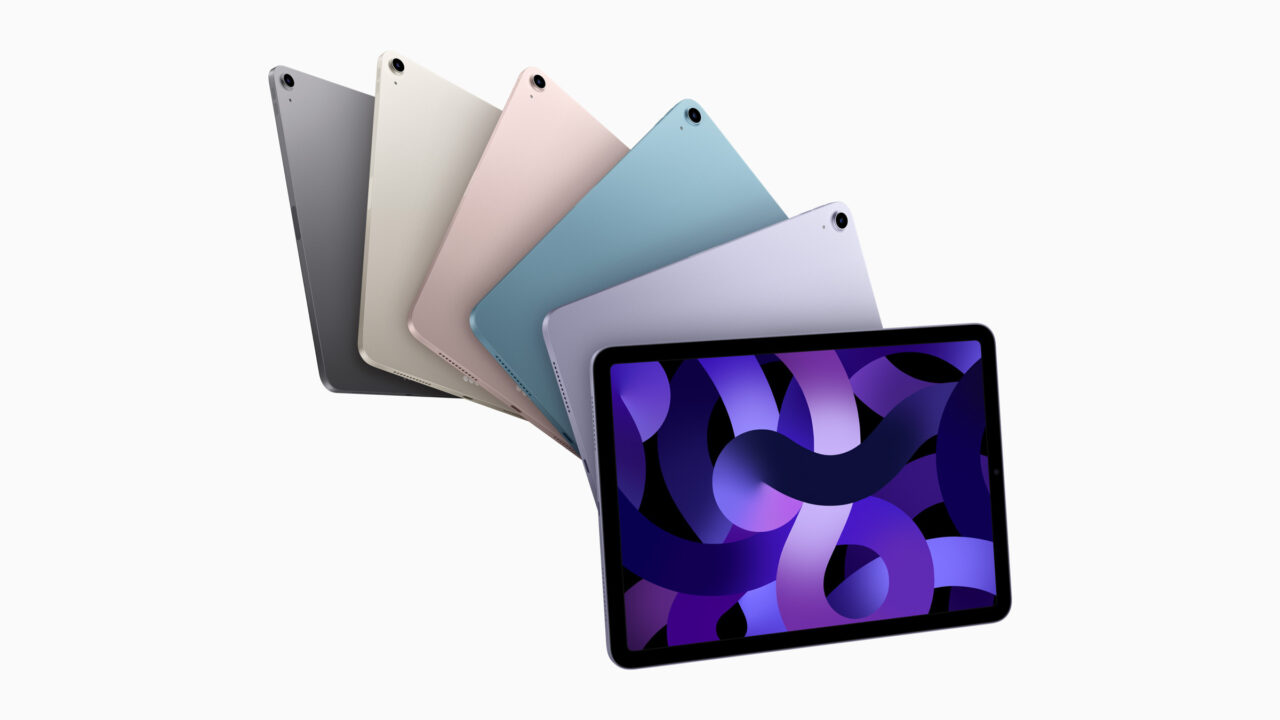
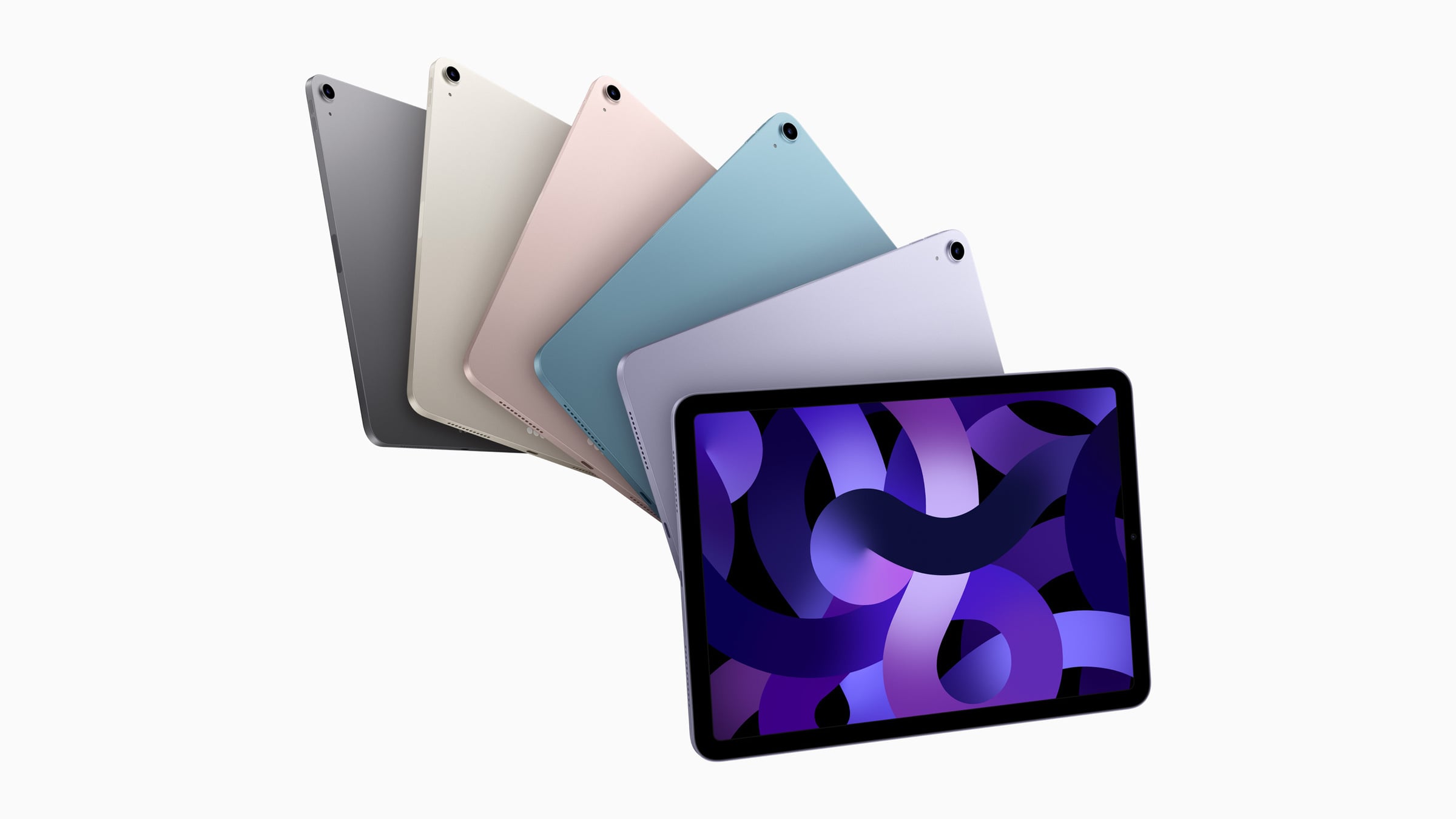
A second panel manufacturer is reportedly entering the fray for the revamped iPad Air. Chinese supplier BOE is vying to become the backup to Samsung Display, but a decision isn't expected until the end of the year at the earliest. Even if BOE wins the contract, it would initially have no impact on consumers in Germany.
The iPad Air is expected to lose its LCD screen and launch with an OLED display in the first half of 2027. The manufacturer of the panels has not yet been finalized: According to a report by the Korean tech publication The Elec, BOE is expanding its production for this specific display to secure a role as a second source. The publication has a solid track record with Korean display supply chains over the years, but occasionally misses the mark with its timelines.
Key Facts at a Glance
- BOE aims to play a secondary supplier role behind Samsung Display for the OLED iPad Air.
- The expansion is taking place at the B12 plant in Chongqing, where BOE's sixth generation OLED line is located.
- Qualification by Apple is still pending; samples must first be submitted.
- A decision is expected in November or December.
- Even if the bid is successful, it would initially only involve small quantities for the Chinese market and for replacement devices.
What BOE is applying for
Samsung Display has already secured the leading role for this panel and is expected to ramp up production by the end of the year or the beginning of 2027. BOE is interested in the next market share – the volume that runs alongside the main source.
The expansion will take place at the B12 plant in Chongqing, the site of the sixth-generation OLED production line. If the decision is made against BOE, Samsung Display will handle the entire first production run on its own.
For BOE, the order would be a significant step forward. The company already supplies panels for iPhones, but has not yet broken into the larger OLED formats – tablets have so far been the territory of Samsung Display and LG Display.
When the decision will be made
Before a contract can be awarded, Apple's qualification process is still pending, and BOE has yet to complete this. Samples must be submitted and evaluated; a result is expected in November or December.
This late date follows Apple's usual pattern: The company typically only grants production approval one to two months before the actual start of mass production. A decision in late autumn therefore fits the picture for a market launch in the first half of 2027.
Initially only China and replacement devices
Even a positive decision would initially bring BOE little volume. According to the company, the first panels were going into iPad Air devices for the Chinese market or into refurbished replacement devices – not into the global sales launch.
For buyers in Germany, Austria, and Switzerland, this would mean that an iPad Air purchased here would initially still use a Samsung Display panel, even after a BOE surcharge. The supplier question is not decided at the point of sale during this phase, but rather in Apple's purchasing negotiations.
What the panel offers technically
The completely redesigned iPad Air is expected to be available in 11-inch and 13-inch versions and will feature a hybrid OLED display: a glass substrate combined with thin-film encapsulation, a simple RGB emission layer, and an LTPS backplane. This is intentionally a more cost-effective design than the iPad Pro, whose tandem stack uses two light-emitting layers.
| Model | Display type | Construction | Refresh rate |
|---|---|---|---|
| iPad Air (current) | LCD | Liquid Retina | 60 Hz |
| iPad Air (expected in 2027) | Hybrid OLED | Simple RGB layer, LTPS | 60 Hz |
| iPad Pro | OLED | Tandem stack, two layers | 120 Hz |
The improvement therefore affects contrast and black levels, not the smoothness of the display. ProMotion will remain exclusive to the Pro models – anyone expecting a 120Hz iPad Air will be disappointed at this point.
A supplier that is losing ground with Apple
This move comes at a time when BOE is falling behind rather than advancing with Apple. The utilization of Apple's production lines has dropped from around 82 percent in 2024 to about 48 percent at the beginning of this year. Apple also uses Samsung Display for the OLED iPad mini, and the company already reacted to quality issues at BOE in January. BOE is also bidding for the MacBook Ultra, but ongoing yield problems at its B16 factory in Chengdu make a start before 2028 unlikely.
We expect Apple to keep the process open, even if BOE narrowly misses qualification. Having a second source in sight provides negotiating leverage with a supplier who currently covers the majority of Apple's OLED needs. The display price represents a significant portion of the material costs for a tablet, and this is precisely where the room for negotiation on the final price lies.
Added to this is the political situation. Chinese suppliers are under scrutiny in Washington, as was recently demonstrated by the debate surrounding memory chips from China. While a display order is technically different from a memory chip, the pattern of the dispute is likely to be similar.
The question will remain open until the end of the year
This situation is unlikely to change much before November. Until then, Samsung Display is considered a done deal, and the timeline for the iPad Air itself is not dependent on this – the first half of 2027 is fixed regardless of the outcome of the second source. The matter will only become concrete once Apple gives the go-ahead for production. (Image: Apple)
- iPhone 20: Glass design is not supposed to be scrapped after all
- iPhone 18 Pro: Doubts about the billion-dollar backlog at TSMC
- OLED iMac: Fifth layer designed to prevent burn-in