Apple is reportedly sourcing the OLED touch panels for its redesigned 14- and 16-inch models exclusively from Samsung Display. According to a Korean industry report, LG Display and BOE didn't even make the shortlist. The initial shipment is expected to be small, and one detail in the report contradicts recent information about the chips.
The MacBook Pro's switch to OLED has been the most thoroughly documented detail surrounding the upcoming model for months, and the manufacturing side is unusually well-documented. In May, OLED production for the MacBook Ultra reached the 90 percent yield mark, the level at which production is considered ready for mass production in the industry. The new report from Korea now specifies who is supplying the components, where they are being manufactured, and the initial production volume.
Manufactured in Asan on the industry's largest OLED production line
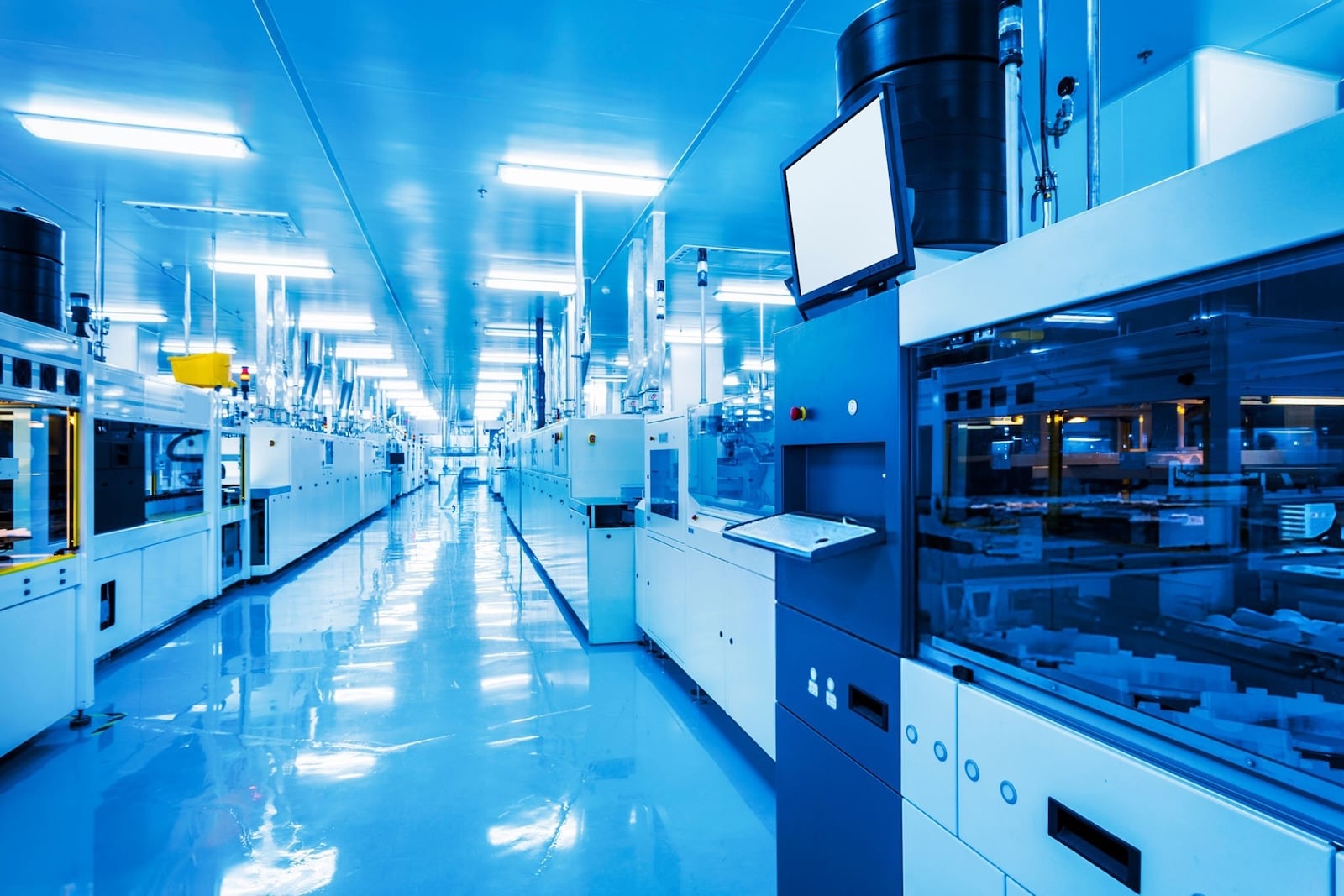
The panels for both screen sizes will be produced on Samsung's 8.6-inch line at its Asan plant in the South Korean province of Chungcheongnam-do. This so-called A6 line was converted from a decommissioned LCD production facility and uses a substrate glass measuring 2290 × 2620 millimeters. For comparison, the sixth generation, used for smartphone displays, utilizes substrates measuring 1500 × 1850 millimeters.
The larger cutting area is the real advantage. Significantly more notebook-sized panels can be cut from a single sheet of glass, reducing waste and thus lowering unit costs – precisely the point where OLED technology has previously failed in laptops. Technically, the line uses a two-layer tandem structure with two emission layers, which increases brightness and lifespan, combined with oxide transistors that are more energy-efficient than the previously common LTPS technology.
Mass production is expected to begin around August. The report cites an initial delivery volume of approximately 250,000 panels – a cautious start that is more in line with a staggered market launch than widespread availability from day one.
Why LG Display and BOE shouldn't be involved
Both competitors were reportedly not seriously considered due to yield issues. The fact that this particular point proved decisive fits the overall picture: as early as June, it became apparent that the field of OLED suppliers for Apple was narrowing down to Samsung and LG. For the touch panel of the new flagship model, only one of these names would remain.
This concentration has a downside. A single supplier without a backup option means that any disruption in Asan will immediately impact the market launch. The timeline has already been pushed back once: in April, it was reported that the launch would be slightly delayed due to the memory crisis. Most recently, sources close to Bloomberg indicated that a launch in early 2027 was more likely than the originally stated window starting at the end of 2026, citing the global chip shortage.
Regarding the chips, the report contradicts the latest findings
One detail in the report warrants skepticism. It mentions the M6 Pro and M6 Max as the processors for the new models – an assignment based on outdated information. Since the end of June, there have been increasing indications that Apple is foregoing the M6 Pro and M6 Max and focusing its development resources on accelerating the AI performance of the next generation. For the flagship model itself, it recently appeared that it might surprisingly launch with the M5 Pro and M5 Max.
These two accounts cannot be reconciled. Since the Korean report relies on the display supply chain and offers no original information regarding the chips, it is more reasonable to treat the chip specifications as existing information rather than new findings.
What else is in the room for the model?
Beyond the display, expectations revolve around a noticeably thinner chassis and the elimination of the notch in favor of a Dynamic Island display. On the software side, macOS 27 has already revealed three hints of a touch-enabled notebook, including adjustments to the user interface for larger touch areas. Whether the device will ultimately be marketed as the MacBook Ultra or retain the existing Pro designation remains to be seen. The confirmed and rumored information is summarized in the MacBook Ultra overview .
Apple's OLED switch for the Mac is becoming a reality
With a named manufacturing site, a production volume, and a production window, the switch loses its speculative character on the hardware side. The question that remains, and the one that matters most to buyers in Germany, Austria, and Switzerland, is: What will a tandem OLED with a touch layer ultimately add to the price? Panels of this type are more expensive to manufacture than the previous mini-LED displays, and Apple already raised the prices of Macs and iPads in June. (Image: Shutterstock / chinaface)
- Apple Glasses: Data privacy becomes the biggest hurdle before launch
- Apple Watch 2026: No new SE, no redesign for the Ultra 4
- iPhone Ultra: Report identifies further production hurdles
- Apple's Mac roadmap: 11 new models by 2028
- iPhone 18 Pro goes into mass production
- Apple Upgrade: Leasing program scheduled to start next week
- iPhone 20: Largest iPhone display ever being tested
- Live Notes: AI at the Genius Bar raises surveillance concerns
- Why Apple is keeping Jony Ive out of the OpenAI lawsuit
- M2 Extreme and M3 Extreme: Apple's discontinued Mac Pro chips