
For one day, Apple's Chinese support page contained instructions on how to connect an Alibaba AI model to Siri. Then the document disappeared again – and Apple's customer service knew nothing about it.
Apple Intelligence in China is subject to one condition: it's impossible without a local partner. The service has been available in China since July, but only for the iPhone – Apple hasn't specified whether or when iPad and Mac will follow. A briefly published support document now provides the clearest indication so far.
The Chinese-language instructions were discovered on August 8th via a Reuters report. They described how authorized Mac users in mainland China could connect Qwen – Alibaba's model family – to Siri and the writing tools. The document was no longer available a day later.
Key Facts at a Glance
- Apple published instructions on August 8th for connecting Qwen to Siri on the Mac and removed them the following day.
- macOS 26.6 or newer and a personal Qwen account were required.
- According to the document, Alibaba is not allowed to use the submitted content to train its models.
- No comparable instructions were published for iPhone and iPad.
- The Chinese approval from July currently only covers the iPhone.
What the instructions said
The described structure follows a known pattern. Siri could have accessed Qwen for certain queries to provide more detailed answers – including the analysis of photos and documents. The writing tools could have used the model to generate text and images.
Technically, the document required macOS 26.6 or later and login with a personal Qwen account. It explicitly stated that Alibaba could not use the submitted content for training or improving its models.
This design largely corresponds to the ChatGPT extension available outside of China: Siri forwards complex requests, the writing tools get an additional option, and the user must actively agree.
A document that disappeared after one day
The page disappeared on August 9th. Chinese media reported the disappearance, and Apple's customer service told them they had received no notification about the launch of a new feature. There was no official explanation.
An industry analyst quoted in Chinese media believes the withdrawal is a sign of pending technical adjustments in the approval process – not a reversal of the decision. This interpretation has not yet been substantiated.
What's remarkable is the repetition: Back in March, Apple Intelligence was briefly accessible in China without authorization and was subsequently taken offline. Twice within a few months, something went live in China that shouldn't have been live yet.
Why Apple needs a partner in China
China requires an approval process for generative AI services and, in practice, cooperation with a domestic provider. Apple initially intended this role for Baidu. According to reports from February 2025, Alibaba took the lead after Baidu's models failed to meet Apple's requirements; Baidu remained in a supporting role.
In July, the Chinese cybersecurity agency registered Apple's in-device AI service. This approval applied to the iPhone. It remained unclear when iPad and Mac would follow suit – which is why a Mac-specific document is considered a potential indicator.
Two regions, same mechanics
For readers in German-speaking countries, this process is interesting for a different reason than it initially appears. Here, too, it is not technology that determines which device gets an AI function first, but regulation – only with the opposite result.
| Region | Released first | Still open |
|---|---|---|
| China | iPhone | iPad, Mac |
| EU | Mac, Vision Pro | iPhone, iPad, Apple Watch |
In the EU, Siri AI will initially launch on Mac and Vision Pro, while iPhone, iPad, and Apple Watch will be excluded. In China, the situation is reversed. Switzerland is not part of the EU in either case and is listed on the availability page. Information on which other features are missing in Switzerland can be found in the Evergreen article on Apple features not available in the EU.
In practical terms, this means that this process won't change anything regarding your device situation. However, it demonstrates that Apple is now rolling out AI features in a regionally fragmented manner – country by country, device by device, and each time in the order dictated by a regulatory authority. A uniform set of features across all markets is therefore off the table for the foreseeable future.
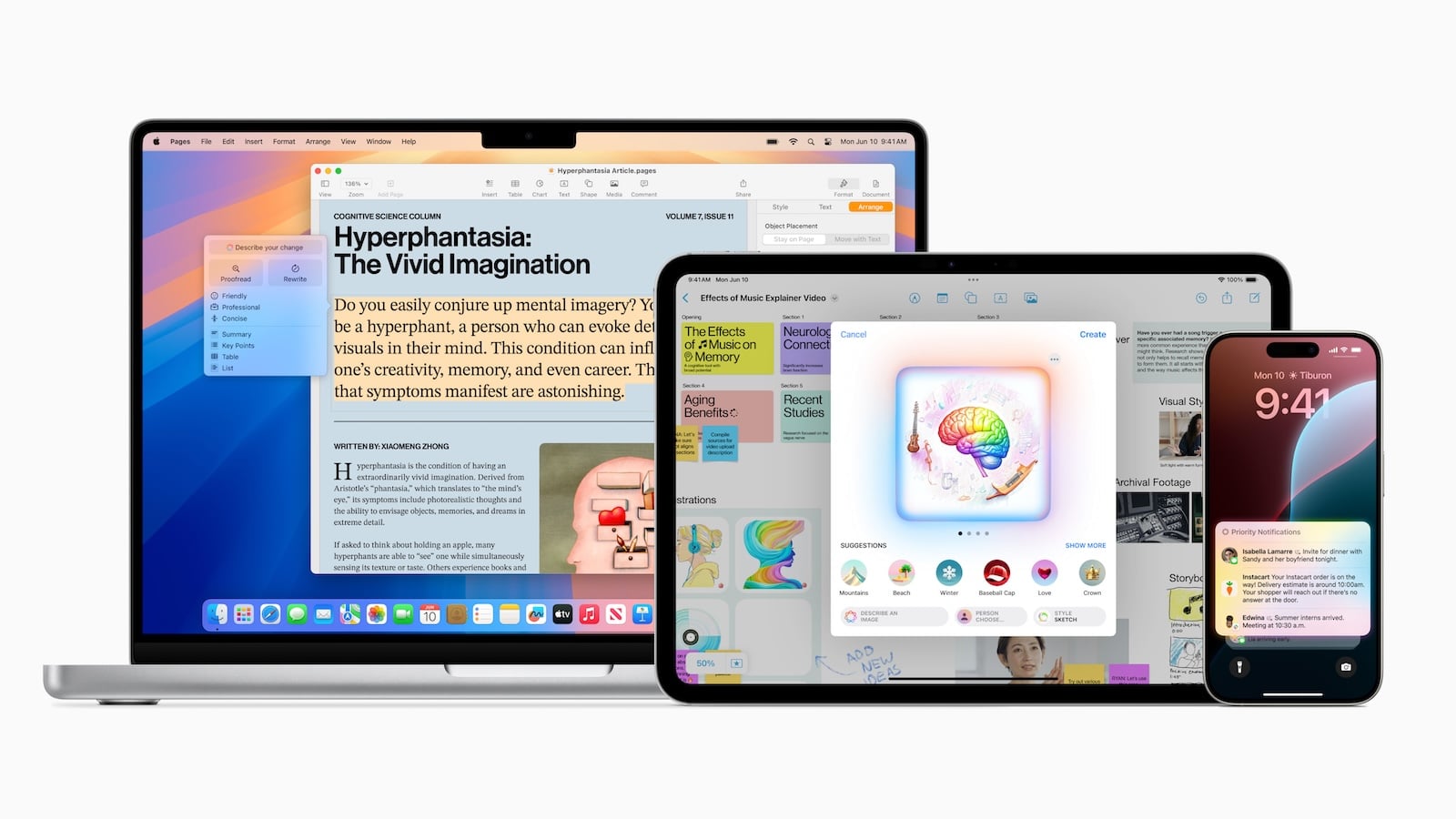
It's unclear when Apple will officially launch the Qwen connection for Macs. The fact that the instructions have already been written suggests that the work is largely complete. (Image: Apple)
- Apple is testing Chinese memory in iPhones and MacBooks
- Made for iPhone: 43 more hearing aids, MacBook Neo included
- OpenAI halts work on the Astra AI model due to cyber risks