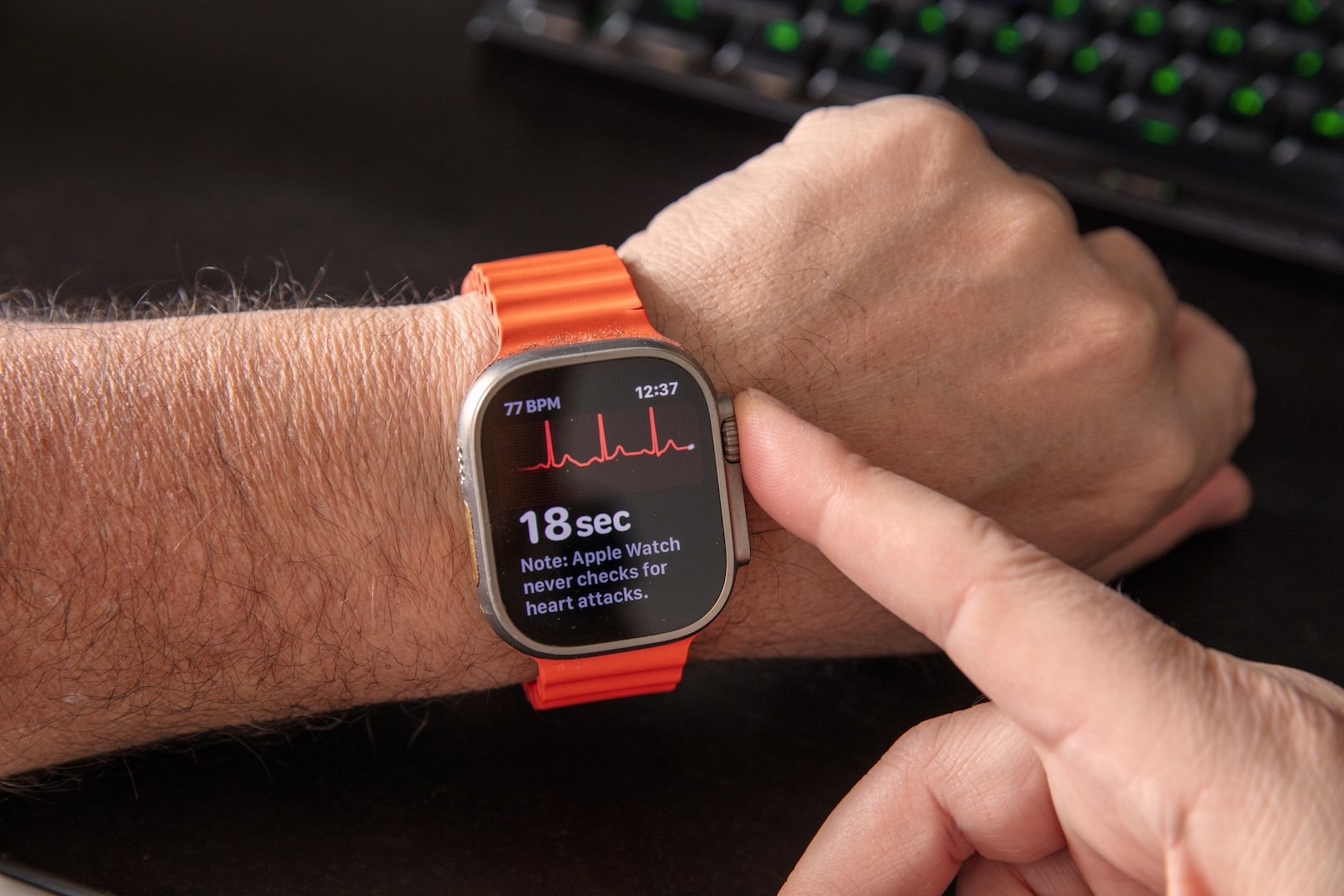
The Apple Watch is increasingly being recognized as a medical device, particularly for monitoring heart rhythm disorders. A new clinical study now demonstrates its specific benefits following atrial fibrillation ablation. The study focuses not on improving the procedure itself, but rather on what becomes visible after treatment and how early changes can be detected.
Atrial fibrillation is one of the most common persistent heart rhythm disorders. If medication is insufficient, catheter ablation is often used. This involves selectively destroying the heart tissue causing the irregular rhythms using heat or cold. However, the success of this procedure depends heavily on follow-up care. Relapses often occur irregularly and are not always detected during routine check-ups. This is precisely where the use of the Apple Watch comes in.
Structure and aim of the study
The study, conducted by researchers at St. Bartholomew's Hospital in London and published in the Journal of the American College of Cardiology, investigated how different follow-up care concepts after atrial fibrillation ablation affect the detection of relapses and unplanned hospital admissions.
The focus was on comparing structured aftercare with the Apple Watch and the usual standard care.
Overview of the two study groups
Apple Watch Group
Patients in this group received an Apple Watch and were instructed to record a daily ECG directly from the watch. Additional ECGs were to be taken whenever symptoms occurred or when the watch issued a notification. All recorded ECGs were reviewed and evaluated remotely by a clinical team.
Standard care group
In this group, follow-up care was carried out as usual. This included check-up appointments at the clinic after three, six, and twelve months. Monitoring consisted of on-site ECG examinations as well as time-limited, symptom-dependent Holter monitoring.
Earlier detection of atrial fibrillation recurrences
After the so-called 90-day blanking period, significant differences emerged between the groups. In the Apple Watch group, relapses of atrial fibrillation were detected earlier. The median time to the first confirmed recurrence was 116 days, compared to 132 days in the standard care group. This time advantage is significant because early detection of arrhythmias allows for better classification and monitoring.
Higher detection rate through continuous ECG monitoring
At the end of the follow-up period, more recurrences were observed in the Apple Watch group. 52.9 percent of the patients experienced atrial fibrillation again, compared to 34.9 percent in the control group.
The main reason for this difference was the improved detection of paroxysmal episodes. These intermittent, often short-lived arrhythmias occur irregularly and are easily missed during sporadic ECGs in the clinic or short Holter monitoring sessions. Daily and event-driven ECG recordings with the Apple Watch enabled significantly more frequent detection of such episodes.
Fewer unplanned hospital stays
Despite the higher number of identified cardiac arrhythmias, the Apple Watch group experienced fewer unplanned hospitalizations. At the same time, the rates of repeat ablations hardly differed between the two groups.
This finding is remarkable because it shows that close monitoring does not automatically lead to more interventions or overtreatment. Instead, it allows for better interpretation of findings and a more targeted medical response.
Significance of the results for follow-up care
The study suggests that integrating monitoring into daily life with on-demand ECGs offers a clear advantage. A structured workflow using the Apple Watch can help detect relapses earlier and more reliably, while simultaneously avoiding unnecessary escalations in care.
This makes it clear that the Apple Watch is not only relevant for the initial diagnosis of atrial fibrillation, but can also play an important role in long-term monitoring after an ablation.
Apple Watch as a practical tool in cardiological aftercare
The results from London underscore the practical benefits the Apple Watch can offer in cardiac follow-up care. Regular, patient-centered ECG monitoring leads to the detection of more relapses without resulting in increased hospitalizations or additional interventions.
For the follow-up treatment of atrial fibrillation after ablation, the study provides a clear signal: Digital monitoring with the Apple Watch can make care more transparent, structured, and efficient. The best products for you: Our Amazon storefront offers a wide selection of accessories, including those compatible with HomeKit. (Image: Shutterstock / rawf8)
- Apple loses top position at TSMC due to AI boom
- AirTag 2: Teardown reveals all internal innovations
- Apple poised for a strong quarter: iPhone 17 and AI in focus
- Apple Creator Studio: new creative subscription now available
- Apple TV: Criminal Record Season 2 starts in April
- Apple TV confirms Ted Lasso Season 4 for Summer 2026
- Tim Cook comments internally on the Minneapolis shooting
- Apple TV received nine nominations at the Writers Guild Awards
- Apple TV has renewed "Shrinking" for a fourth season
- App Store: Report reveals extent of problematic apps
- Apple's iPad turns 16 – this is how the tablet era began
- WhatsApp improves data protection with anti-spyware update
- Apple Services weaker? iPhone 17 Pro compensates for a lot
- Meta plans premium subscriptions for Instagram, Facebook and WhatsApp
- iPhone 5s receives iOS update 13 years after market launch
- Apple is benefiting from the premium boom in the Indian market
- iOS 26.3 restricts location data for network operators
- ChatGPT Health put to the test: When AI misreads heart data
- Apple continues testing phase: iOS 26.3 Beta 3 is here
- iOS 26.2.1 brings AirTag 2 support and important fixes
- Grok produced CSAM images: Investigations are underway in the EU
- Apple stock on the rise: JP Morgan raises target to $315