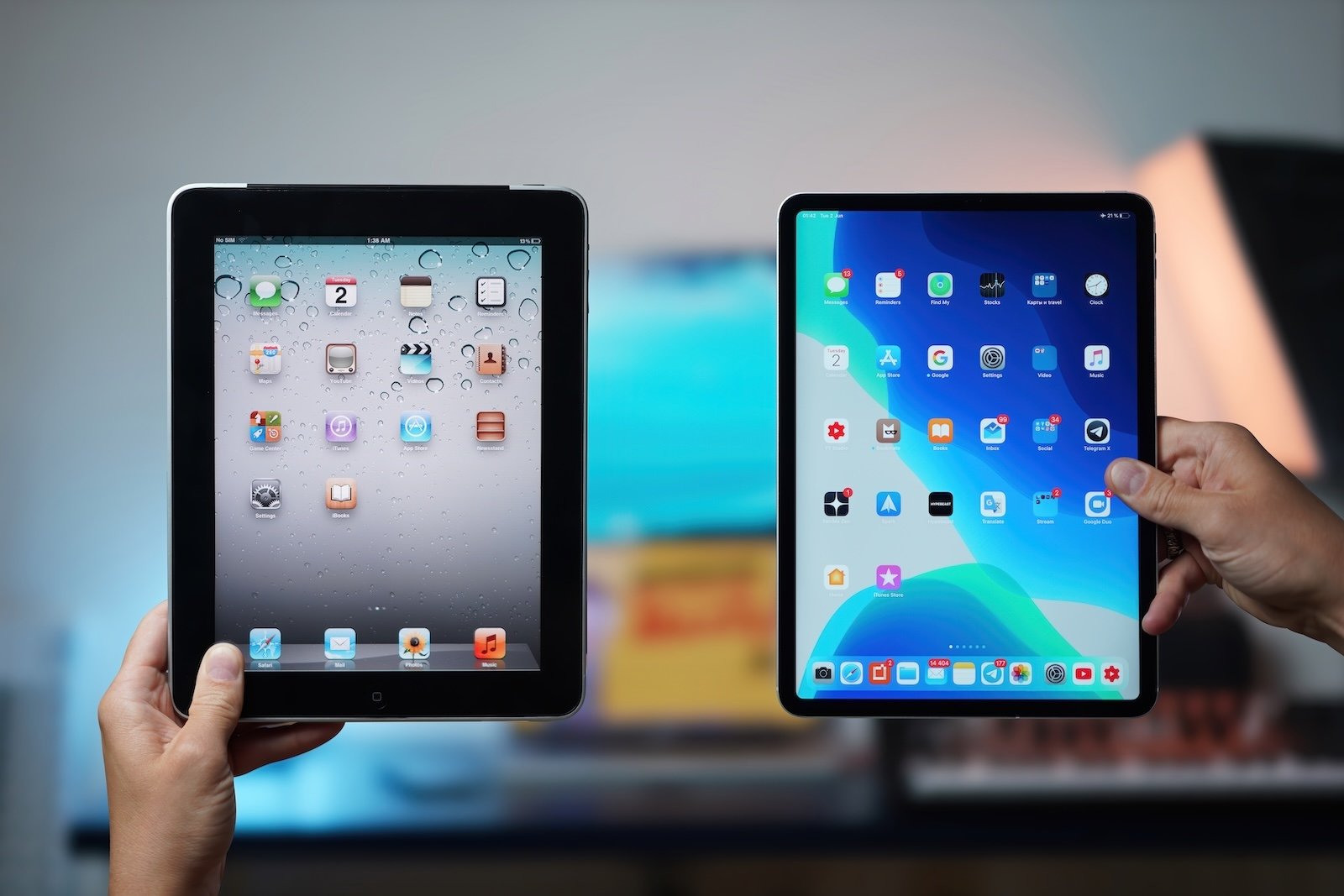
The iPad is now an integral part of Apple's product portfolio. Sixteen years ago, this was far from certain. When Apple first introduced the tablet, it was unclear whether it would be a useful addition to the smartphone-laptop lineup or a purely technological experiment. In retrospect, the introduction of the iPad marks a turning point in how mobile devices are used.
On January 27, 2010, Steve Jobs, then CEO of Apple, officially unveiled the first iPad. The presentation took place at the Yerba Buena Center for the Arts in San Francisco and was deliberately understated. Jobs demonstrated everyday applications such as browsing the internet, reading emails, and viewing photos and videos.
He described the iPad as a "magical and revolutionary device." Apple's clear goal was to create a new product category. The tablet was intended to bridge the gap between smartphones and laptops, enabling simpler, more intuitive use of digital content.
The first-generation iPad: Technology and features
The first iPad featured a 9.7-inch multi-touch display with LED backlighting. Inside, it was powered by the A4 chip, Apple's first in-house designed processor. It also included a 30-pin dock connector and a choice of 16, 32, or 64 GB of storage.
Weighing in at around 1.5 pounds, the iPad was significantly lighter than many laptops. Its battery life was up to ten hours, which was considered very good for mobile devices of that era. With a starting price of $499, the iPad was relatively affordable.
Visually, Apple opted for a clean design with wide black bezels, a physical home button on the front, and a slightly curved aluminum back. This design defined the iPad line for several years.
Software, apps and getting started with e-reading
On the software side, the iPad used a specially adapted version of iOS designed for the larger display. Familiar apps like Safari, Mail, and Photos were scaled accordingly, offering a significantly more expansive user experience than on the iPhone.
The iBooks app and the iBookstore were also newly introduced. With this, Apple positioned itself directly in the digital book market, which at that time was heavily dominated by Amazon's Kindle. The iPad was intended to be not only a media consumption device, but also a platform for apps, games, and digital content of all kinds.
Initial reactions and doubts about the concept
Initial reactions to the iPad were mixed. Many praised its light, fast, and user-friendly experience. However, critics questioned whether such a device was truly necessary. The question of whether the iPad could replace a laptop or was simply a larger iPhone was frequently debated.
Despite these doubts, it quickly became clear that a market for the iPad existed. On the day of its launch in April 2010, Apple sold over 300,000 devices. Within the first month, the one million mark for iPad sales was surpassed.
Market success and new competition
By the end of 2010, Apple had sold more than 15 million iPads, generating approximately $9.5 billion in revenue. This established the iPad as one of the company's most important product lines.
The success of the iPad sparked a new competition. Companies like Samsung, Microsoft, and Amazon launched their own tablets, based on Apple's concept. The iPad thus not only achieved commercial success but also defined a new device category.
The evolution of the iPad over 16 years
In the following years, the iPad was continuously developed. Apple introduced new model lines such as the iPad mini, the iPad Air, and the iPad Pro. These differ in size, performance, and target audience.
Later generations gained cameras, improved multitasking capabilities, different display sizes, and new connection standards such as USB-C. With accessories like the Apple Pencil and the Magic Keyboard, the iPad increasingly evolved into a tool for productive work, creative design, and professional use.
The current role of the iPad at Apple
Sixteen years after its introduction, the iPad is firmly established in the Apple ecosystem. What was originally conceived as a device bridging the gap between smartphones and laptops has evolved into a standalone platform. Today, the iPad stands for versatility, portability, and ease of use. Steve Jobs' original vision of making content accessible in a more intimate and intuitive way continues to shape the iPad. The best products for you: Our Amazon storefront offers a wide selection of accessories, including those compatible with HomeKit. (Image: Shutterstock / Mr.Mikla)
- WhatsApp improves data protection with anti-spyware update
- Apple Services weaker? iPhone 17 Pro compensates for a lot
- Meta plans premium subscriptions for Instagram, Facebook and WhatsApp
- iPhone 5s receives iOS update 13 years after market launch
- Apple is benefiting from the premium boom in the Indian market
- iOS 26.3 restricts location data for network operators
- ChatGPT Health put to the test: When AI misreads heart data
- Apple continues testing phase: iOS 26.3 Beta 3 is here
- iOS 26.2.1 brings AirTag 2 support and important fixes
- Grok produced CSAM images: Investigations are underway in the EU
- Apple stock on the rise: JP Morgan raises target to $315
- Apple introduces new Black Unity Apple Watch band
- AirTag 2 unveiled: Greater range, tracking and protection
- Apple and new Macs: Will memory prices rise?
- Apple and India: Antitrust case with global implications
- Data leak without a hack: How 149 million passwords got online
- WhatsApp is testing a new group feature for chat histories
- Apple remains the industry benchmark in the Fortune 2026 ranking
- Apple Event for Creatives: Is the new MacBook Pro coming?
- Apple AI lawsuit: Judge rejects Musk's source code request
- Apple accuses the EU of political delaying tactics
- App Store: Significantly more advertising will be added starting in March 2026
- Apple Watch improves early detection of atrial fibrillation
- Apple significantly increased its lobbying spending in the US in 2025