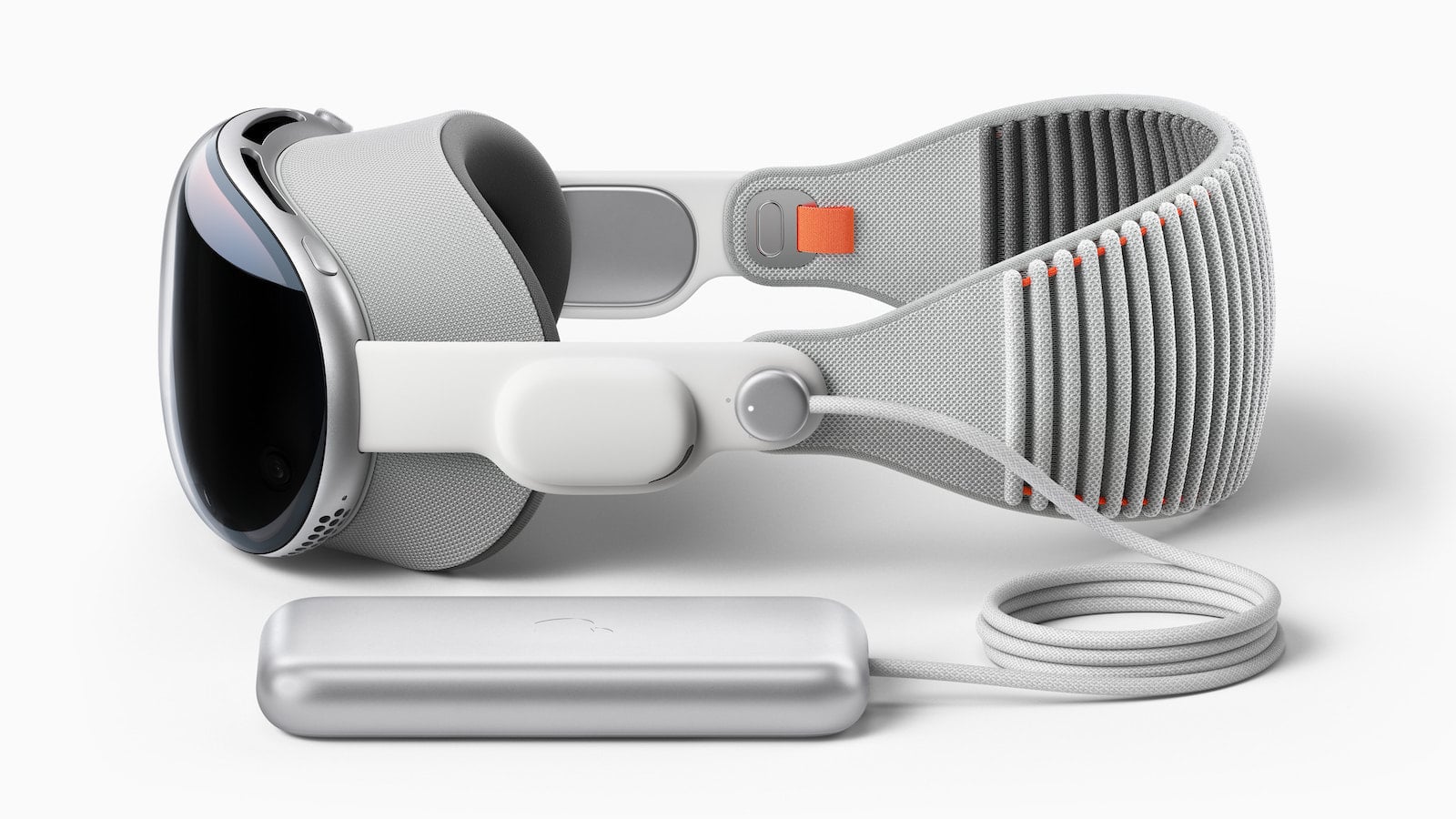
Surgeons who used a Vision Pro instead of a monitor during a procedure finished an average of eight minutes faster. This is the result of the first peer-reviewed study on this application. Ironically, the device, considered a sales flop, has thus found a use where its price seems reasonable.
For a product whose future has been openly debated for months, this is unusual news. While the development of a more affordable version has apparently been halted, a study published in the journal AJO International by the University of California San Diego provides solid data on its professional use. The Vision Pro was examined not as an add-on device, but as a complete replacement for the surgical monitor.
Key Facts at a Glance
- 32 endoscopic procedures on the lacrimal ducts were compared, half of them using Vision Pro as the main display.
- The average operating time decreased from 42.7 to 34.4 minutes.
- All procedures were successful and without complications in both groups.
- All five participating surgeons preferred the headset and reported reduced physical and mental strain.
- The authors explicitly call the study small and preliminary and call for larger studies.
What was measured
During endoscopic procedures, surgeons work with thin instruments through a narrow incision and view the surgical field exclusively via a camera. Their gaze is not directed at their hands, but at a monitor positioned in the room – often to the side or elevated.
In half of the cases, this monitor was replaced by a Vision Pro, which displayed the endoscope image directly in the surgeon's field of vision. This allowed the surgeons to work facing forward at all times, instead of having to turn their upper body towards the screen.
| Criterion | With monitor | With Vision Pro |
|---|---|---|
| Average surgery duration | 42.7 minutes | 34.4 minutes |
| Successful interventions | all | all |
| Complications | no | no |
| Preferred by surgeons | – | all five |
The study also recorded the self-reported workload of the surgeons. It was significantly lower with the headset, both physically and mentally.
Why posture is the crucial point
The time saved is not the primary issue, but rather a consequence. Anyone who spends hours switching back and forth between the surgical field and a monitor positioned to their side is working against their own spine. Neck and shoulder pain are among the most common occupational diseases in surgical specialties.
Maintaining a stable, forward-facing posture not only eliminates twisting movements but also the moments when the gaze needs to refocus. Over a half-hour procedure, this adds up.
It is noteworthy that no new medical technology was used. The only change was where the existing camera image appears.
A price argument that only works in the operating room
In the consumer market, the Vision Pro is considered too expensive – in Germany, it has cost €3,999 since the price increase in June. In the operating room, this perception is reversed.
According to participating physicians, surgical monitoring systems cost between $20,000 and $30,000 per unit. Compared to that, a headset is a marginal product, and it also takes up a fraction of the space – a compelling argument in its own right in cramped ophthalmic surgery rooms.
That's precisely the point of the report: A device perceived as a luxury item in the living room is, in an environment with six-figure device budgets, the cheapest element in the room. This provides a concrete example of viewing the Vision Pro as a misjudged, rather than a failed, product.
From individual operation to the study situation
The use of this technology is not new. The world's first cataract surgery using a Vision Pro headset was performed back in October 2025, and hundreds of procedures have followed since. The headset has also been used in spinal surgery and in preparing for robot-assisted operations.
The difference lies in the robustness. Individual interventions are anecdotes, while a peer-reviewed comparative study provides a solid data foundation. That Apple is pursuing the same approach with other hardware is demonstrated by the Studio Display XDR and its support for the DICOM standard – imaging is clearly an area the company is actively pursuing.
What 32 interventions prove – and what they don't
Despite the clear figures, 32 operations represent a small sample, all performed at a single center and within a single specialty. The authors themselves acknowledge this and call for larger studies. A single journal article is no substitute for regulatory approval, and the US Food and Drug Administration (FDA) has not yet cleared the device for widespread medical use.
For hospitals in German-speaking countries, this means for now: interesting, but not yet ready for procurement. Anyone wanting to use the Vision Pro in the operating room needs a certified software solution in addition to the headset, and that's precisely where the real effort lies – the study used a connection to the existing endoscopy system, not a standard function of visionOS.
Finally, our own prediction: We expect the medical application to become the Vision Pro's most stable sales channel, even before a more affordable consumer model appears. This is supported by the fact that measurable economic benefits are proven in this sector, rather than just a promise of an experience. On the other hand, the slow pace of procurement in the healthcare sector, where certifications and tenders can take years, argues against this. (Image: Apple)
- Apple's leverage against memory prices is fizzling out
- OpenAI requests that Apple's lawsuit be dismissed in court
- iCloud Private Relay reveals the real IP address