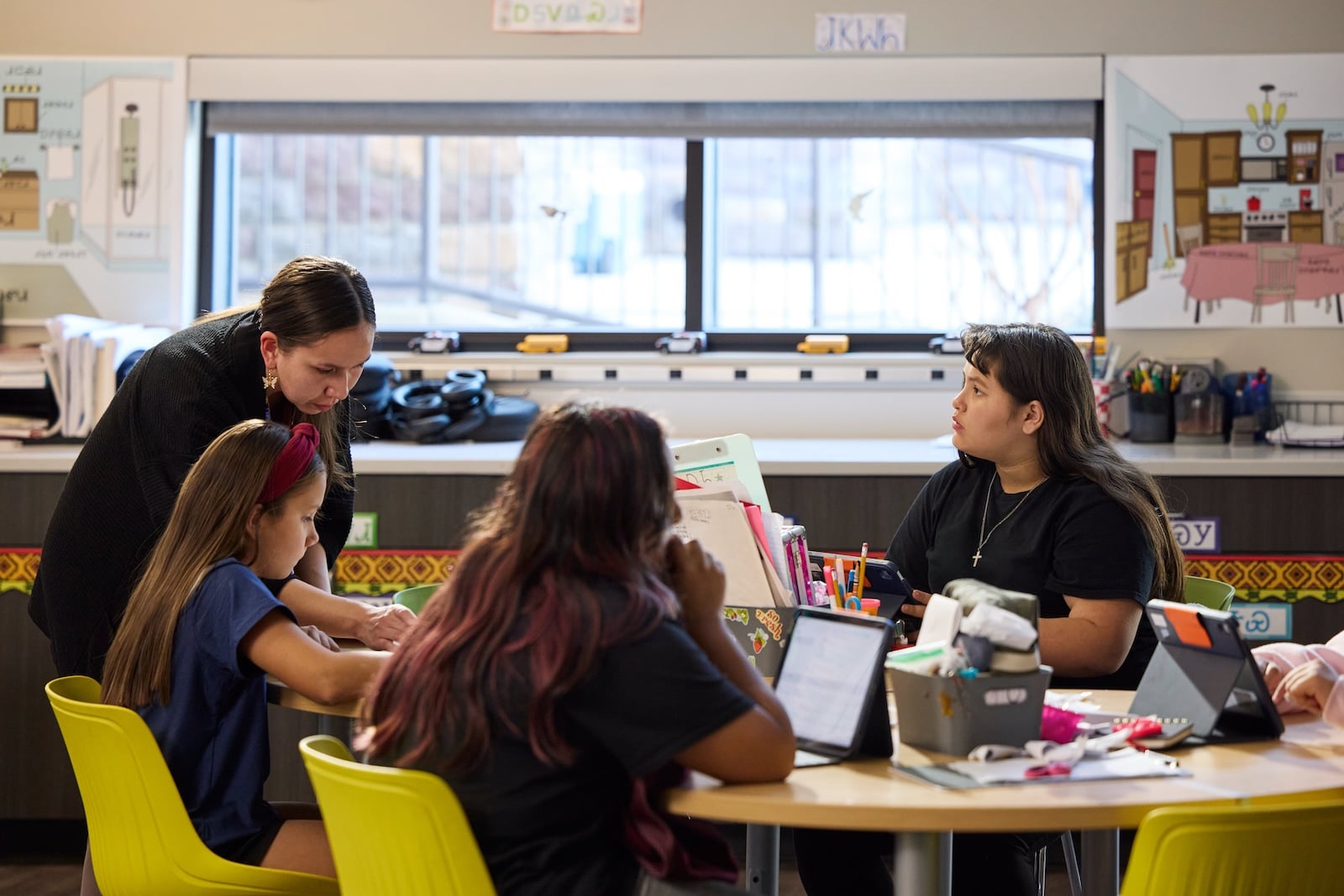
At an immersion school in Oklahoma, children and teachers are fighting for the survival of a language that only a few still speak fluently. Apple is supporting the Cherokee Nation with iPad and Mac – turning pronunciation exercises, animations, and podcasts into a tool to connect generations.
Of the more than 480,000 Cherokee people worldwide, fewer than 1,500 speak the language fluently today. At the Cherokee Immersion School in Tahlequah, Oklahoma, a facility of the Durbin Feeling Language Center, this is set to change: Here, students from preschool through eighth grade are being trained to become the next generation of Cherokee speakers. Through its Community Education Initiative, Apple, in partnership with Oklahoma City University, is equipping teachers and students at this school, as well as at the nearby Sequoyah High School, with iPads and Macs. The iPad, which elsewhere in Apple's lineup is currently the focus of much anticipation for the next generation, is here becoming a tool for language preservation.
Every pitch counts
In Cherokee, pronunciation determines meaning. A single different sound can transform a word into something completely different – a challenge that makes learning difficult. This is precisely where the iPad comes in.
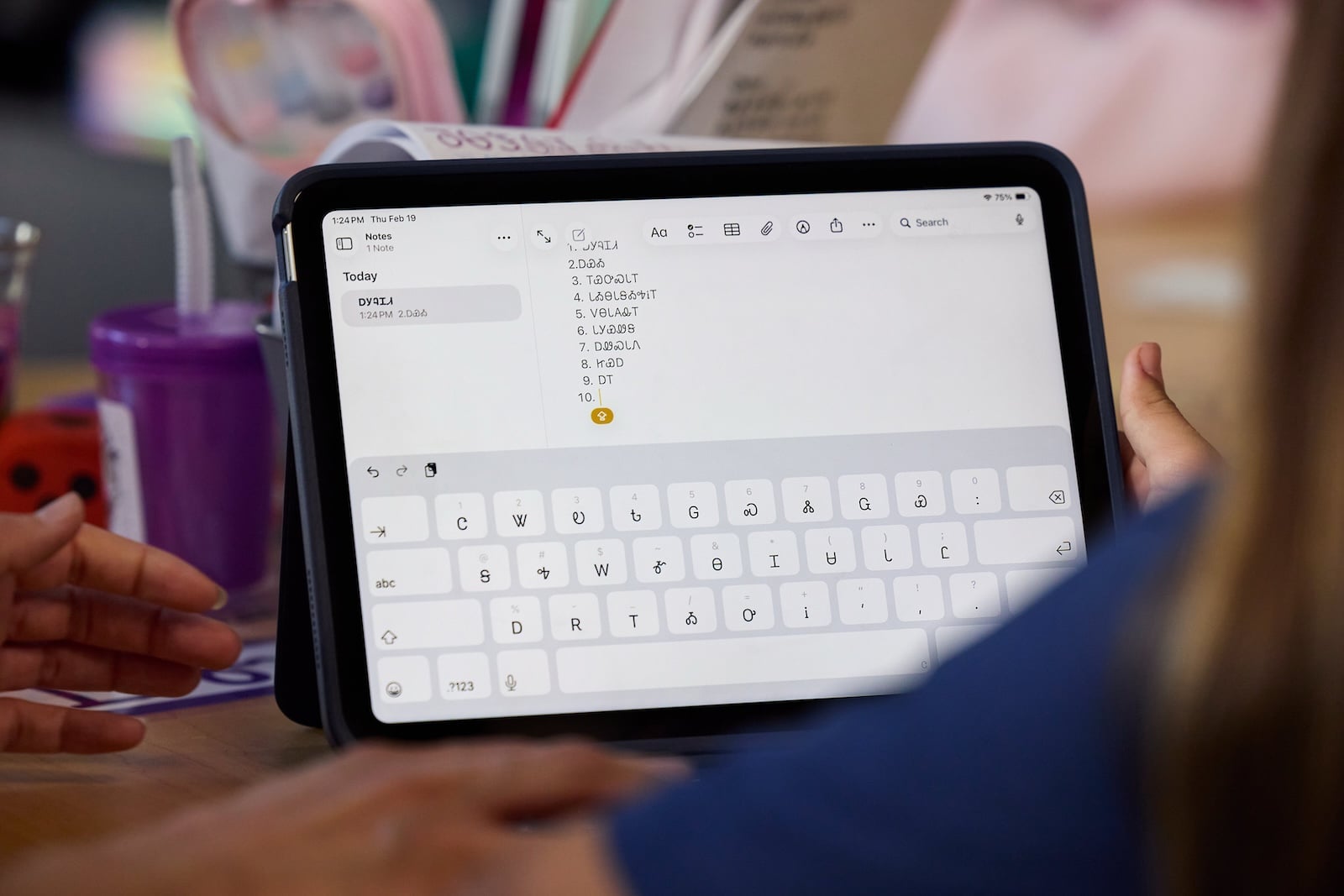
Where students once jotted down their vocabulary words on paper with a pencil, they now record themselves speaking. They can listen to these recordings at school and at home, allowing them to specifically improve their pronunciation. In the Notes app, they write words and sentences in the Cherokee script, a syllabic script consisting of 86 characters. Apple provides this complete syllabic script via the keyboards of Macs, iPads, and iPhones—a detail that, according to teachers, is essential for making literacy in one's own language truly practical.
From storytelling to your own app
The lessons go far beyond simply learning vocabulary. In one class, the children work on animated storytelling projects: First, they illustrate their stories in Keynote on the iPad, then they add sound to the narrative using iMovie. Storytelling is a key way in which language and culture are passed on from generation to generation.
One particularly ambitious project focuses on local flora. To document their knowledge of plants and their medicinal uses, the students are working on an app for identifying different species. They design the concept in Keynote, collect and label images from their surroundings to train their own machine learning model, and finally combine everything into a functioning app using Apple's Swift Playground.
This also demonstrates respect for regional differences: If a word sounds different to the teacher than to a child's grandmother, the grandmother's version should be recorded – because intonation and pronunciation differ between communities.
Teachers as technology ambassadors
To ensure the devices are truly effective in the classroom, the initiative trains selected teachers to become technology ambassadors. Through training courses offered by Apple and Oklahoma City University, they learn how to integrate creativity and programming into the cultural curriculum to better reach younger generations.
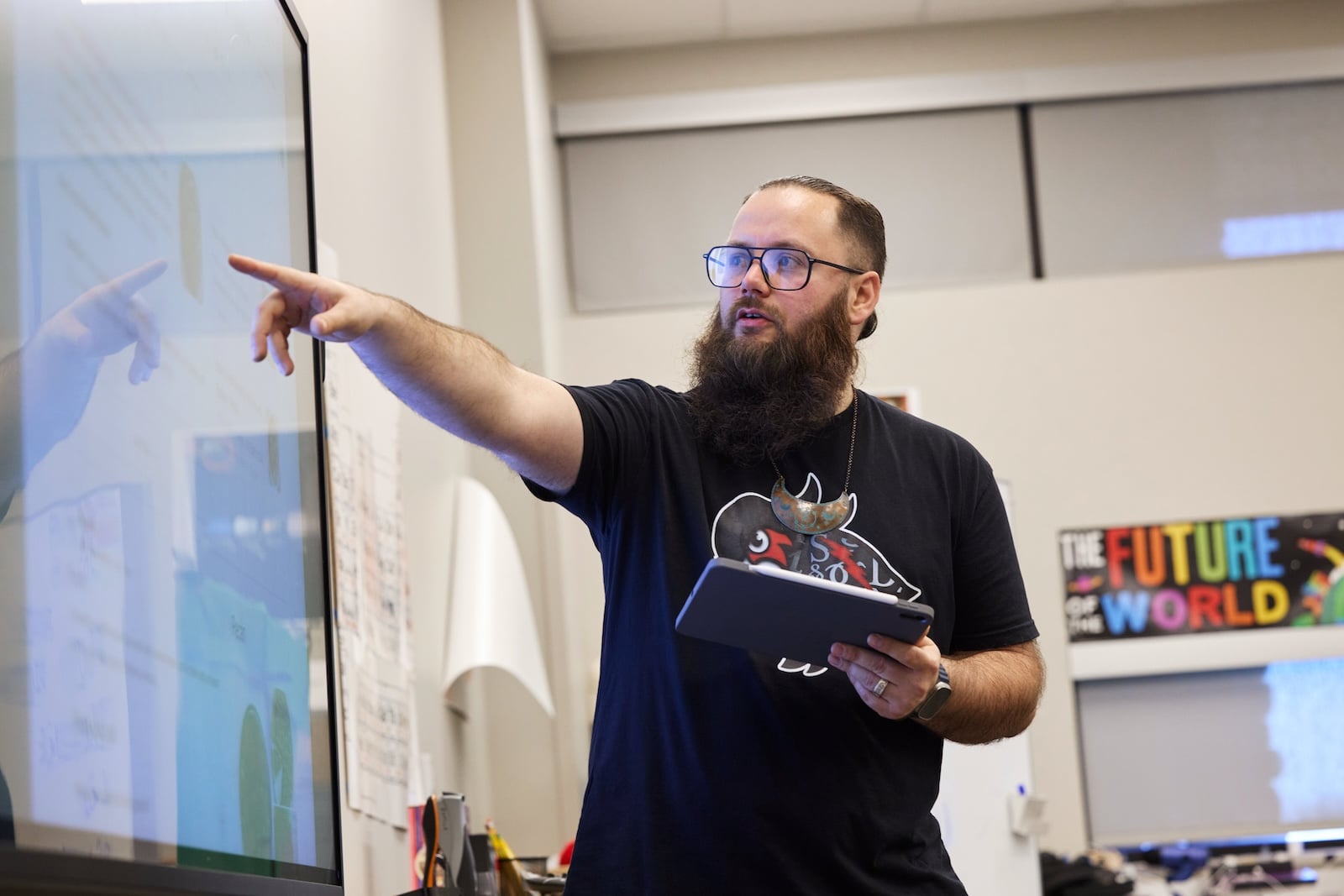
In a classroom, a mirror displaying self-affirmations sets the tone for the day: Cherokee phrases like "I am smart, I am loved, I am strong" greet each child. The class is preparing for an upcoming Cherokee Language Challenge Bowl, a language competition.
A bridge to high school
Sequoyah High School established a new immersion program specifically for graduates of the immersion school. One student, who transferred from the immersion school in 2024, continues her language and cultural studies there and describes how she initially feared losing her language and community – until the conversational Cherokee course opened a new avenue for her.
In Cherokee conversation classes, students also learn basket weaving: they practice traditional basket weaving together with elders. After hearing the origin stories, they photograph baskets at school and at home with iPads and use these photos as templates to design their own baskets in Freeform. In this way, art becomes a means of expressing language and culture.
When technology and tradition come together
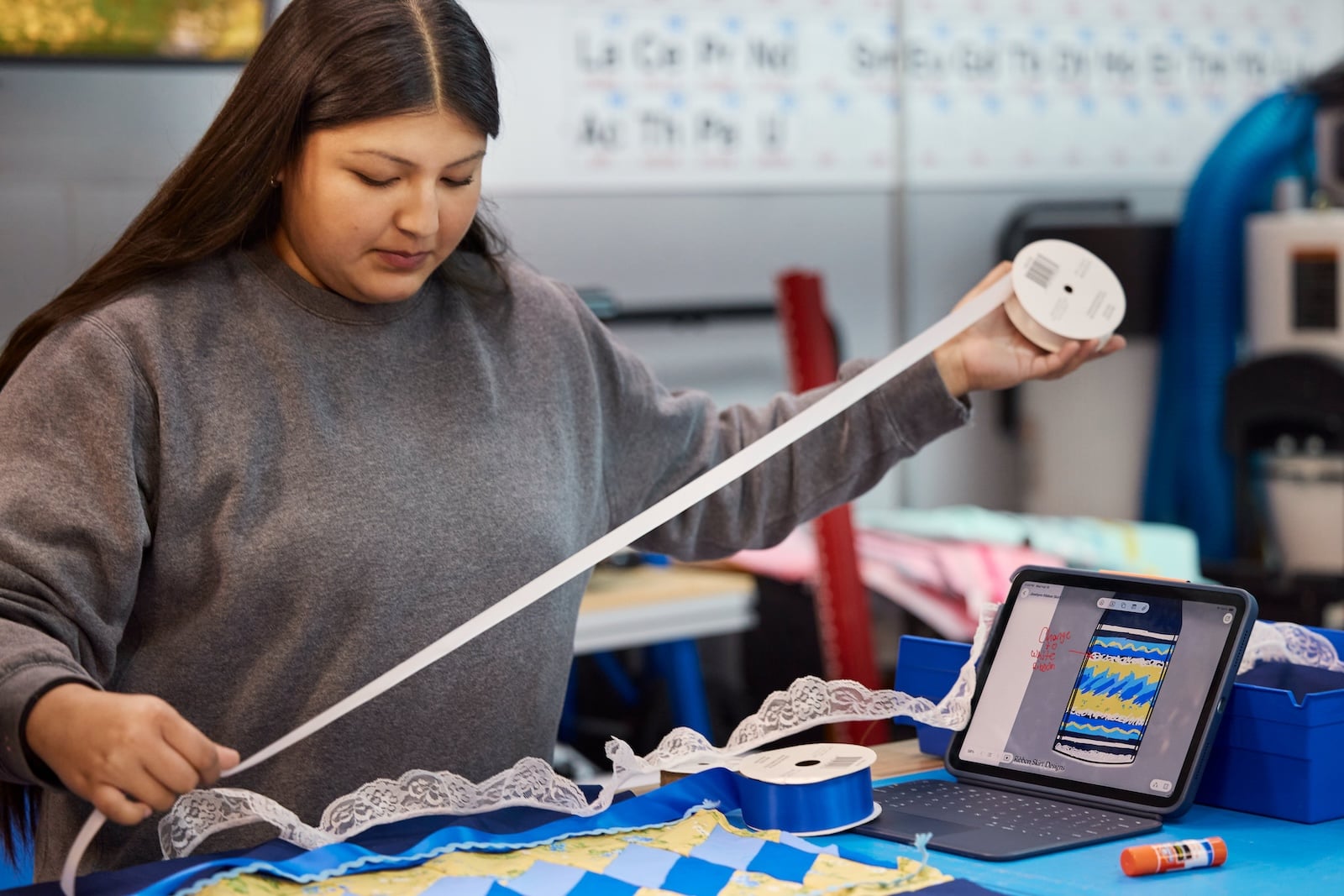
In the so-called STREAM Lab – for science, technology, research, engineering, art, and mathematics – ribbon skirts hang next to Mac computers, large-format printers, and sewing machines. Students design their own skirts using iPads and Apple Pencils before sewing them by hand. The same room serves as a studio for the student-produced podcast "Stories of Sequoyah."
For an upcoming episode, the students are recording an interview with a community elder who has been involved with the school since 1987 and editing the audio using GarageBand on a Mac. Craftsmanship, storytelling, and digital media converge here: The learners create traditional objects, understand their cultural significance, and simultaneously produce podcasts that preserve and respectfully pass on Cherokee stories.
What the project reveals about Apple's role
From the Cherokee Nation's perspective, technology is not an end in itself, but an accelerator. Representatives of the nation explain that without these tools, the language would not spread nearly as quickly, and that the iPad brings everything that has been built up so far within reach of young Cherokee people.
For Apple, this collaboration fits into a longer line of educational projects in which its devices are not seen as consumer products, but rather as tools for concrete social tasks. In the case of the Cherokee Nation, it's about nothing less than the survival of a language – and how recording capabilities, a syllabic keyboard, and creative apps can connect a generation with the knowledge of the previous one. (Image: Apple)
- Amazon is also acquiring Apple's 20 percent stake in Globalstar
- Study: People who cancel an annual subscription almost never come back
- Meta launches Facebook Plus, Instagram Plus and WhatsApp Plus worldwide
- Apple publishes help document to differentiate between Creator Studio apps
- WhatsApp will soon allow iPhone users to send documents to Meta AI
- iPhone Theft: Apple Plans Automatic Lock When Snatched
- Apple releases new AirTag 2 firmware 3.0.49
- Apple adds CVE details for older and current updates
- Apple patent outlines true underwater photography for iPhones
- Apple Patent: Vision Pro could become modular and upgradeable
- Apple is working on an Apple Pencil with realistic haptics
- Apple case designed to connect iPhone to satellites
- Apple is bringing Touch ID back under the Display
- Apple Vision Pro: Will there be an Apple Pencil-like controller?
- Apple reported significantly fewer patents in the US in 2025
- AirPods of the future: Apple is researching smart gesture logic
- Apple plans fabric displays for HomePod and other devices
- Apple wins long-running dispute over iPhone camera patents
- Apple develops magnetic game controller for iPhone & iPad
- Apple relies on smart mattress sensors for sleep tracking
- Apple develops next-generation Taptic Engine