Apple is gradually expanding the satellite capabilities of the iPhone. At the same time, a fundamental problem remains: even with good software, the limitations of satellite communication cannot simply be optimized away. If more data is to be transmitted reliably, more "hardware" for the radio link is ultimately required. This is precisely where a new idea comes in, which Apple describes in a patent application: an iPhone or iPad case that not only protects the device but also serves as a large satellite antenna, thus potentially paving the way for "full-fledged internet via satellite" in the future.
Since 2022, with the iPhone 14, "Emergency SOS via Satellite" has been available for the first time. This was a significant step because Apple made a satellite function accessible to the masses, which has since helped in real emergencies and demonstrably saved lives. Apple has since improved the feature and plans to expand it considerably in the future.
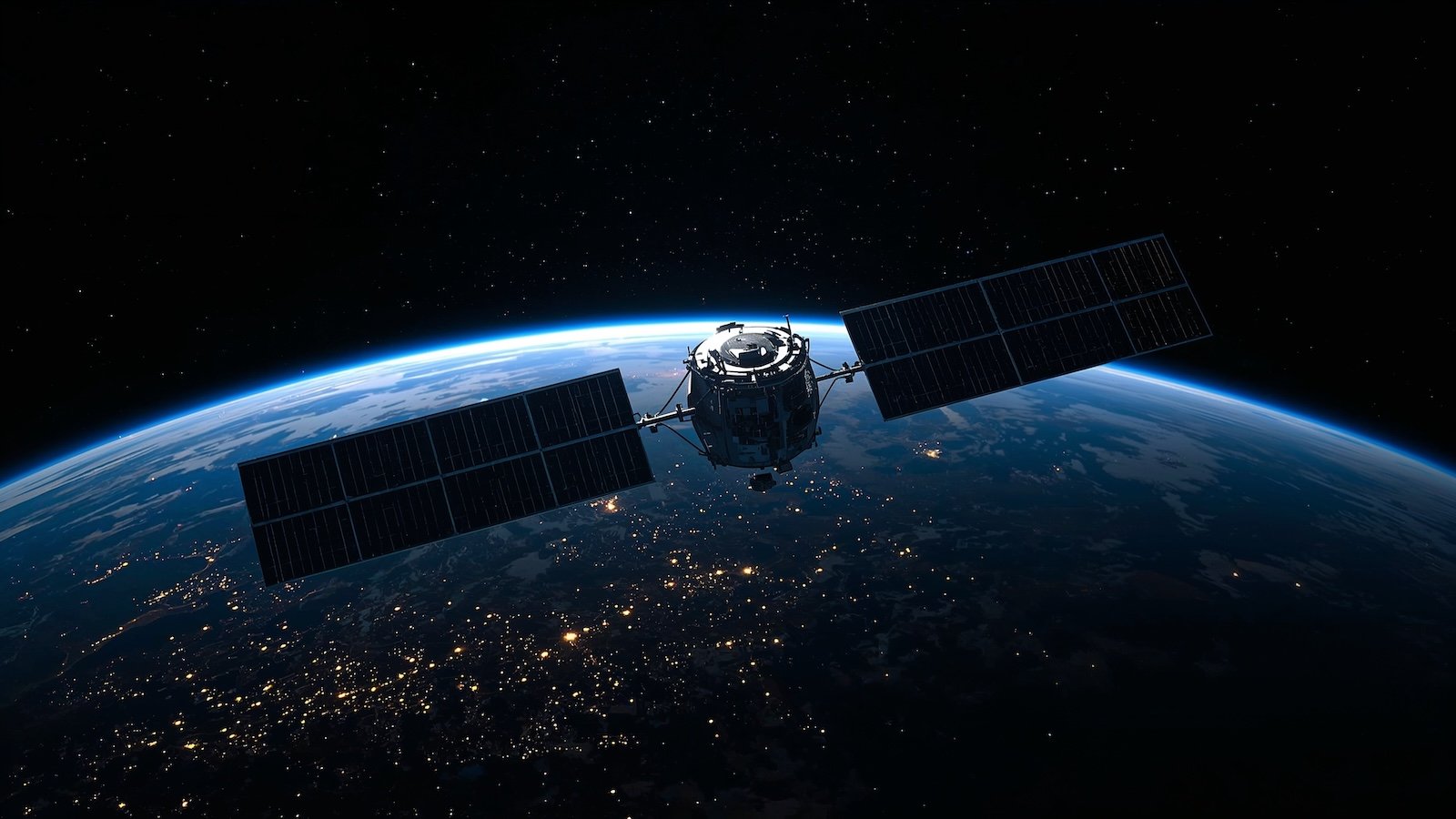
Nevertheless, maintaining a connection to the satellite remains difficult. Satellites in low Earth orbit (LEO) move very quickly relative to the transmitter. A single LEO satellite crosses the horizon in approximately seven minutes. In practice, the time during which a usable line of sight exists is often even shorter. This is due to obstacles such as buildings, trees, or the terrain.
Furthermore, while the iPhone software can help locate and track a satellite, the iPhone's antenna itself has a small surface area and is not particularly powerful. This limits the amount of data that can be reliably transmitted before the satellite goes out of range.
Why Apple is even considering a case
For a satellite connection to become more stable and transmit more data, antenna size and power play a crucial role. The iPhone offers limited space for this. A case, on the other hand, could provide significantly more surface area and accommodate more technically sophisticated antenna designs.
This is precisely what appears in a patent application originally filed in 2024 and recently published. The title is very direct: "Electronic device and enclosure with satellite communication capabilities". In it, Apple describes how an enclosure could serve as a satellite antenna for an iPhone or iPad.
What is specifically described in the patent application
The casing as an antenna
Apple has outlined a detachable cover that can be attached and removed like a normal case. Some of the diagrams also show an iPad variant where the cover can be powered via the Smart Connector.
The important thing is that the antenna isn't just placed anywhere, but should be positioned so that it can be pointed towards the sky when the case is open. Apple puts it this way: a removable case can have a phased-array antenna housed in a cover, and this cover, when open, points the antenna towards the sky. Additionally, a beamforming circuit can be located in the cover, connected to the phased-array antenna.
Phased array: not just "more antenna", but a different principle
The core idea is explicitly a phased-array antenna. This means: multiple transmitting and receiving elements instead of a single, small antenna surface.
Put simply: A phased-array antenna doesn't just have to find "one" satellite. It can work with an entire group of satellites and "move along" with the constellation. This is particularly relevant because LEO satellites move quickly through the line of sight. An antenna that can align more flexibly and shape signals more precisely has clear advantages in such an environment.
Data transfer between iPhone and case
Apple also describes how data can be exchanged between the iPhone and the case. The following methods are mentioned:
- a high-frequency connector (Apple refers to it as a "high-frequency connector" that allows wireless data transfer between the device and the case)
- Alternatives such as NFC (Near Field Communication)
- and generally various options for data transfer, whereby the case can then send the data back to the iPhone.
The basic logic is: The iPhone sends or transmits data to the case, the case handles the satellite uplink and delivers incoming data back to the iPhone.
A practical problem with current use: the hand as a blocker
Another point that Apple explicitly addresses in the patent concerns something very mundane: the hand.
Apple describes how holding the device can cause the hand to interfere with or block the radio signal. The patent application therefore emphasizes that, with the cover open, the antenna array can transmit wireless data to the satellite via the signal beam without being blocked by the hand while the device, including its case, is being held.
This is relevant in everyday life because current satellite usage already requires precise alignment and as unobstructed a view of the sky as possible. Every additional attenuation can make a difference.
What Apple wants to achieve with this in the long term: more than just emergency texts
A larger satellite antenna on the iPhone would allow for the transmission of more data than is currently possible. This is particularly interesting in the context of the patent because the described approach contributes to a larger goal: Apple ultimately wants to offer a complete internet connection via satellite.
Today's iPhone satellite function is functional and useful, but heavily geared towards limited data volumes and specific use cases. If Apple is thinking in terms of a "full-fledged internet," it naturally needs higher data rates, more stable connections, and less reliance on very short windows of view.
The catch: More power, but potentially fewer users
Today: automatically available, without anyone having to think about it
The current approach has a major advantage: it works for virtually all iPhone users when a regular cellular signal is unavailable. In practice, it doesn't even need to be known beforehand that satellite communication exists. The iPhone only indicates this when it's needed.
This is crucial because emergencies often happen unexpectedly.
With a cover: consciously take it with you, consciously own it
Using a casing as an antenna changes this principle. It would then require prior knowledge of the casing's existence and planning to bring it along. Many would do this, especially on tours, trips, or activities in areas with poor network coverage. However, there would still be people who unexpectedly find themselves in danger without being prepared. This creates a classic trade-off:
- More data performance and probably a better connection
- However, this results in less "universal" availability because additional hardware is required.
Ideally, everything would be on the iPhone, but that's not certain
From Apple's perspective, full integration directly into the iPhone would be ideal, rather than outsourcing the function to a case. Whether this is technically and spatially feasible in the foreseeable future remains to be seen. Until then, or if it never becomes possible in this form, a case could serve as an interim solution to significantly improve satellite communication.
Apple's patent reveals the next stage of development
With this patent application, Apple demonstrates that satellite communication for the iPhone is not intended as a one-off emergency feature, but rather as a path for future development. The document describes a removable case that functions as a phased-array antenna, uses beamforming to transmit directly to the satellite, exchanges data with the iPhone via a high-frequency connection or NFC, and even addresses the practical problem of hand interference.
At the same time, the limitations become clear: A protective case can offer more performance, but it's less automatically available than a solution integrated into the device. As of today, "Emergency SOS via Satellite" remains the approach that activates without preparation as soon as there's no cellular signal. For planned trips like mountain climbs, its use can be practiced and prepared in advance. Apple's case concept would go further and, if it ever becomes a product, could be a building block on the path to significantly more data and, in the long term, to a "fully-fledged internet via satellite." (Image: Shutterstock / Arif7871)
- Apple is bringing Touch ID back under the Display
- Apple Vision Pro: Will there be an Apple Pencil-like controller?
- Apple reported significantly fewer patents in the US in 2025
- AirPods of the future: Apple is researching smart gesture logic
- Apple plans fabric displays for HomePod and other devices
- Apple wins long-running dispute over iPhone camera patents
- Apple develops magnetic game controller for iPhone & iPad
- Apple relies on smart mattress sensors for sleep tracking
- Apple develops next-generation Taptic Engine
- Apple Ring – new patents give hope for an innovative wearable
- Apple Vision Pro could get more touch controls
- Apple files patent for iPhone made from a single piece of glass
- Apple is working on light signals for Apple Ring and more
- Apple files patent for new mouse button in keyboard
- Will Apple Pencil soon be available as a stylus for all Apple devices?
- Apple patent proves: AirPods with cameras in development
- Apple could improve Vision Pro for travel via software
- AirPods learn to read lips: Apple plans silent control
- Apple patent shows: iPhone could soon control everything automatically
- New research: Apple develops hinges for foldable iPhone
- Magic Mouse: Apple is working on touchless control
- Apple Patent: More action buttons for iPhones and more
- iPhone: Face ID under the display is within reach