
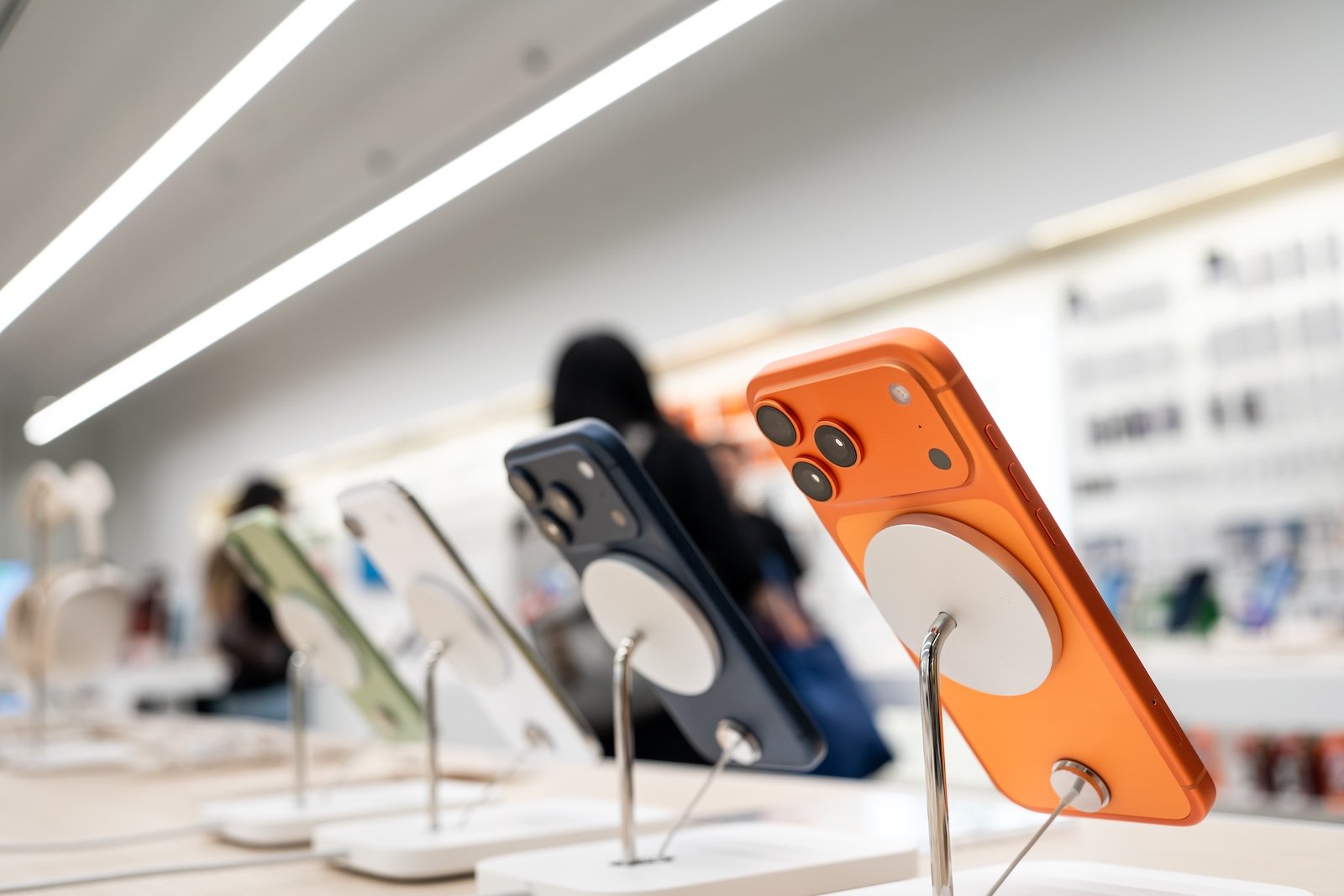
Apple posted exceptionally strong figures in the last quarter of last year. The Chinese market played a particularly key role. After roughly 18 months of declining iPhone sales, a clear turnaround was achieved there. The result was not only significant growth, but also the best iPhone quarter Apple has ever achieved in China.
According to Apple CEO Tim Cook, iPhone growth in China was one of the most important drivers of the company's record profits. This success came from two directions: many existing iPhone users switched to a new model, while at the same time the number of people switching from Android devices to iPhones increased.
This development is remarkable because Apple had previously lost market share to Chinese manufacturers over a year and a half, whose devices had become increasingly competitive technically.
Record numbers in Greater China
In Greater China, sales increased by 38 percent year-over-year. The iPhone was primarily responsible for this. Apple achieved record sales there, making this quarter the most successful iPhone quarter ever in the region.
Additionally, visitor numbers at Apple Stores in China rose significantly. The installed base reached a new record high in both Greater China and mainland China. At the same time, Apple recorded a new record for iPhone upgrades and strong double-digit growth in users switching from Android.
A survey by Worldpanel also showed that iPhones were the three most popular smartphones in Chinese cities during this period.
Three reasons for the success
Analysts quoted by Wired attribute the turnaround to three specific factors.
An unusually powerful base model
The iPhone 17 offers a price-performance ratio that hasn't been seen in this form for a base model for years. Instead of clear compromises compared to the Pro models, there are hardly any relevant compromises.
For the first time, a non-Pro iPhone features an always-on display with ProMotion. It also includes the same 18-megapixel selfie camera with Center Stage as the iPhone 17 Pro, as well as an improved 48-megapixel ultra-wide-angle lens on the back.
In direct comparison to the Pro model, the only real differences are a slightly longer battery life, a bit more power, and an additional camera. This makes the base model significantly more attractive to many buyers than in previous years.
Counterpoint analyst Gerrit Schneemann described it as a significantly larger technological leap than the iPhone 16. Features previously reserved for the Pro series have now made their way into the standard model. This likely prompted many users to upgrade to a new device sooner than planned.
A price just below the subsidy threshold
Another crucial factor was the selling price in China. To stimulate the domestic economy, the Chinese government allocated approximately $43 billion in subsidies for the purchase of electronics, household appliances, and cars in 2025.
Smartphones with a retail price below 6,000 RMB, equivalent to approximately $860, were eligible for a government discount of up to 15 percent. Apple deliberately priced the iPhone 17 in China at 5,999 RMB. This placed the device just a few cents below the price limit and thus qualified it for the subsidy.
This made the iPhone 17 significantly more attractive for price-conscious buyers, without Apple having to officially abandon its premium positioning.
The right time in the upgrade cycle
The market success also coincided with a period when many Chinese iPhone users were already considering upgrading their devices. In China, the typical replacement cycle is around three to four years.
The last major iPhone sales boom was triggered by the introduction of the iPhone 13. With the iPhone 17, Apple hit the perfect moment when a large portion of users were ready for an upgrade. The compelling overall package further amplified this effect.
Apple's return to growth in the Chinese market
Apple successfully combined several factors in China. An unusually strong base model, a targeted pricing strategy taking advantage of government subsidies, and an optimally chosen market launch time together resulted in the best iPhone sales ever in the region.
After a prolonged period of weakness, this shows that Apple can once again achieve significant growth in a highly competitive market like China, provided the product, price, and timing are right. (Image: Shutterstock / Wongsakorn 2468)
- iPad growth is expected to be strong in 2025 – 2026 will be challenging.
- Google as a cloud platform for Siri? New statements raise questions
- Formula 1 boss hints at F1 movie sequel on Apple TV
- iOS 26.3 provides clues about upcoming M5 chips
- Lockdown Mode: FBI fails to crack a reporter's iPhone
- Visual Intelligence: Apple's AI feature becomes key
- iOS 26.3 RC released: All new features at a glance
- iPhone and NFC: These innovations will shape the next few years
- Apple expands education and robotics in India's supply chain
- Apple TV Press Day Event: An overview of all content for 2026
- iPhone spyware bypasses iOS protection for camera and audio
- iOS 26.2.1 is causing problems for some users
- Apple Sports expands its offering to include golf and the DFB Cup
- Apple and Google: Why the search deal is being re-evaluated
- Apple TV presents "The Dink": New summer comedy 2026
- Apple TV presents Outcome: A black comedy with a star-studded cast
- Apple TV announces thriller series “Lucky” for summer 2026
- Apple is increasing SDK requirements for apps starting in April 2026
- xAI is alleged to have destroyed evidence in the antitrust case against Apple
- Apple is consistently expanding AI support in the Support app
- Apple introduces agent-based coding with Xcode 26.3
- Apple Home: Final deadline for upgrades
- Apple Music Replay 2026 is now available in the app and on the web
- WhatsApp in focus: Lawsuit questions encryption