One-fifth of shipped devices, almost half of revenue: In the second quarter, Apple achieved a figure the company has never reached before in this period. The driving force behind this success is not new technology, but a pricing decision – one that is unlikely to last.
That storage scarcity is dividing the smartphone market into winners and losers has been apparent for weeks. Now the figures for the past quarter are in, and they are more pronounced than expected: According to research by Counterpoint Research, Apple accounted for 49 percent of global smartphone sales. The company's revenue grew by 22 percent, while the overall market expanded by seven percent – the fastest growth among the five largest providers.
One fifth of the devices, almost half of the proceeds
Apple achieved a 21 percent market share in sales, up from 17 percent in the same quarter last year, also a record high for a second quarter. Samsung, however, remains in first place with 23 percent of shipped devices. The discrepancy between these two figures is the real key finding: For every percentage point in unit sales, Apple generates more than two percentage points in revenue.
This is evident in the average price. A single iPhone sold brought in $946 in the quarter, compared to $879 a year earlier – an increase of 7.6 percent. If you factor out the rest of the market from revenue and unit sales, the average price of all other manufacturers combined is around $260. Apple thus earns roughly three and a half times more per device than its competitors. Its 21 percent market share was already a signal in the previous quarter, but only the revenue side reveals the true role of the pricing structure.
The competition was in a consistently downward trend
All other top five manufacturers lost market share. Xiaomi was hit hardest: from 14 to 11 percent, with a 26 percent drop in units shipped compared to the previous year. The overall market shrank in terms of sales volume but grew in revenue – a pattern explained by the price increases that the memory shortage forced many manufacturers to implement.
This is precisely where the difference lies. While Android providers passed on increased component costs to their customers, Apple largely kept iPhone prices stable and absorbed the higher material costs itself. Whoever raises prices while their competitor doesn't shifts the price-performance ratio in favor of the other side.
Why Europe was among the strongest regions
This mechanism has concrete consequences for the European market. Counterpoint identifies China, Europe, and emerging markets as the regions with the strongest growth – explicitly attributing this to the fact that Apple's stable prices improved the relative attractiveness of its devices, while Android prices rose around them.
This reverses an argument that has driven iPhone sales in Europe for years. In a market phase where virtually every competing model became more expensive, an iPhone at the same price appeared mathematically cheaper than in the previous quarter – without Apple changing the price tag by a single cent. This growth was primarily driven by the base model iPhone 17 and the iPhone 17 Pro Max, meaning the product mix remained clearly focused on the premium segment.
The discipline that brought this advantage will probably end soon
Counterpoint explicitly states that Apple will likely raise prices in the coming quarters. This expectation aligns with estimates for the next generation, which could see a price increase of up to $300. Therefore, what the record second-quarter figures demonstrate is the effect of a decision that Apple is currently reversing.
The timing suggests that the limit has been reached. At its earnings call on Thursday, Apple announced significant supply shortages for the September quarter and cited storage costs as the primary reason for the expected decline in margins. How the pricing issue will affect the upcoming model year is part of the rumor mill surrounding the iPhone 18 Pro.
The real test will come in the fall
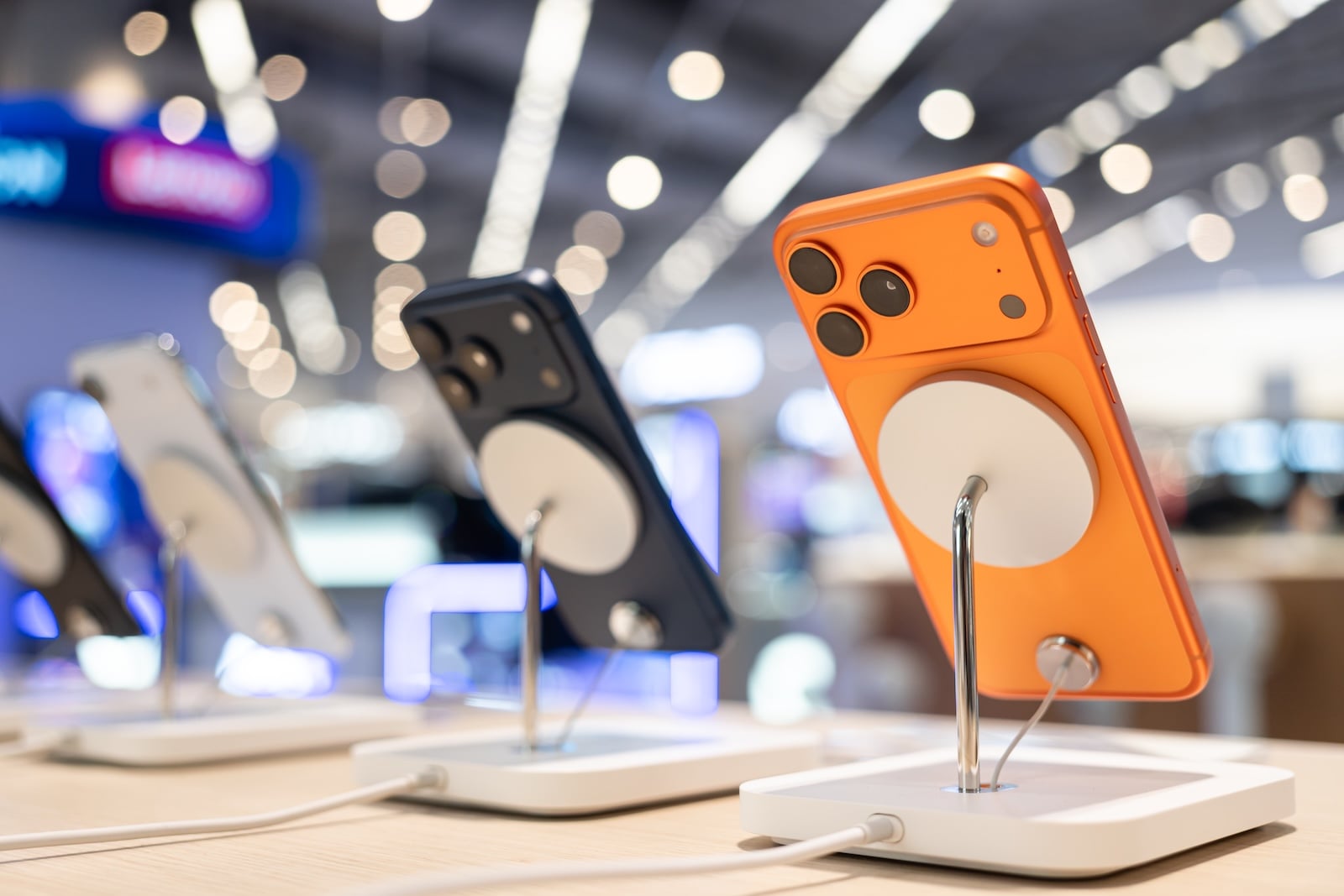
A revenue share of 49 percent is difficult to increase further without Apple selling significantly more devices – and that's unlikely in the current quarter due to component shortages. More interesting is the comparison: The lead in the second quarter arose because Apple was the only company that didn't adjust prices. Once that's no longer the case, it will become clear how much of that was due to the brand and how much simply to the in-store price. (Image: Shutterstock / Wongsakorn 2468)
- Goldman Sachs lowers Apple price target after raising its own
- Morgan Stanley lowers Apple price target to $360
- JP Morgan lowers Apple price target to $340
- Apple Q3 2026: Details from the conference call
- Why Apple's services failed to meet expectations
- More storage providers do not mean lower prices