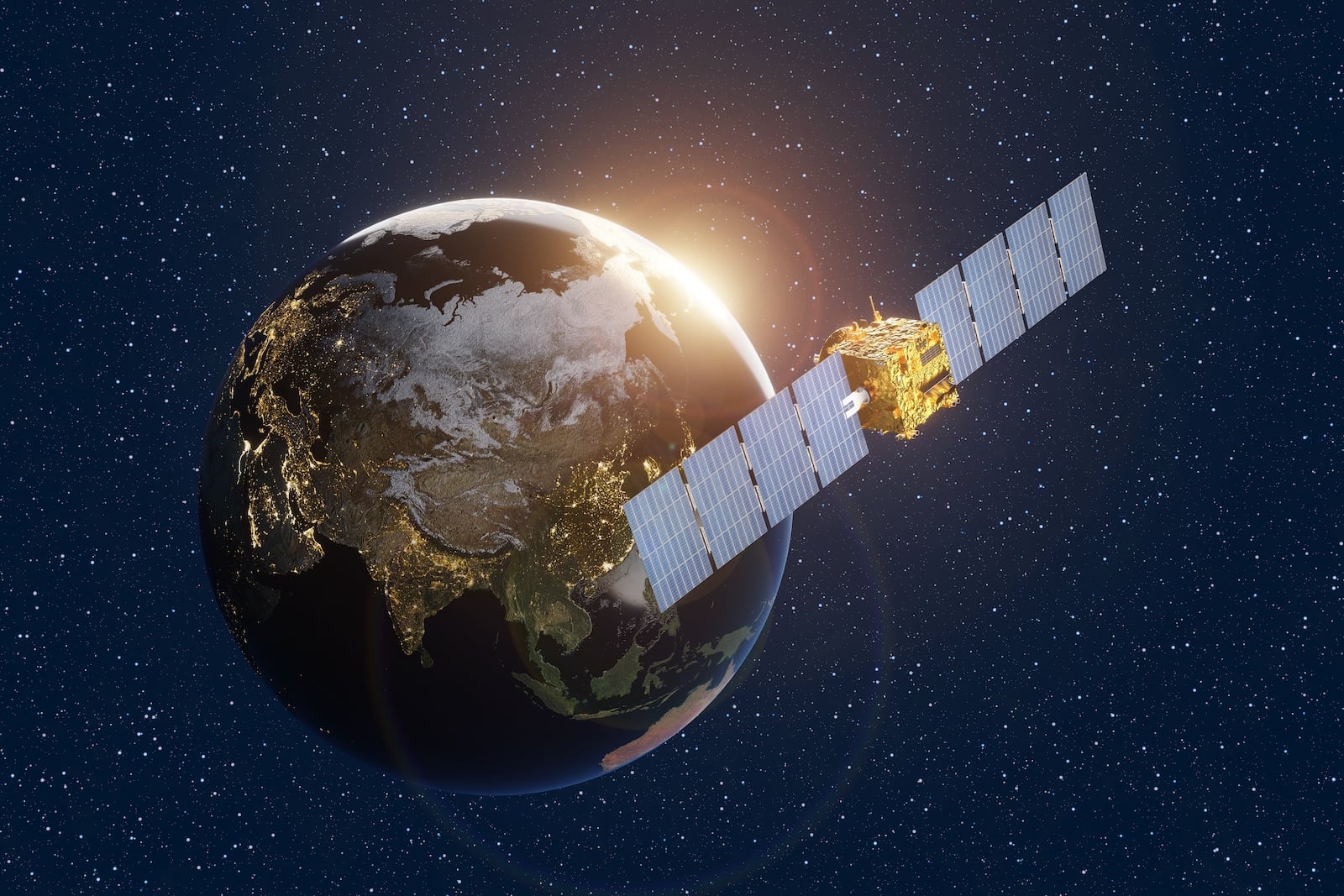
Amazon has submitted an application to the US regulatory authority for a network of up to 5,105 satellites. It would operate using the radio spectrum of Globalstar – the company that currently provides all the satellite functionality for the iPhone and Apple Watch. However, it will be years before users see any benefit from this.
The application is the next step in a restructuring that has been underway since spring. Amazon is acquiring Globalstar, thereby also purchasing Apple's 20 percent stake in the satellite operator. Apple and Amazon agreed in May that the existing Globalstar network would continue to operate alongside Amazon's own Leo constellation, with both together providing satellite services on Apple devices. What was missing until now was the technical dimension of this plan – and it is proving to be more extensive than expected.
What was submitted to the authority
Amazon has applied to the Federal Communications Commission for a network of up to 5,105 satellites in low Earth orbit. These satellites would transmit voice, data, messages, and emergency services directly to end devices – without the need for additional hardware, provided the device has a satellite-enabled chipset. This applies to current iPhone models and the Apple Watch Ultra 3.
The array of satellites is distributed across five orbital shells. Three of these target densely populated regions, while the others extend coverage towards the polar regions. Amazon expects this to result in higher speeds and greater throughput than with current technology.
In its announcement, Amazon explicitly mentions the agreement with Apple: The network will carry emergency SOS calls via satellite, messages, Find my and roadside assistance on supported iPhone and Apple Watch models – and will also serve as a basis for jointly developed future services.
Two of these four services are not available here at all
The list reads as more complete than it actually is for the German-speaking region. Of the four functions mentioned, only two are usable in this country:
| Feature | Germany | Austria | Switzerland |
|---|---|---|---|
| Emergency SOS via satellite | available | available | available |
| Find my via satellite | available | available | available |
| Messages via satellite | no | no | no |
| Roadside Assistance via satellite | no | no | no |
Emergency SOS via satellite launched in Germany in December 2022, along with France, Great Britain, and Ireland; Austria and Switzerland were added in subsequent expansion phases. To date, Apple limits satellite messaging to the USA, Canada, Mexico, and Japan. Roadside assistance operates in the USA, Great Britain, and Australia – a service that relies on local towing networks anyway.
Which features are enabled in which country therefore differs considerably. Apple justifies this with the necessary approvals and regulations by the respective authorities. A larger network alone does not solve this problem: The FCC is a US agency, and separate approvals are required for operation across Europe.
The timetable extends well into the next decade
Nothing will change in the short term. Amazon plans to put the satellites into operation starting in 2028. The acquisition of Globalstar is expected to be completed in 2027, subject to antitrust approvals. Until then, everything will continue to run unchanged via the existing Globalstar infrastructure.
For comparison, the number 5,105 is smaller than it sounds. Starlink already has many more satellites in orbit and offers a comparable service with its direct-to-cell offering. Apple, on the other hand, has clearly dominated the satellite smartphone market so far – albeit based on a network that is currently changing ownership.
Apple's satellite strategy depends on third-party hardware
What's remarkable is not so much the number of satellites, but the constellation behind them: Apple has relinquished its stake in the operator, becoming a complete customer instead of a co-owner. The technical foundation of a feature that Apple has touted for years as a security advantage of the iPhone will now reside with a corporation that directly competes in other areas.
Whether this will amount to more than simply continuing the existing system depends on the expansion of services. For the iPhone 18 Pro, significantly more extensive satellite connectivity is being considered – however, this would require precisely the capacity that Amazon cannot deliver until 2028 at the earliest. (Image: Shutterstock / Dragon Claws)
- iOS 26.6 is here: These are the new features the update brings
- Silo Season 4 starts in summer 2027
- Neuromancer on Apple TV: Teaser and release date confirmed
- AppleCare One launches in Germany: Prices, scope & limitations
- Apple vs. Micron: Dispute over Chinese storage ends up with Trump
- Trump threatens the EU with tariffs over tech fines
- Claude Opus 5: Anthropic's new AI model is here
- macOS 27: Hidden Siri interface with 13 voices discovered
- iPhone Ultra: 25 percent market share expected for foldables