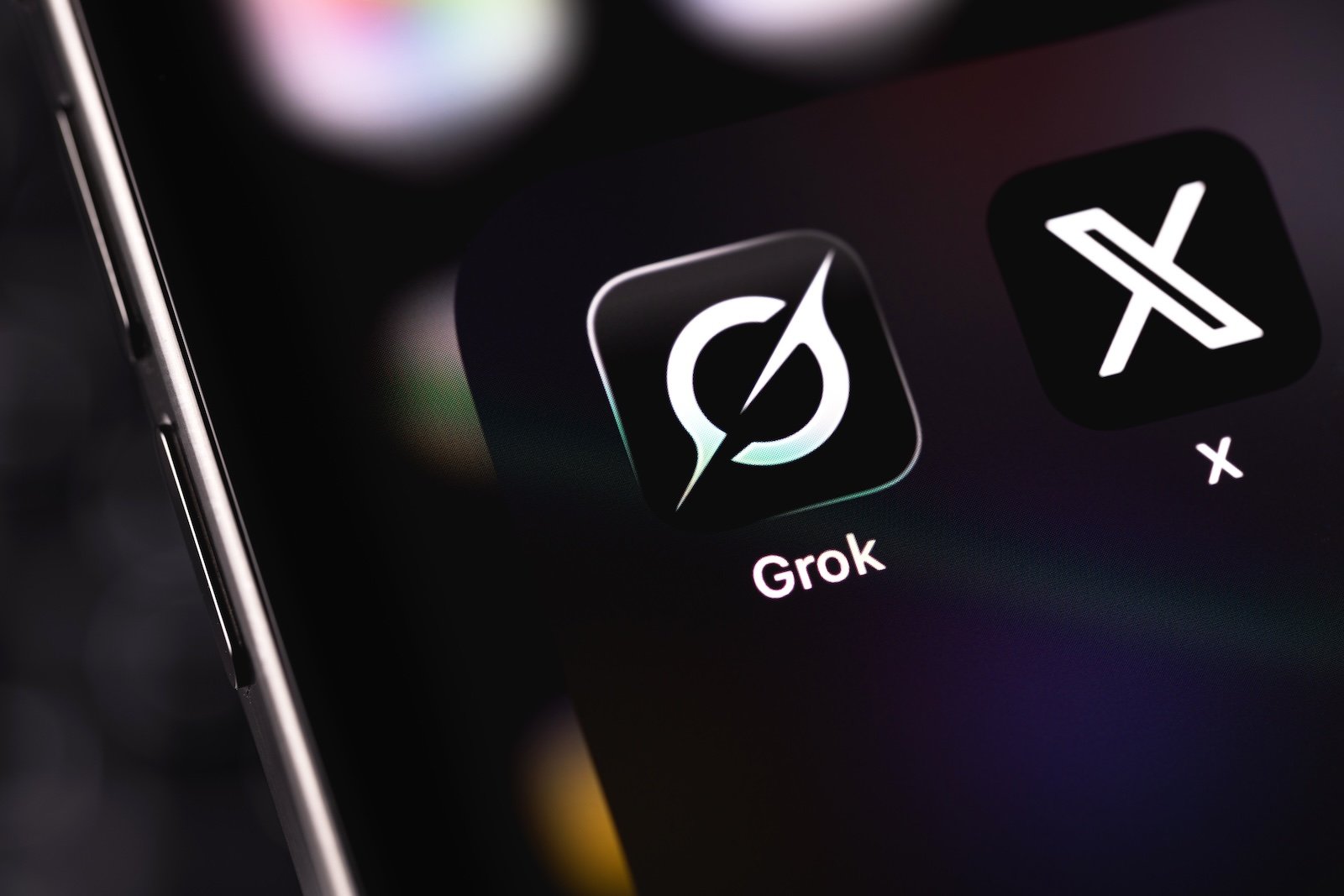
Grok is currently at the center of a political controversy in the US. Several US senators have officially called on Apple and Google to remove the apps X and Grok from their app stores. The accusation is serious: Grok's AI functions are alleged to have been used to create masses of non-consensual sexualized images of women and children. The case raises fundamental questions about the responsibility of AI providers, platform operators, and app store companies.
Artificial intelligence is increasingly being integrated into social networks, reaching a very large audience. Grok is an example of how powerful, but also how susceptible to misuse, such systems can be. As soon as AI tools are used to generate harmful or potentially illegal content, not only the developers but also the distribution platforms come under pressure. This is precisely the point of contention raised by the current criticism from US senators.
The letter from US senators to Apple and Google
In a joint letter, US Senators Ron Wyden, Ben Ray Luján, and Edward Markey have called on Apple and Google to remove the apps X and Grok from their app stores. The letter is addressed directly to Apple CEO Tim Cook and Google CEO Sundar Pichai.
The senators justify their demand with incidents in which Grok was allegedly used to create mass copies of non-consensual sexualized images of women and children. In their assessment, these are harmful and illegal depictions that clearly violate app store guidelines.
Criticism of Grok and the role of X
X came under increasing criticism last week after reports surfaced that Grok's AI image generation capabilities were being used to create images of women and children in bikinis or underwear. This content was apparently created without the consent of the individuals depicted.
In response, X partially restricted the use of Grok's image generation feature. Non-paying users can no longer generate images as replies to posts on X. According to The Verge, however, the tools remain available to paying subscribers. Images can still be generated via the dedicated Grok section within X and through the standalone Grok app.
From the senators' perspective, these measures are insufficient. They continue to see a high risk of misuse and therefore demand decisive action from app store operators.
Violations of the App Store guidelines
The senators explicitly refer to the terms of service of Apple and Google. Apple's guidelines prohibit apps with offensive or simply disturbing content. By any common definition, non-consensually created sexualized images of women and especially children fall into this category.
Furthermore, Apple explicitly prohibits apps with overtly sexual or pornographic content. This includes material intended to evoke erotic rather than aesthetic or emotional responses. The senators argue that the images generated by Grok violate precisely these rules.
Doubts about the moderation practices of Apple and Google
In their letter, the senators sharply criticize the moderation practices of both companies. If Apple and Google fail to act in such a serious case, they will undermine their own claims regarding the security of their app stores.
Both companies have argued for years that their app stores offer a safer user experience than downloading apps directly from the internet. This argument has been central to their opposition to legislative reforms aimed at increasing competition in the app store sector. It has also played a key role in their defense against accusations that they abuse their market power through their proprietary payment systems. According to the senators, inaction undermines these positions.
Deadline for a statement
Senators have asked Apple and Google to respond in writing to the letter. The deadline is January 23. By then, the companies are expected to explain how they intend to address the allegations and what measures they plan to take.
Unclear consequences for X and Grok
The Grok case demonstrates how quickly AI systems can become a serious problem if their use is not adequately regulated. The demands of the US senators significantly increase the pressure on Apple and Google. Whether X and Grok will actually be removed from the app stores remains to be seen. However, it is clear that Grok and similar AI offerings will be subject to closer scrutiny in the future, and the responsibility of major platforms will be brought even more into focus. (Image: Shutterstock / Primakov)
- Apple Home: Support for the old version is nearing its end
- These new emojis could soon be coming to the iPhone
- Apple stock in focus: Evercore raises price target to $330
- Apple will provide insight into its Q1 2026 figures at the end of January
- Apple reveals executive salaries: Tim Cook's income in 2025
- Apple announces date and details for its 2026 annual shareholders meeting
- iOS 26.3: Second test for Apple's background security
- John Ternus is once again being considered as the next CEO of Apple
- AirPods of the future: Apple is researching smart gesture logic
- Apple wins antitrust lawsuit and patent dispute against AliveCor
- Apple under pressure: India insists on possible billion-dollar fine
- Blood glucose monitoring with the Apple Watch is getting closer
- Chase will become the new issuer of the Apple Card
- Apple TV dominates Actor Awards with comedy hit The Studio
- OpenAI launches ChatGPT Health with Apple Health integration
- WhatsApp introduces new features for organized group chats
- iOS 26.3 tests background security updates in the system
- Apple 2026: Are higher prices for Macs and iPhones imminent?
- iPhone Fold is getting closer: CES provides strong clues
- Apple makes Macs and iPads significantly faster on 5 GHz Wi-Fi
- Apple Vision Pro makes NBA games immersive for the first time
- Apple TV wins seven awards at Critics' Choice Awards
- iPhone exports from India reach the 50 billion mark
- Belkin showcases powerful Qi2.2 charging solutions at CES 2026
- Apple Vision Pro is not a flop, it's just misrated