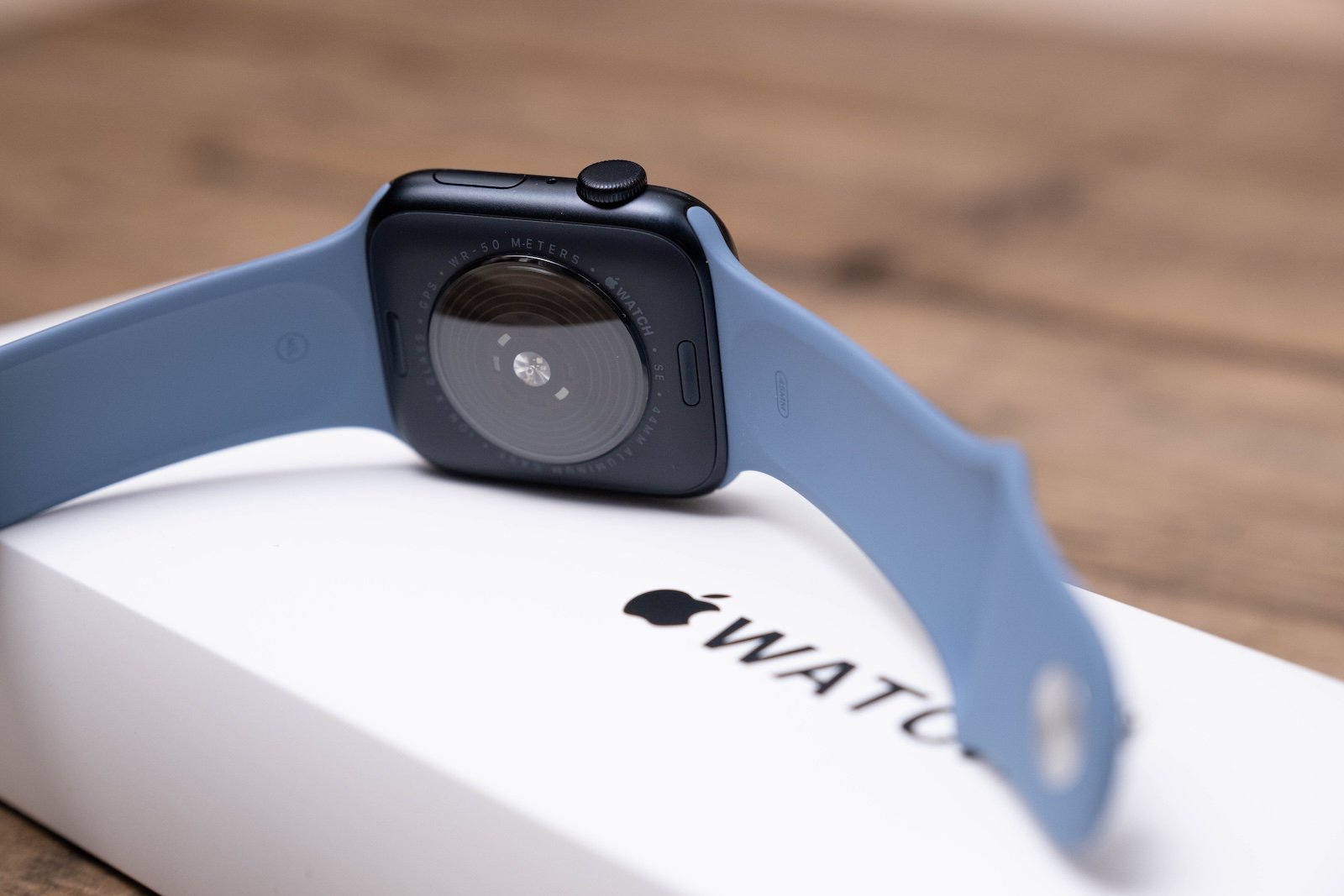
Apple has achieved another major legal victory in the US. A federal appeals court rejected AliveCor's final attempt to revive an antitrust lawsuit against Apple. This brings to a definitive end the years-long dispute surrounding the Apple Watch, heart rhythm apps, and alleged anticompetitive practices. Apple emerges victorious once again.
The legal dispute between Apple Inc. and AliveCor has dragged on for several years through various courts. At its core were both patent rights and antitrust issues. After AliveCor lost its patent case, the focus recently shifted to the allegation that Apple had unlawfully controlled the market for heart rhythm analysis apps on the Apple Watch.
Decision of the Court of Appeal
On January 8, 2026, the U.S. Court of Appeals for the Ninth Circuit upheld the lower court's summary judgment in favor of Apple. The judges dismissed AliveCor's antitrust lawsuit in its entirety. This ended the medical technology company's final attempt to revive the case.
The court concluded that Apple did not illegally monopolize the market for heart rhythm analysis apps on the Apple Watch. The decision directly follows Apple's previous successes in the same legal dispute.
A look back at the patent dispute before the ITC
Back in March 2025, Apple had already achieved a decisive victory in the patent dispute before the International Trade Commission. The patents for heart monitoring claimed by AliveCor had previously been declared invalid by the Patent Trial and Appeal Board. This assessment was later upheld on appeal.
This outcome not only dismissed AliveCor's patent-based lawsuit against Apple, but also eliminated the risk of an import ban on the Apple Watch. This removed a key point of leverage against Apple.
The core of the antitrust lawsuit against Apple
The antitrust lawsuit, which has now been definitively dismissed, ran parallel to the patent proceedings. AliveCor focused on modifications to watchOS and access to heart rate data from the Apple Watch.
AliveCor had developed a software feature called SmartRhythm designed to detect atrial fibrillation. This feature used heart rate data calculated by Apple using its own algorithm while the Apple Watch was in workout mode.
A year after the introduction of SmartRhythm, Apple changed the Watch's operating system. From then on, a different algorithm was used to calculate heart rate data. The data from this new algorithm continued to be shared with third-party apps. However, Apple no longer made the data from the old algorithm available. As a result, SmartRhythm could no longer reliably detect atrial fibrillation.
In parallel, Apple introduced its own feature for detecting irregular heart rhythms. This feature is called Irregular Rhythm Notification. It is based on a third algorithm for calculating heart rate data. Apple also made this data available to app developers via existing programming interfaces.
AliveCor argued that Apple had deliberately blocked access to the old algorithm in order to favor its own function and weaken competing apps.
Court assessment
The appeals court did not accept this argument. The Ninth Circuit clarified that Apple's conduct constituted a lawful refusal to enter into a business transaction and not anti-competitive behavior.
The judges emphasized that companies generally have no antitrust obligation to permanently share their proprietary technologies with competitors. In the court's view, AliveCor failed to demonstrate a recognized exception to this rule.
Furthermore, the judges concluded that the data requested by AliveCor did not constitute a so-called essential facility. Particularly relevant was the observation that Apple's own heart rhythm function is based on different data. This data remains available to third-party developers via official APIs.
Apple finally ends years-long legal battle with AliveCor
With the January 2026 ruling, the legal dispute between Apple and AliveCor has effectively ended. Apple has prevailed completely in both the patent case and the antitrust lawsuit. For Apple, this means legal clarity regarding the Apple Watch, watchOS, and the handling of health data. At the same time, the ruling sends a clear signal to app developers that changes to platforms and algorithms are not automatically considered anti-competitive as long as fundamental interfaces remain open. (Image: Shutterstock / Colin Hui)
- Apple under pressure: India insists on possible billion-dollar fine
- Blood glucose monitoring with the Apple Watch is getting closer
- Chase will become the new issuer of the Apple Card
- Apple TV dominates Actor Awards with comedy hit The Studio
- OpenAI launches ChatGPT Health with Apple Health integration
- WhatsApp introduces new features for organized group chats
- iOS 26.3 tests background security updates in the system
- Apple 2026: Are higher prices for Macs and iPhones imminent?
- iPhone Fold is getting closer: CES provides strong clues
- Apple makes Macs and iPads significantly faster on 5 GHz Wi-Fi
- Apple Vision Pro makes NBA games immersive for the first time
- Apple TV wins seven awards at Critics' Choice Awards
- iPhone exports from India reach the 50 billion mark
- Belkin showcases powerful Qi2.2 charging solutions at CES 2026
- Apple Vision Pro is not a flop, it's just misrated
- Clicks Power Keyboard: New MagSafe keyboard in detail
- Punkt. MC03: A smartphone that consistently protects data
- Clicks Communicator: Communication instead of smartphone stress
- Apple is focusing on new Fitness+ programs and challenges
- Apple updates vintage list for Macs, iPhones and more
- Apple Fitness+ officially announces big plans for 2026
- Apple raises $3 million to fight AIDS
- iPhone 17 Pro: Reports of static noise while charging
- Apple better prepared: Notebook market under pressure in 2026
- More Roomba models support Matter for HomeKit