
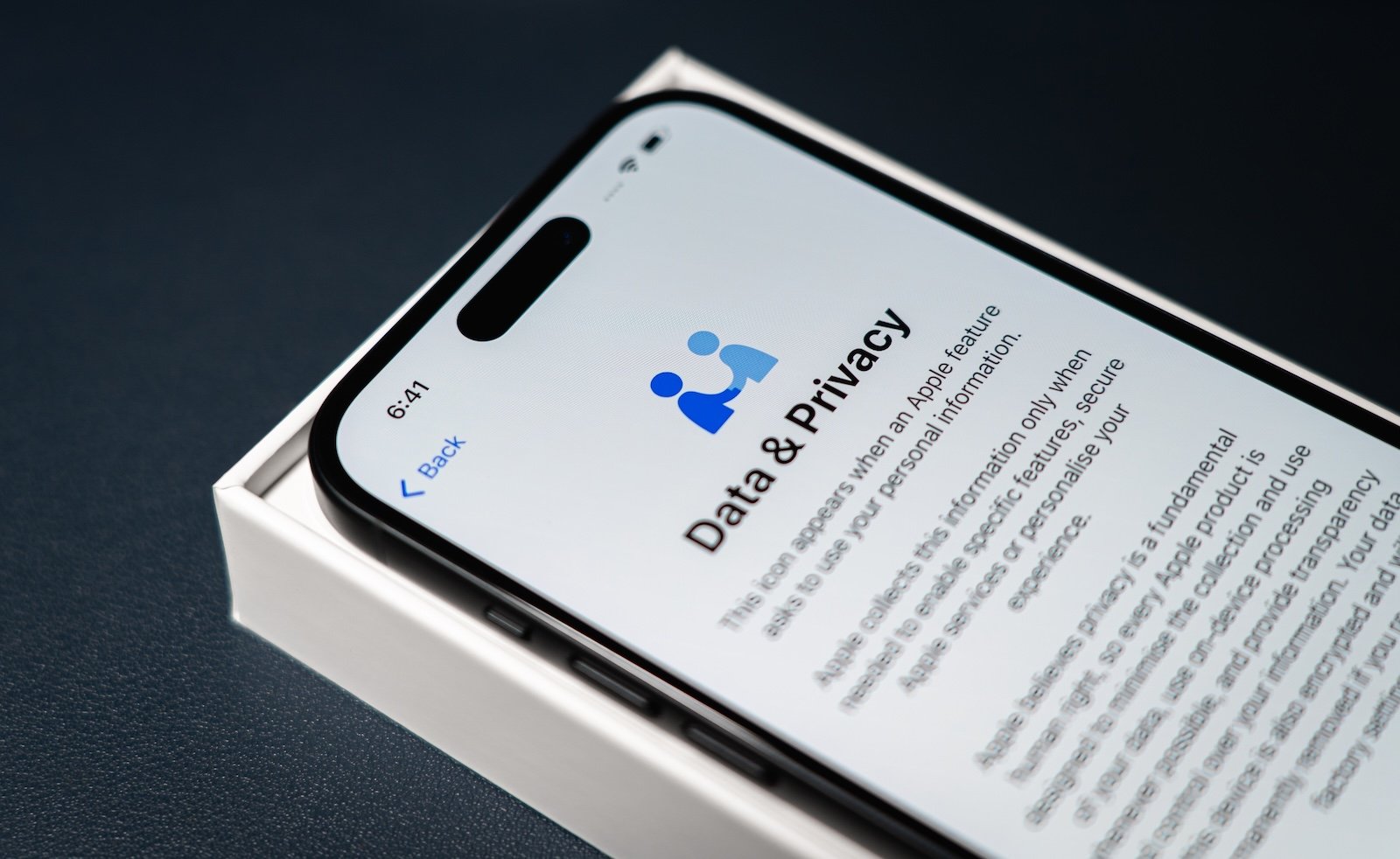
In Europe, technology and politics intersect – and this often leads to tension. The recent case of Apple illustrates how difficult it has become to reconcile one's own data privacy standards with regulatory requirements. While the company has cultivated a reputation for setting particularly high standards for security and privacy over the years, it now faces accusations of not doing enough to protect its users. The problem is that the very measures designed to enhance security are restricted or even undermined by other EU regulations.
The focus is on two European legal frameworks – the Digital Markets Act (DMA) and the Digital Services Act (DSA) – which are ostensibly aimed at different objectives but clash in practice. Apple has now responded with a detailed open letter in which the company clearly identifies the contradiction between regulatory market liberalization and data protection.
Two legislative packages with conflicting goals
The Digital Marketing Act (DMA) is intended to foster greater competition in the digital market. It obliges large platform operators like Apple to open their systems to third-party providers – specifically, by allowing external links in apps that point to alternative marketplaces or services.
The DSA, in turn, aims to better protect users from illegal content, fraud, and harmful online behavior. Platforms are expected to take effective measures to minimize risks – particularly in the areas of consumer protection and the safety of minors.
In practice, this creates a conflict: If Apple has to grant third-party providers access to its ecosystem, it can no longer fully control what content is distributed on these external platforms. The consequence: Users are potentially exposed to higher risks – which is now being criticized for Apple.
The specific allegations of the EU
Apple has received several so-called RFIs (Requests for Information) from the EU. These official requests accuse the company of, among other things:
- Failure to take sufficient measures against the distribution of illegal content related to financial fraud in the App Store,
- and fail to provide adequate safeguards for minors on the platform.
Apple is certain that the causes of these risks do not lie in a neglect of responsibility, but in the restrictions created by the DMA.
Apple's response: A clearly worded letter
Apple responded to the allegations with an open letter of complaint, signed by Kyle Andeer, Vice President of Legal. In approximately 5,500 words, the company explains why it finds the current RFI requests incomprehensible – particularly in light of the regulatory requirements Apple has already implemented.
A key point: From Apple's perspective, the mandatory opening to third-party providers undermines many of the protective mechanisms the company has built up in recent years. These include, among others:
- the curation of the App Store,
- comprehensive child protection features,
- as well as technical protection measures against phishing, fraud and dangerous content.
Apple points out that developers now have the option to redirect users directly from their apps to websites or external marketplaces. These are outside of Apple's control and may contain problematic content or fraudulent offers. Ironically, it is precisely this opening up of the market that is now leading to the problems Apple is being blamed for.
Effort without recognition?
Apple emphasizes that implementing EU regulations has already consumed enormous resources. According to the company, "hundreds of thousands of engineering hours" were invested to meet the DMA requirements on time. Nevertheless, the company is now facing additional burdens – with demands whose implementation is practically impossible due to the same regulations.
Apple is particularly critical of the restrictions on parental controls. These were previously considered an industry standard and helped to improve the protection of children on Apple devices. However, opening up to external platforms has weakened many of these protective mechanisms – and according to Apple, the EU Commission has not approved alternatives.
The conflict is escalating
What originally began as a dialogue between Apple and the EU has now become an official legal dispute before the European Court of Justice in Luxembourg. Apple is challenging key aspects of the DMA – not for economic reasons, but, as the company emphasizes, out of concern for the integrity of its platform and the protection of its users.
In its open letter, Apple argues that the EU's new investigations are distracting from the real problem: the flawed and unbalanced implementation of the DMA. The fact that the RFI allegations became public precisely when the EU was reviewing the DMA raises further questions.
Apple warns of unintended consequences of EU regulations
The Apple vs. EU case demonstrates how difficult it is to meaningfully reconcile regulatory objectives in practice. The desire to make the digital market more open is understandable – but this must not come at the expense of data protection and security. Apple warned early on that the opening requirements would create new risks. That these risks are now being considered a failure is hardly comprehensible from a corporate perspective.
This case will not only have repercussions for Apple, but is also likely to raise fundamental questions about how digital policy in Europe will be shaped in the future. Users can only hope that data protection standards do not become pawns in conflicting regulations – but remain what they are meant to be: reliable, effective, and non-negotiable. The best products for you: Our Amazon storefront offers a wide selection of accessories, including those for HomeKit. (Image: Shutterstock / Eudaimonic Traveler)
- iOS 26.2 brings Apple Music integration to WhatsApp Status
- iOS 26.2: Apple removes important feature in the EU
- Apple's next Home product is hidden in iOS 26.2
- Nintendo introduces a new Store app with a brilliant additional feature
- macOS 26.1 introduces new options for Spotlight & Clipboard
- iOS 26.2 brings third-party app stores to Japan
- Apple Creator Studio: Note in iOS 26.2 Beta 1 raises questions
- Apple makes a blunder: App Store source code accidentally ends up online
- iOS 26.2: These new features are already visible in Beta 1.
- iOS 26.2: Beta reveals planned new feature for AirDrop
- iOS 26.2: Freeform app gets table functionality
- iOS 26.2 brings alarms for reminders – here's what's new
- iOS 26.2: Liquid Glass slider brings new options
- iOS 26.2: New features make Apple Podcasts smarter
- watchOS 26.2 introduces a new scale for sleep assessment
- Live translation with AirPods: EU launch planned for December
- iOS 26.2 Beta released – Apple prepares next update
- WhatsApp is now officially available on the Apple Watch
- Apple postpones the end of the old HomeKit version to 2026.
- iOS 26.1 closes over 50 dangerous security vulnerabilities.