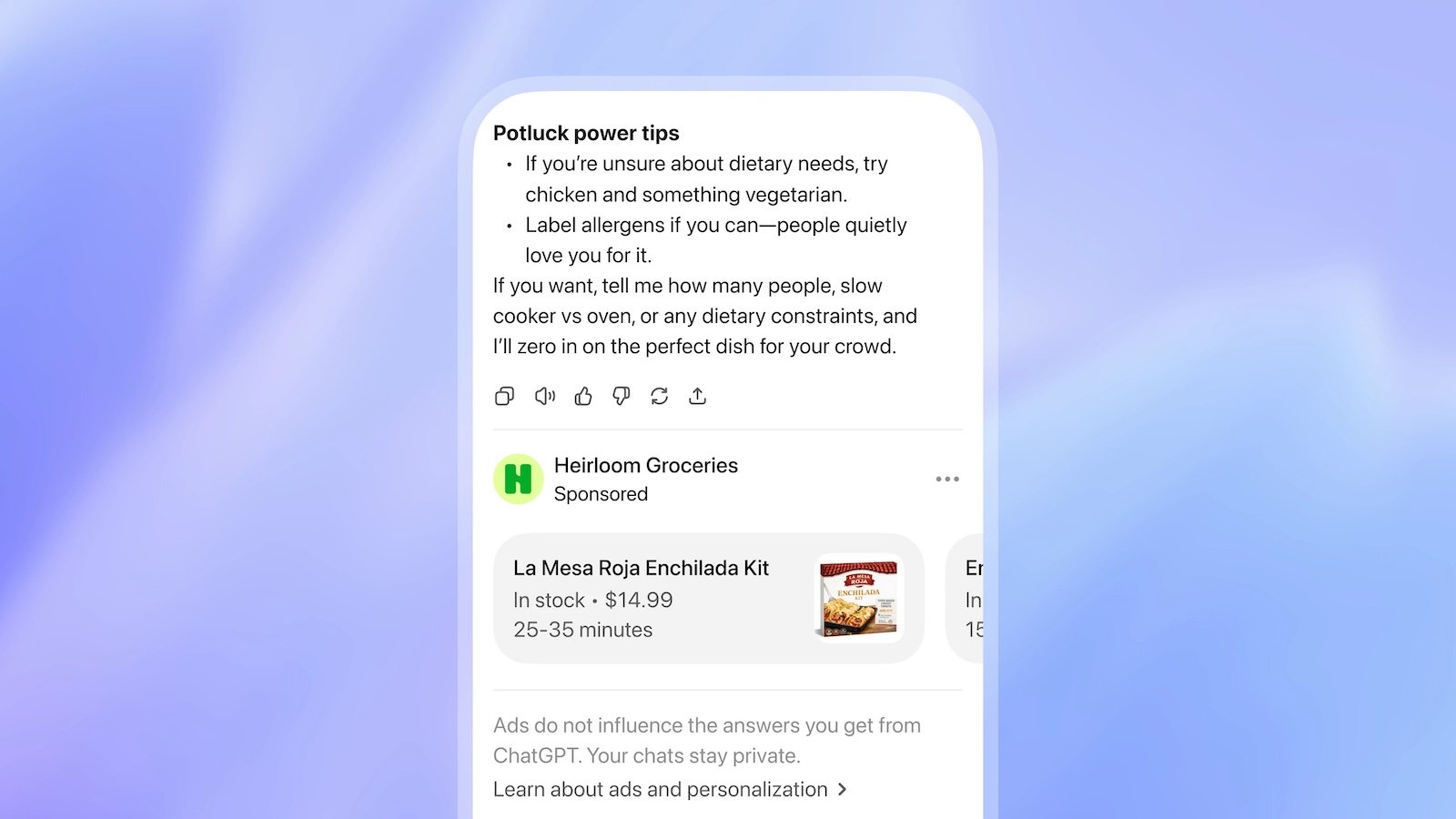
ChatGPT is now advertising. With this move, OpenAI is consciously leaving the purely ad-free space for the first time and introducing a business model previously associated primarily with traditional online platforms. While this step doesn't affect all users, it is already sparking discussions about trust, data privacy, and the future of AI-powered responses.
Developing ChatGPT is costly. Computing power, model training, and global infrastructure result in consistently high expenses. At the same time, the user base is growing rapidly. OpenAI is therefore faced with the challenge of operating ChatGPT economically without fundamentally damaging the product.
Advertising is intended to achieve precisely this balancing act. It should provide broader access to more powerful features while simultaneously keeping paid subscriptions ad-free. OpenAI emphasizes that trust in ChatGPT, especially for personal and important tasks, must not be compromised.
Advertising in ChatGPT: Who is affected and who is not
OpenAI has announced it will begin testing advertising in the US for users of its Free and Go plans. The Go plan is a new, low-cost subscription for $8 per month and was launched globally in mid-January.
According to OpenAI, users of the paid Plus, Pro, Business, Enterprise, and Education subscriptions will not see any advertising. This separation is intended to be clear and permanent.
Influence on responses and handling of user data
A key criticism is the concern that advertising could influence ChatGPT's responses. OpenAI explicitly rejects this concern. Advertising has no influence on ChatGPT's content or recommendations. Advertisements are clearly marked as sponsored and distinctly separated from the actual answers.
OpenAI also explains that conversations using ChatGPT remain private for advertisers. There is no access to individual chats or personal content.
How advertising is selected and displayed
In tests, OpenAI adapts ads thematically. This is based on:
- the topic of current conversations
- previous chats
- Previous interactions with ads
For example, someone browsing recipes might see ads for food delivery services or meal kits. OpenAI emphasizes that advertisers do not receive individual user data. They only receive aggregated performance data such as page views or clicks.
User control options
OpenAI grants users several control and transparency features. These include:
- Insight into the history of ad interactions
- Option to delete this history at any time
- Reject ads or give feedback
- to see why a particular ad was displayed
- Managing the personalization of advertising
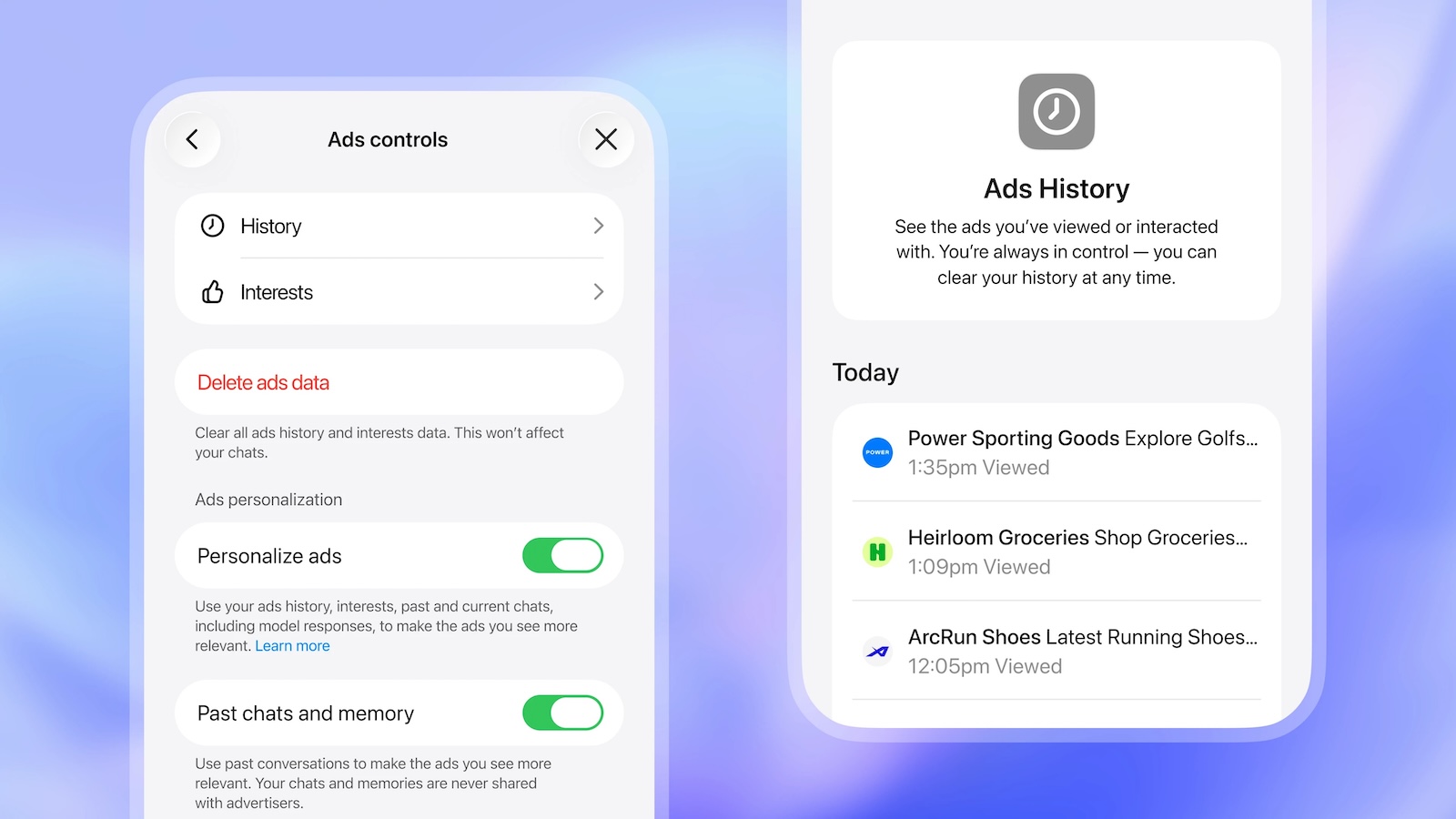
This is intended to prevent advertising from being perceived as opaque or intrusive.
Clear exclusions regarding age and sensitive topics
Not everyone sees ads. OpenAI explicitly excludes certain areas:
- No ads for users under 18 years of age
- No ads near sensitive or regulated topics
These include, among other things, health, politics, and mental health. These restrictions are intended to minimize risks and uphold ethical standards.
Criticism from within the industry and public barbs
The introduction of advertising is met with skepticism not only by users. There is also resistance within the AI industry. A prominent example is competitor Anthropic, which publicly mocked the topic in several Super Bowl commercials.
The ads featured AI chatbots portrayed by glass-eyed actors offering helpful advice alongside poorly integrated advertisements. The message: advertising can massively disrupt the user experience.
OpenAI CEO Sam Altman reacted with obvious irritation. He called the campaign dishonest and Anthropic an authoritarian company. The incident illustrates just how fierce the competition in the AI market has become.
Previous criticism and economic reality
OpenAI already came under pressure at the end of last year when app suggestions were tested that many users perceived as unwanted advertising. The reactions made it clear that acceptance of advertising in AI systems is not a given.
At the same time, the economic reality remains: ChatGPT needs to generate revenue to finance the development of its technology and the growth of the company. Advertising is a means for OpenAI to achieve this goal without charging all users.
Advertising in ChatGPT: A cautious but crucial step
ChatGPT is breaking new ground with the introduction of advertising. OpenAI is attempting to set clear boundaries: no influencing responses, no sharing of personal data, and no advertising on sensitive topics. Whether these promises are kept in the long term and how users react will be crucial for acceptance.
It's clear: ChatGPT is evolving from a purely AI-powered tool into a platform with commercial interests. The success of this transformation depends not on the advertising itself, but on how consistently it is controlled and limited. (Image: OpenAI)
- EU threatens Meta with measures over AI blocking on WhatsApp
- Apple AI generates speech and sound from silent videos
- Apple Music: Bad Bunny's Halftime Show breaks records
- Apple TV celebrates success at the 78th Directors Guild Awards
- Apple tightens App Store guidelines for chat apps
- Apple CEO Tim Cook comments on retirement
- watchOS 11.6.2 for Apple Watch: What's included in the update
- Apple celebrates 50 years and looks to the future with AI
- Apple takes a stand: Tim Cook fights for migration
- AirTag 2 Teardown: iFixit Shows All the New Features
- iPhone 17 Pro Max wins battery test against Android competition
- Apple Maps and Ads are not considered gatekeepers in the EU
- Apple celebrates record quarter: How the China comeback succeeded
- iPad growth is expected to be strong in 2025 – 2026 will be challenging.
- Google as a cloud platform for Siri? New statements raise questions
- Formula 1 boss hints at F1 movie sequel on Apple TV
- iOS 26.3 provides clues about upcoming M5 chips
- Lockdown Mode: FBI fails to crack a reporter's iPhone
- Visual Intelligence: Apple's AI feature becomes key
- iOS 26.3 RC released: All new features at a glance
- iPhone and NFC: These innovations will shape the next few years
- Apple expands education and robotics in India's supply chain
- Apple TV Press Day Event: An overview of all content for 2026