Visual Intelligence has become one of the core AI functions in the Apple ecosystem. What initially started as a camera feature on the iPhone is gradually evolving into a system-wide tool for managing information. Apple CEO Tim Cook recently explicitly described the function as one of Apple Intelligence's greatest achievements. At the same time, there are concrete indications that Apple plans to significantly expand visual intelligence and bring it to new device categories in the near future.
Apple has a clear approach to artificial intelligence: the technology should work in the background and solve real-world problems without appearing complicated. Visual intelligence fits perfectly into this concept. Instead of abstract AI functions, the focus is on recognizing and categorizing content on the screen or in the environment and making it directly usable. The rapid success of this feature demonstrates that this idea resonates well with users.
Visual Intelligence as an early success for Apple
During the recent quarterly earnings call, Tim Cook specifically highlighted Visual Intelligence, calling it one of Apple Intelligence's most popular features to date. According to Cook, the feature helps users get more out of the content on their iPhone screen, search faster, perform targeted actions, and answer questions directly within apps. Apple is thus emphasizing not only the technical aspects but, above all, its practical, everyday benefits.
Introduction with the iPhone 16
Visual Intelligence was first introduced with the iPhone 16. The feature is closely linked to the new camera control button. A long press of this button activates Visual Intelligence mode. Additionally, the feature can be launched via a customizable button in the Control Center or on the Lock Screen. This makes Visual Intelligence quickly accessible and easily integrated into everyday life.
What functions does Visual Intelligence offer?
At its core, Visual Intelligence combines the iPhone's camera with AI-powered analysis. This results in several concrete use cases:
- Street signs or other texts can be automatically translated into your own language.
- Information on flyers can be recognized and saved directly as appointments in the calendar.
- Restaurants, shops or places are identified and displayed with ratings, photos and additional information.
The crucial point is that information no longer needs to be manually transferred or searched for. The camera becomes the interface between the real world and digital actions.
Enhancement through iOS 26
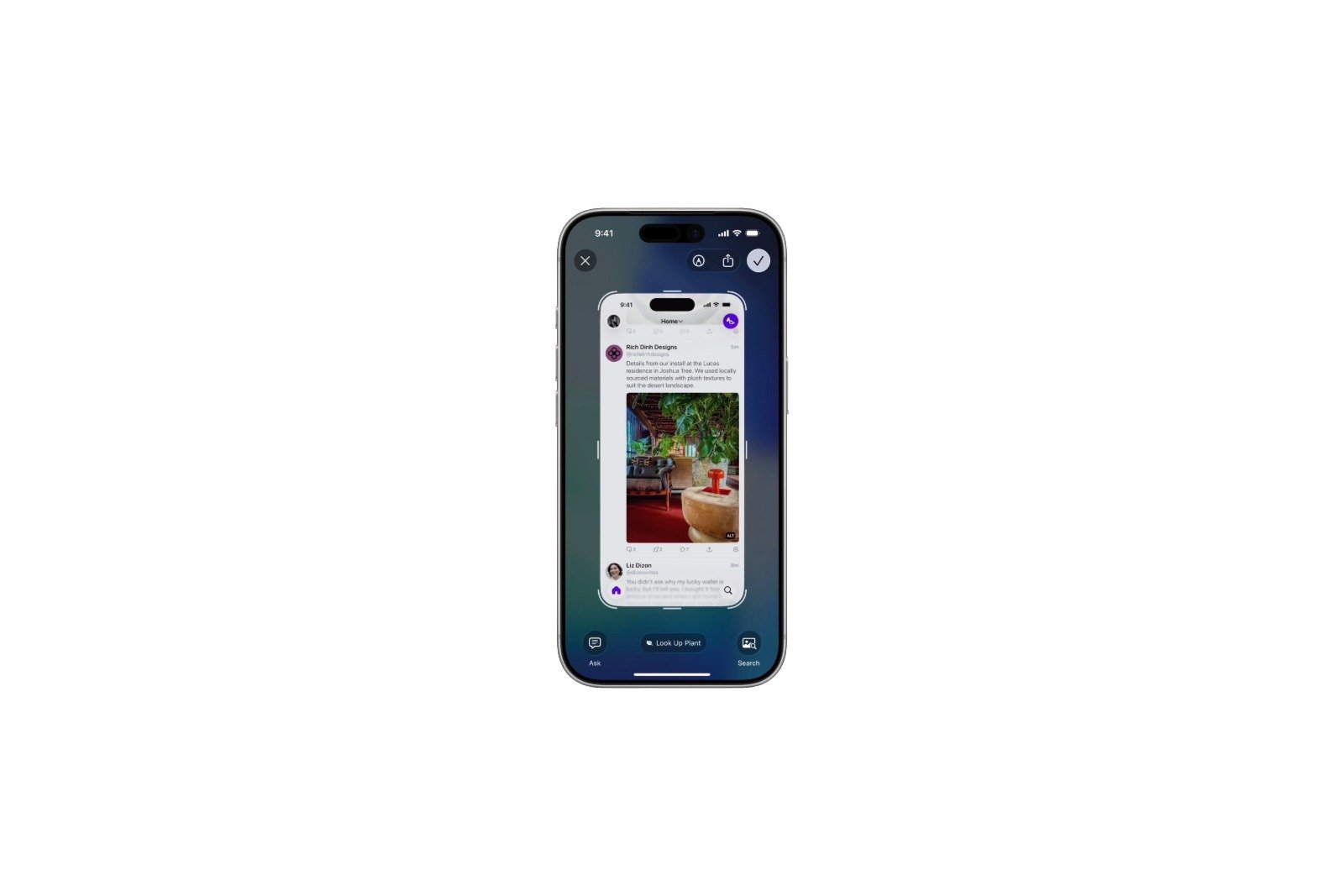
With iOS 26, Apple significantly expanded Visual Intelligence. The feature is no longer limited to the camera. Screenshots can now also be analyzed. After taking a screenshot, options for Visual Intelligence appear in the redesigned screenshot viewer. This allows on-screen content to be analyzed just like real-world subjects in front of the camera.
One particularly practical application is converting simple text URLs into clickable links. This makes information that was previously only available as an image immediately usable.
Why Apple is now increasing its focus
Tim Cook's emphasis on the success of visual intelligence is likely due to strategic reasons. Apple rarely comments on individual features by chance. One obvious reason is that the company has bigger plans and intends for visual intelligence to play an even more important role in the future.
Visual Intelligence on new devices
Rumors suggest that Apple plans to extend visual intelligence to other product categories. A new high-end model of the AirPods Pro 3 and the Apple Glasses are expected to be unveiled later this year. Both devices are rumored to be equipped with integrated cameras capable of utilizing visual intelligence.
Journalist Mark Gurman clearly describes Apple's long-term vision: Visual intelligence should not be limited to the iPhone, but should become a core component of future wearables. With Apple Glasses, the goal is to continuously analyze the environment and provide context-related information. This feature is also expected to play a central role in camera-based AirPods.
Visual Intelligence as a strategic key technology at Apple
Visual Intelligence has quickly evolved from a new camera feature to a key component of Apple Intelligence. With its introduction on the iPhone 16, its expansion in iOS 26, and its planned use in future wearables, a clear direction is emerging. Apple is positioning visual intelligence as a long-term key technology designed to simplify and accelerate how we handle information. Tim Cook's public emphasis underscores that this feature is far more than a short-term fad. The best products for you: Our Amazon storefront offers a wide selection of accessories, including those compatible with HomeKit. (Image: Apple)
- iOS 26.3 RC released: All new features at a glance
- iPhone and NFC: These innovations will shape the next few years
- Apple expands education and robotics in India's supply chain
- Apple TV Press Day Event: An overview of all content for 2026
- iPhone spyware bypasses iOS protection for camera and audio
- iOS 26.2.1 is causing problems for some users
- Apple Sports expands its offering to include golf and the DFB Cup
- Apple and Google: Why the search deal is being re-evaluated
- Apple TV presents "The Dink": New summer comedy 2026
- Apple TV presents Outcome: A black comedy with a star-studded cast
- Apple TV announces thriller series “Lucky” for summer 2026
- Apple is increasing SDK requirements for apps starting in April 2026
- xAI is alleged to have destroyed evidence in the antitrust case against Apple
- Apple is consistently expanding AI support in the Support app
- Apple introduces agent-based coding with Xcode 26.3
- Apple Home: Final deadline for upgrades
- Apple Music Replay 2026 is now available in the app and on the web
- WhatsApp in focus: Lawsuit questions encryption
- Apple shows new way to faster AI language models
- SpaceX acquires xAI and plans data centers in space
- Apple benefits from tax reform and expands production in India
- iTunes is more relevant than previously thought: New figures are surprising
- Tim Cook appears in the Epstein Files – without scandal.