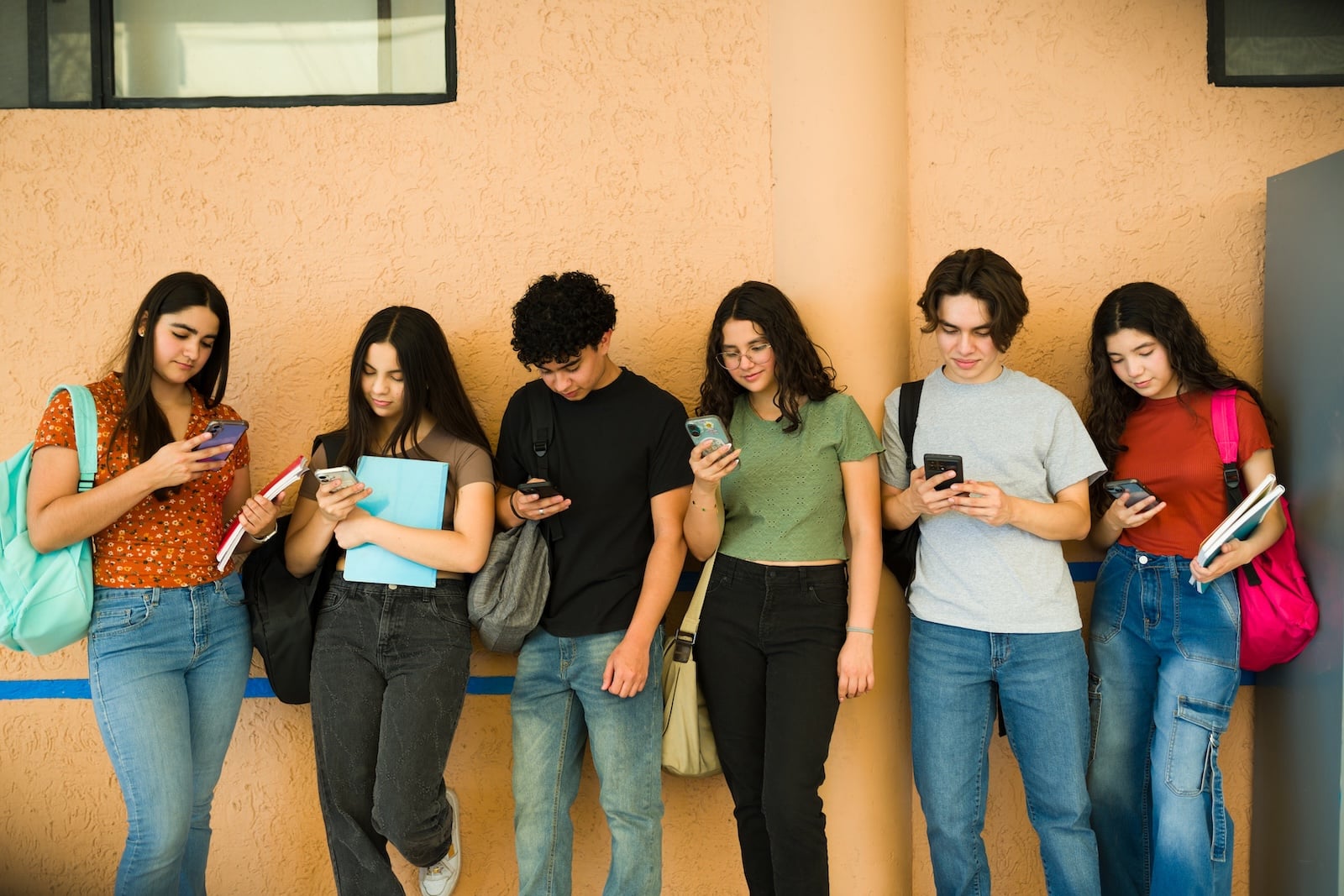
The European Commission is planning its first-ever Europe-wide age limit for social media. Ursula von der Leyen announced in Brussels on Monday that the Commission will follow the recommendations of a panel of experts – the concrete legislative proposal is expected after the summer. Apple has already released the technology needed to enforce such a rule on iPhones.
The debate surrounding age restrictions online has long since reached Apple. In February, the company tightened its age verification in the App Store – initially for Australia, Brazil, Singapore, and the US states of Utah and Louisiana, due to new laws coming into effect there. What Brussels is now preparing would, for the first time, implement the same mechanism for 27 member states. On July 13, a specially appointed panel of experts submitted its report on online child safety to the Commission President, and von der Leyen left no doubt that she intends to follow its recommendations.
What the Commission intends to do
The report reverses the burden of proof: Regulators, parents, or children should not have to prove that a platform is dangerous – providers should have to demonstrate that their services are designed to be safe. Until this proof is provided, access for children under 13 in the EU should remain restricted (via Financial Times).
In Brussels, von der Leyen outlined a tiered model. Children under three should not be exposed to screens at all. Those under 13 should only be allowed to use social networks for limited periods and under the supervision of parents, guardians, or teachers. After that, access will be phased in, depending on whether the platforms can demonstrate that their services are age-appropriate and safe for young people.
It wouldn't just be social networks in the narrow sense that would be affected. Von der Leyen spoke of a category "social media plus"—referring to other providers with age-inappropriate or addictive features. Just last week, the Commission demanded that Instagram and Facebook end endless scrolling and automatic video playback.
13 or 16: Member States want to be stricter
A German expert played a key role in the recommendation. Jörg Fegert, a professor at the University of Ulm, advocated for an EU-wide harmonized age limit below 13 years – based on the available research.
Politically, however, the figure of 13 is the lower value. A large majority of the member states that initially pushed Brussels toward this initiative would have preferred a higher limit. Australia and the UK have set their bans at 16 years, while other countries have set them at 15. Von der Leyen herself had previously referred to the Australian model – the report now significantly lowers the threshold.
The technology for this is already built into the iPhone
With iOS 26, Apple introduced the Declared Age Range API, which has included enhanced signals since iOS 26.2. Here's how it works: An app doesn't request the exact date of birth, but instead receives a general age range from the system – under 13, 13 to 15, or 16 and older. The precise date of birth remains with Apple. For children in a Family Sharing account, parents decide whether this age range is shared with apps at all; adults choose between "Always Share," "Ask First," and "Don't Share".
Crucial to the EU's initiative is a second signal: The interface also informs an app whether age-related legal requirements even apply in the user's region. Apple uses this information to activate the check on a country-by-country basis. In Australia, Brazil, and Singapore, the App Store has blocked the download of apps rated for ages 18 and up since February 24, 2026, until the user's age of majority is confirmed. In Utah, the rule has been in effect for new Apple accounts since May 6, and in Louisiana since July 1.
The EU is not currently on any of these lists. A law along the lines outlined by von der Leyen would trigger its inclusion. The basis for each of these checks is the age information stored in the birthdate of the Apple account.
The rule would not apply to Switzerland
Germany and Austria, as EU members, would be directly affected. Switzerland is not an EU member and therefore would not be subject to a Brussels age limit – Swiss users would initially remain unaffected by such a requirement, regardless of how the Commission ultimately tailors the proposal.
For parents in all three countries, nothing will change in the short term anyway. Regardless of legislation, the tools to limit age and content on your child's device are already built into the parental controls of iPhones and iPads – from screen time and content filters to communication limits.
In September, the initiative will become a proposal
The Commission intends to examine the panel's recommendations and then present a concrete draft law. The announcement is expected during the State of the Union address in September. Before it becomes law, Parliament and member states must approve it – a process that could take years, and in which the number 13 is unlikely to remain untouched, given the preferences of many capital cities.
For Apple, this is less a technical than a political problem. The interface exists, it's running productively in five jurisdictions, and it's deliberately designed to be activated by region. What's being negotiated in Brussels isn't whether the iPhone can detect age – but who will ultimately be held accountable for its accuracy. (Image: Shutterstock / antoniodiaz)
- Ted Lasso Season 4: Fan Event with the Cast in Kansas City
- Apple avoided US chip tariffs thanks to a deal with Intel
- Apple is taking legal action against OpenAI – over AI hardware
- Apple receives royalty-free access to AI chips in the Emirates
- OpenAI discontinues its AI browser ChatGPT Atlas
- The EU sees a violation of regulations at Instagram and Facebook
- iOS 27: Translate app gets nine new languages
- OpenAI introduces ChatGPT Work and new GPT 5.6 models
- Chat control: EU Parliament allows scanning again
- India removes tariffs on iPhone components
- macOS 28 drops support for encrypted HFS+ drives
- Apple TV achieves Emmy record: 87 nominations
- Apple is growing against the trend in the shrinking PC market
- Apple is testing controversial memory from China