Tim Cook and his designated successor John Ternus held a virtual meeting with Bavarian Minister-President Markus Söder. Publicly, the discussion focused on jobs and investments in Munich – but between the lines, it centered on a shared point of contention: Brussels regulations.
It was a meeting with symbolic value: On Tuesday, Apple CEO Tim Cook and his designated successor John Ternus, who will take over on September 1st, met with Markus Söder for a virtual discussion. Matt Browne, Apple's head of relations with European governments, also participated. Söder himself made the meeting public via a post on X – and combined his friendly words about the company's location with a clear message directed at the EU.
An appointment, made public via X
The shared photo shows Söder in front of a large screen displaying Ternus wearing glasses, while Cook is connected to the discussion via video link. Söder captioned the post "Silicon Valley meets Bavaria," describing Apple and Bavaria as two globally powerful brands. Bavaria is considered the Silicon Valley of Europe; he said they are proud that global corporations like Apple, as well as young startups, invest and grow in the Free State.
Silicon Valley meets Bavaria: Apple and Bavaria are two powerful global brands. Had good talks today with @apple CEO @tim_cook and his successor John Ternus. Bavaria is considered the Silicon Valley of Europe. We are proud that global players like #Apple as well as young… pic.twitter.com/7F9i9waq0N
— Markus Söder (@Markus_Soeder) July 7, 2026
Specifically, Söder pointed to the more than 2,000 jobs that Apple now maintains in Munich, attributing this to the success of his high-tech agenda. The discussion did not produce any results – it was clearly about cultivating relationships at a high level, shortly before the leadership change at Apple.
Over 2000 jobs: Apple's Bavarian foothold
This figure is not just a PR ploy. Munich has long been Apple's largest development center in Europe. According to the company, more than 2,000 engineers work on its own chips at the European Silicon Design Center there – from power management and mobile modems to future wireless technologies. Since 2021, Apple has invested around one billion euros in each of two phases, continuously expanding the centrally located site near the Technical University of Munich.
For Apple, Bavaria is therefore far more than just a sales market: a significant portion of the chip development that goes into iPhones, iPads, and Macs takes place here. This very standing makes the friendly gesture valuable in both directions – for the Free State as a showcase, and for Apple as support in an increasingly regulated market environment.
A dig at Brussels
The second part of Söder's message is noteworthy. Overregulation – for example, regarding AI and data protection – should not lead to being cut off from technological progress; the goal is to shape the future, not just watch it unfold. Söder left open whether this point was actually discussed in his conversation with Cook and Ternus. However, the general thrust of his argument strikingly aligns with Apple's own criticism of the EU.
The timing fits into an ongoing conflict: Just a few days ago, Cook was in direct contact with the EU Commission, seeking a way to bring Siri AI to the EU despite the DMA restrictions. For now, the new Siri generation remains blocked on iPhones and iPads in Germany, Austria, and the rest of the EU, while Macs and Apple Vision Pro will receive it – Switzerland, as a non-EU country, is not affected by the block anyway.
The EU Commission does not see itself as responsible: The Digital Markets Act does not prohibit new products; Apple simply has not presented a solution that meets European data protection and competition regulations. In this complex situation, support for Apple from a large member state carries political weight – and for Söder, this technology-friendly stance aligns with his own economic development policy.
Transfer of power also on the political stage
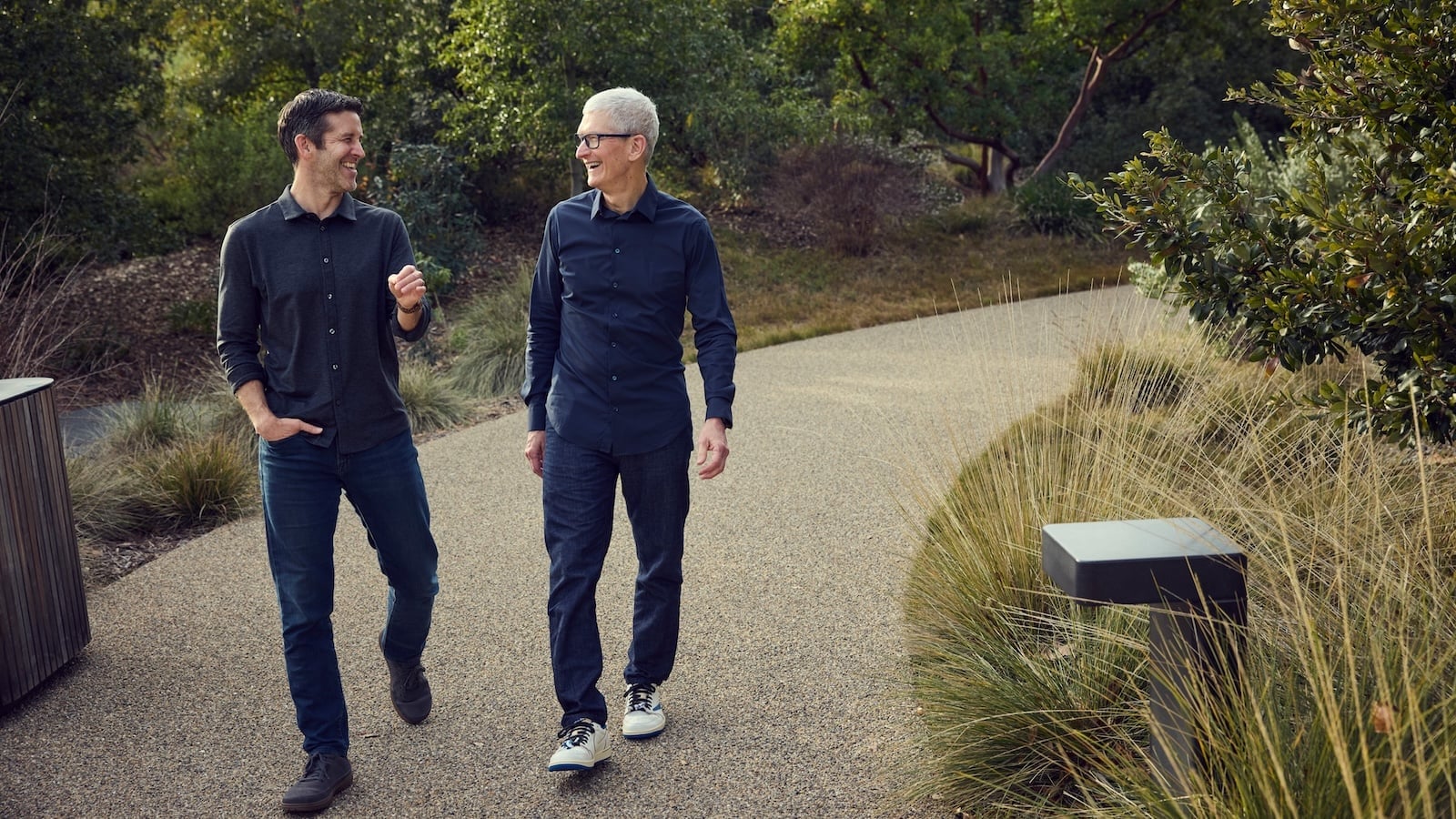
That Ternus was sitting next to Cook in the meeting is no coincidence. Cook will remain with the company as Executive Chairman after September 1st and will then primarily focus on negotiations with governments – in Washington as well as in Brussels. Their joint appearance in this meeting thus resembles a handover in the public eye: The outgoing CEO is positioning his successor where a growing portion of the work at the top of the company will take place in the future – at the intersection of technology and politics. (Image: Apple)
- Claude Cowork is coming to iPhone, iPad and the web
- Nocturne: Apple TV adapts Lars Kepler's bestseller into a film
- China: iPhone discounts put Apple in second place
- JP Morgan raises Apple price target to $345
- iOS 27 Beta 3: These are the new features included
- Edge AI: Apple Watch almost single-handedly dominates the smartwatch market
- Julia Garner stars in Apple's new true-crime thriller
- Epic dispute: Apple wants to pause the App Store process
- Home AI in iOS 27 requires the 2TB iCloud+ plan
- Apple asks via a popup before AI data is sent to Google
- Siri AI arrives on the Apple Watch with watchOS 27 Beta 3
- iOS 27 Beta 3: Development enters the next phase
- iOS 26.6 Beta 4: The testing phase continues
- Why the Mac mini is becoming the preferred AI machine
- Apple and Broadcom extend their chip deal until 2031
- WhatsApp receives a green light for online contacts
- iOS 27: Code discovery suggests new Apple wearable with cameras
- iOS 27: New framework warns apps about fraud in real time
- AI lawsuit: Apple defends itself against three YouTube channels
- iOS 26 leak: Jon Prosser responds to Apple's lawsuit