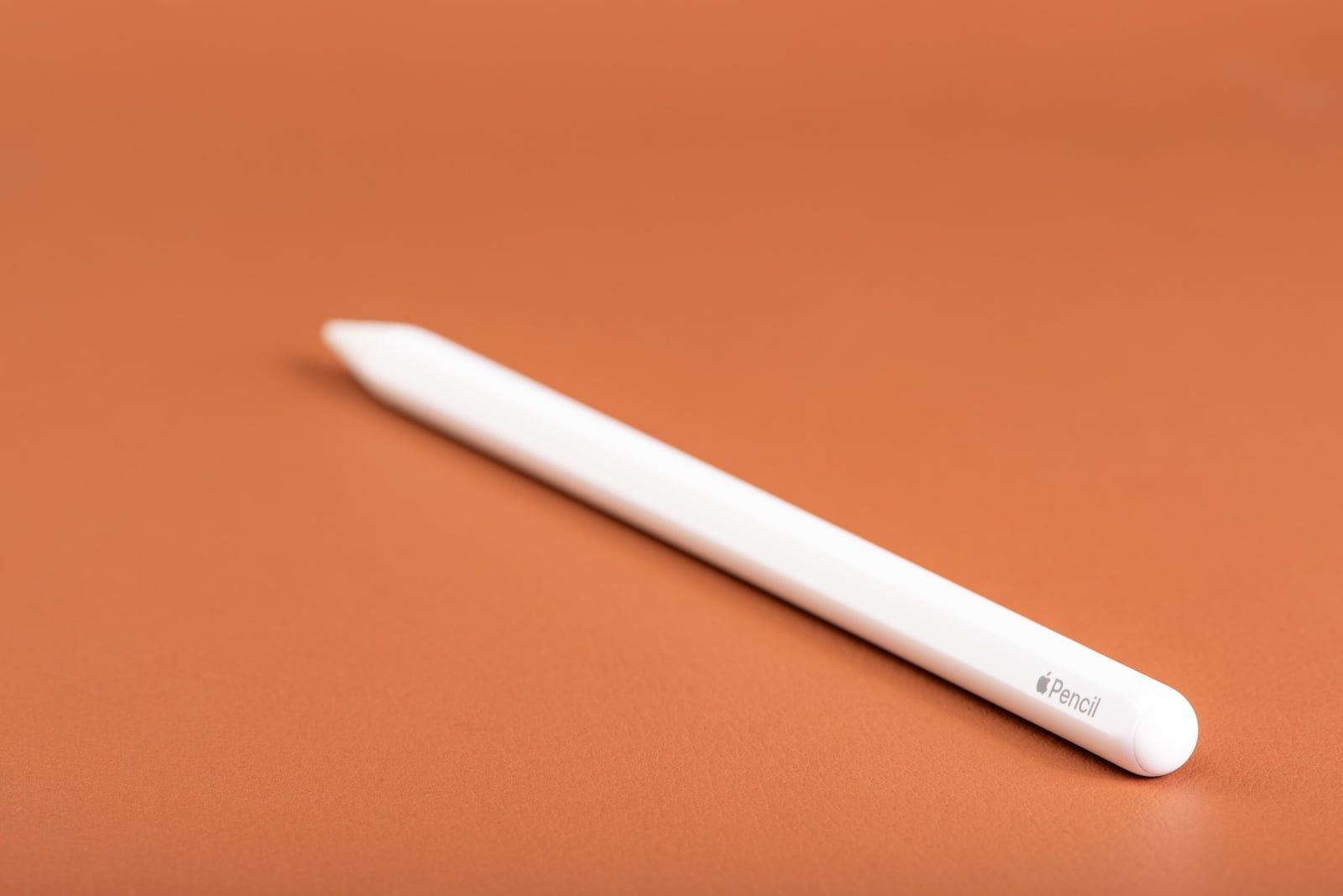
The Apple Pencil is now one of the most important accessories in the Apple ecosystem. Especially with the iPad, the stylus has become a central tool for drawing, note-taking, and creative work.
A newly granted patent reveals how Apple could further develop the Apple Pencil in the future. This involves not only additional functions, but above all the physical feel when writing or drawing. The stylus could change its properties during use, thus feeling like different tools, such as a ballpoint pen, pencil, felt-tip pen, or even a paintbrush.
The patent describes in detail how Apple could adjust the shape, weight, stiffness, and even the tip of the Apple Pencil so that the stylus automatically adapts to different tasks.
When Apple introduced the first Apple Pencil more than ten years ago, the reactions were mixed. Some critics saw it as merely an expensive stylus with a big name. Others praised its precision and called it one of the best input devices for tablets.
Since that first generation, Apple has continuously improved the Apple Pencil. Pressure sensitivity, tilt recognition, and low latency have made the stylus particularly appealing to artists, designers, and many iPad users.
In parallel, Apple has filed numerous patents related to the Apple Pencil over the years. Some of these ideas were rather experimental. These include, for example, concepts for an Apple Pencil that can recognize colors and textures, a model with a transparent Touch Bar, or even a variant that could be used as a TV antenna.
However, the patent that has now been granted focuses particularly intensively on another question: How can a digital stylus feel like working with real tools?
A patent for an Apple Pencil with customizable functions
The patent is titled "Stylus with customizable functions." It describes a system in which the physical properties of the Apple Pencil can change during use.
The patent explains that the size or shape of individual parts of the stylus could be adjusted, especially the tip. This would allow the stylus to imitate different writing or drawing tools.
The patent states that the size and shape of the tip could be changed to replicate the properties of various tools. These include, among others:
- Ballpoint pen
- Pencil
- Chalk
- Felt-tip pen
- Paint brush
The goal is for the Apple Pencil to automatically adapt to the task at hand, resulting in a more realistic writing or drawing experience.
Adjustment of key physical properties
A key component of the patent is the adjustment of various physical properties of the stylus. Apple describes several factors that could be modified to simulate different tools. These properties include, but are not limited to:
- Shape of the tip
- Stiffness
- flexibility
- friction
- focus
- moment of inertia
By changing these properties, the Apple Pencil could behave differently depending on the application. For example, the stylus could feel stable and precise when writing, while becoming softer and more flexible when drawing.
Features such as multiple bristles reminiscent of a brush are also mentioned in the patent.
A potentially variable tip
A large part of the patent focuses on the tip of the Apple Pencil. Apple describes that this tip doesn't necessarily have to be conical or frustoconical in shape. Instead, the tip could also be:
- have a constant size
- have an adjustable size
- change their shape
Some drawings show a tip that can expand from a single point to two points. Other illustrations show attachments resembling brush hairs.
These illustrations are intended to demonstrate how the feel of different tools can be imitated. It is not always clear whether the changes actually occur physically or merely simulate the writing sensation.
Magnetorheological fluid for variable properties
One particularly technical idea in the patent concerns the use of a so-called magnetorheological fluid in the tip of the Apple Pencil.
This fluid could be located between a rigid core at the tip and the outer casing. Its special property is that its viscosity changes when exposed to a magnetic field.
An electromagnet inside the Apple Pencil could generate this magnetic field. This would allow control over how firm or soft the tip feels.
This would allow Apple to dynamically change the physical feedback during use. For example, this would enable the stylus to behave differently depending on the application.
Changes inside the Apple Pencil
Besides the tip, Apple is also investigating changes to the stylus's interior. Some drawings in the patent show an area reminiscent of the ball of a ballpoint pen.
This ball, however, is not intended for writing, but could serve to shift weight. It could be moved sideways to adjust the center of gravity of the Apple Pencil.
Such an adjustment could affect how the stylus feels when drawing or writing. Depending on the tool or application, the weight distribution could change.
Possible touch surface on the stylus
The patent also mentions a possible touch-sensitive surface on the Apple Pencil.
Such an interface could expand upon current tapping gestures and offer additional control options. For example, it would allow users to switch between different stylus properties.
This would allow users to select different tools or writing feel without changing settings directly on the iPad.
Extensive documentation of the idea
The patent shows how thoroughly Apple has examined this idea. The description includes:
- 31 diagrams
- more than 16,000 words
While the body of the Apple Pencil is also discussed, the majority of the documentary focuses on the stylus tip. It examines in particular detail how this tip could be designed and whether it could potentially be lengthened or modified.
This extensive documentation suggests that Apple is intensively engaged in the further development of the Apple Pencil as an input device.
Tight integration with iPad and possibly iPhone
The Apple Pencil will continue to work closely with other Apple devices. The iPad, in particular, will remain the central platform for the stylus.
However, the patent also contains references to user interfaces and possible use cases, suggesting that the Apple Pencil could potentially also be used with the iPhone.
Software integration plays an important role, as it determines how the stylus is used for writing or drawing and which properties are activated.
The Apple Pencil could adapt to any task in the future
The new patent shows that Apple not only wants to further develop the functionality of the Apple Pencil, but also to place greater emphasis on the physical writing experience.
By modifying properties such as shape, flexibility, friction, or weight distribution, a future Apple Pencil could realistically replicate various writing and drawing tools. Technologies like magnetorheological fluids or movable weights could ensure that the stylus adapts to different tasks during use.
Whether and when these ideas will actually appear in a product is currently unclear. However, the patent demonstrates how intensively Apple is working on the further development of the Apple Pencil and what role the stylus could play in the future for the iPad and potentially other devices. (Image: Shutterstock / Primakov)
- Apple case designed to connect iPhone to satellites
- Apple is bringing Touch ID back under the Display
- Apple Vision Pro: Will there be an Apple Pencil-like controller?
- Apple reported significantly fewer patents in the US in 2025
- AirPods of the future: Apple is researching smart gesture logic
- Apple plans fabric displays for HomePod and other devices
- Apple wins long-running dispute over iPhone camera patents
- Apple develops magnetic game controller for iPhone & iPad
- Apple relies on smart mattress sensors for sleep tracking
- Apple develops next-generation Taptic Engine
- Apple Ring – new patents give hope for an innovative wearable
- Apple Vision Pro could get more touch controls
- Apple files patent for iPhone made from a single piece of glass
- Apple is working on light signals for Apple Ring and more
- Apple files patent for new mouse button in keyboard
- Will Apple Pencil soon be available as a stylus for all Apple devices?
- Apple patent proves: AirPods with cameras in development
- Apple could improve Vision Pro for travel via software
- AirPods learn to read lips: Apple plans silent control
- Apple patent shows: iPhone could soon control everything automatically
- New research: Apple develops hinges for foldable iPhone
- Magic Mouse: Apple is working on touchless control
- Apple Patent: More action buttons for iPhones and more